AI for Engineering Knowledge Management
Why standards aren’t just rules — they’re how engineers protect lives, and themselves, when everything goes wrong
·
⏱
6 min read

Dr. Maor Farid
Maor Farid is the Co-Founder and CEO of Leo AI, the first AI platform purpose-built for mechanical engineers. He holds a PhD in Mechanical Engineering and completed postdoctoral research at MIT as a Fulbright fellow. A Forbes 30 Under 30 honoree and former AI researcher and Mechanical Engineer in an elite military intelligence, Maor leads Leo AI's mission to transform how engineering teams design better products faster.
BOTTOM LINE
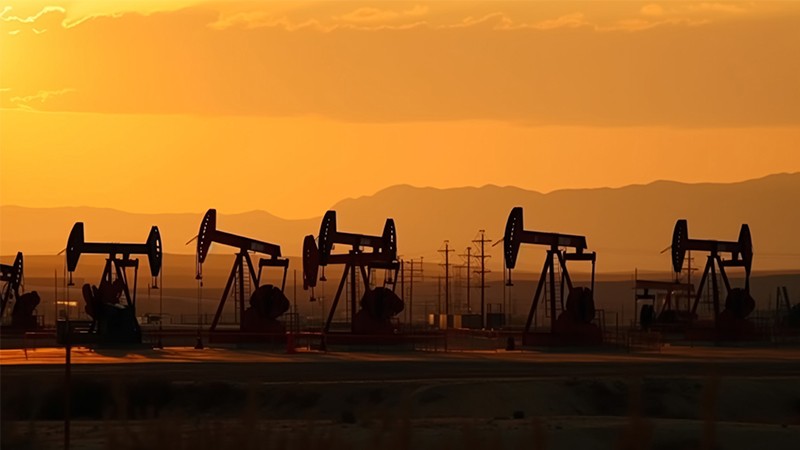
The explosion in Landman is fiction. The obligation it highlights is not.
At the end of the day, engineering decisions aren't abstract. Someone may have to look a family in the eye and explain what happened. That scene with Billy Bob Thornton makes that painfully clear.
Standards exist so fewer people ever have to have that conversation.
Making standards easier to use, easier to cite, and easier to defend isn't about productivity metrics or compliance theater. It's about reducing the probability that anyone — engineer, manager, or operator — is ever put in that position.
The stakes are high. Design errors caught late cost 10-100x more to fix than errors caught during design review. Leo's Inspect feature runs DFM analysis, part selection, and compliance checks in one click—34% reduction in design errors before they reach manufacturing. One missed inspection can cost more than an entire annual subscription.
I love Landman.
Everything about it. The setting. The confidence. The bluntness. The way America shows up in the show as this mix of ambition, risk, and zero illusions about how dangerous real work can be. West Texas oil fields. Roughnecks who know exactly what’s at stake. Lawyers who don’t waste words. Billy Bob Thornton saying the quiet part out loud. Ali Larter is also awesome.
As an Israeli living in Boston, building software for mechanical engineers, I didn’t expect to become completely absorbed by a show about oil and gas. But there I was, posting in our team Slack late at night about how good the writing was and why this show felt so deeply American in the best way.
Early on, the show stops being entertainment and collides directly with my professional reality.
The rig explosion.
Fire. Chaos. Confusion. And people die.
Not metaphorically. Not as a plot device. Workers doing their jobs don’t go home. Families lose fathers, sons, brothers. The show doesn’t soften it, and it shouldn’t. That loss of life is the most horrific part of the story — and it’s the part engineering exists to prevent.
Before compliance.
Before investigations.
Before OSHA, regulators, or lawyers ever show up.
Preventing loss of life is the point.
And then there’s a quieter scene that hit me even harder.
Billy Bob Thornton’s character turns to his son and tells him something along the lines of: I have to go talk to the families. Look them in the eye. Tell them what happened. Sit with them.
That moment strips everything down to its core.
Not the company.
Not the regulators.
Not the legal exposure.
The families.
That’s ultimately what all of this is about. Every standard. Every calculation. Every conservative assumption. Every review gate. It all exists so fewer people have to have that conversation.
As engineers, we rarely think in those terms day to day. We think in stresses, factors of safety, fatigue curves, tolerances. But Landman forces you to confront the human reality behind those abstractions.
And once you see it that way, it’s impossible to unsee.
After the smoke clears — after the funerals, after the families go home — something else inevitably happens.
OSHA shows up. Investigators arrive with clipboards. Regulators start asking questions. And somewhere, in a quiet conference room months later, engineers are going to be asked:
Did you follow the standards?
And can you prove it?
That second question is the one that keeps me up at night.
IN PRACTICE
Why This Is a Safety Issue, Not a Software One
"The connection to our PDM and using that as a data source is legit the best thing ever. I found three viable bracket options fitting my exact envelope constraints — in minutes, not days."
— Eytan S., R&D Engineer
Standards Exist Because People Died
If you work in high-consequence industries — oil and gas, energy, aerospace, subsea, heavy industrial — you already understand this intuitively.
Engineering standards aren’t arbitrary. They are written in response to failure. Every clause, table, and conservative assumption exists because something went wrong somewhere, and someone paid the price.
In oil and gas alone, engineers navigate an enormous web of standards: API 6A for wellhead equipment, API 17D for subsea systems, ASME Section VIII for pressure vessels, ISO 13628 for subsea production systems. Each represents decades of accumulated knowledge — often codified after incidents not unlike the one depicted in Landman.
These standards stand between safe operation and catastrophe. In environments where pressures are extreme, tolerances are tight, and margins for error are razor thin, the standards are the safety net.
But here’s the paradox: the very depth that makes standards effective also makes them incredibly hard to use.
No engineer truly “knows” all of API 6A or ASME VIII. What they know is how to engineer — and how to navigate standards under real-world constraints of time, cost, and complexity.
And navigation is where risk creeps in.
Compliance Is the Floor. Confidence Is the Ceiling.
Standards play two roles at the same time, and this is something we don’t talk about enough.
They are:
Prescriptive guidance — telling engineers what to do
Evidentiary records — proving why those decisions were made
When a subsea connection is designed to API 6A, the standard doesn’t just ensure it can withstand operational loads. It creates a chain of reasoning:
This material grade was selected because API 6A Table X specifies these properties
This bolt load was calculated using Section 6.4.2 of the 21st Edition
These dimensions were verified against Annex C tolerances
That chain matters.
Because when something fails — and sometimes it will, despite best intentions — investigators aren’t asking whether the engineering “felt right.” They’re asking whether recognized standards were followed, and whether the documentation proves it.
Compliance isn’t about checking boxes. It’s about being able to stand behind your work with confidence when it’s scrutinized under the harshest possible conditions.
What Landman Doesn’t Show
The explosion is dramatic. But the real story unfolds afterward.
In real life, serious incidents trigger long, forensic investigations. OSHA. State regulators. Environmental agencies. Sometimes the EPA. Offshore, the Bureau of Safety and Environmental Enforcement. Each with subpoena power. Each with different documentation requirements.
These aren’t friendly conversations.
Investigators will:
Request design packages going back years
Demand full calculation derivations and assumptions
Check whether the current edition of a standard was used
Compare as-built conditions to original design intent
Interview engineers about specific decisions
Subpoena emails, meeting notes, and approvals
The burden of proof falls entirely on the engineering organization.
And here’s the painful irony: in many cases, the engineering was sound. The standards were followed. The failure occurred elsewhere — procurement, installation, maintenance, operations.
But proving that after the fact is brutally difficult when documentation is scattered across spreadsheets, PDFs, email threads, and tribal knowledge.
FAQ
Stop Wasting Hours on Manual CAD Search
Leo AI turns your existing vault into a searchable knowledge base.
Leo AI connects to your PDM and makes every part findable by description in under 10 seconds. <a href="/onboarding">Try Leo Today</a>
Schedule a Demo →

#1 New AI Software Globally - G2 2026

Enterprise-grade security

Trusted by world-class engineering teams