Case Study: Sketch Design

Case Study: Sketch Design

Case Study: Sketch Design

From Weeks to Minutes: How Sketch Design Achieved 10x Innovation Gains with Leo AI 

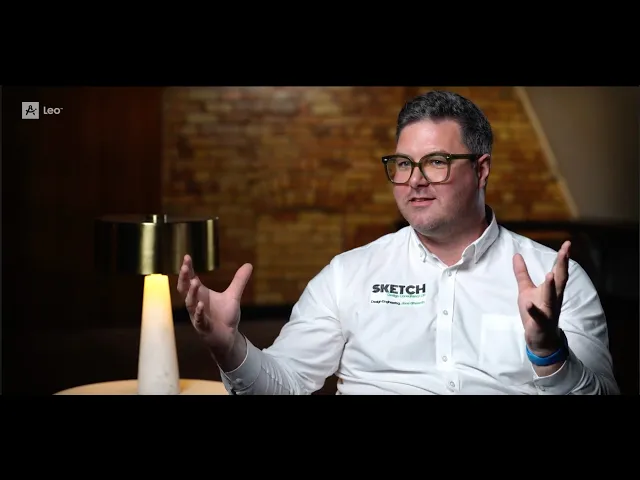
"Leo is just like another engineer in the room now... It's days, weeks, to minutes. It has paid off massively for us."

"Leo is just like another engineer in the room now... It's days, weeks, to minutes. It has paid off massively for us."

Oliver Diebel

Co-Director, Sketch Design Consultancy

About Sketch Design

Sketch Design Consultancy is a Cardiff-based mechanical design engineering firm founded in 2017. The company specializes in Design for Manufacture, Design for Assembly, and Design for Serviceability, serving clients ranging from individual inventors to market-leading manufacturers. Working across CAD platforms, including Onshape and SOLIDWORKS, the team delivers everything from rapid prototyping to full product lifecycle management.

The Challenge: Gatekeeper Bottlenecks and Specialized Knowledge Gaps

The Challenge: Gatekeeper Bottlenecks and Specialized Knowledge Gaps

Before integrating Leo AI, the team faced significant hurdles when venturing into new technical domains:


  • The gatekeeper effect: Technical information was often held by single individuals within client companies, making them gatekeepers of data that was rarely documented. This created dependencies and bottlenecks that slowed project timelines.

  • Traditional research lag: Validating a new engineering concept required flicking through indexes of physical textbooks or searching online four times to find a consistent answer. This process could take anywhere from a day to a week.

  • Cross-disciplinary barriers: When faced with electrical tasks (such as connecting a motor to a battery via a PCB), the mechanical team struggled with electronics-specific jargon and lacked access to the data sheets necessary to proceed confidently.

Before integrating Leo AI, the team faced significant hurdles when venturing into new technical domains:


  • The gatekeeper effect: Technical information was often held by single individuals within client companies, making them gatekeepers of data that was rarely documented. This created dependencies and bottlenecks that slowed project timelines.

  • Traditional research lag: Validating a new engineering concept required flicking through indexes of physical textbooks or searching online four times to find a consistent answer. This process could take anywhere from a day to a week.

  • Cross-disciplinary barriers: When faced with electrical tasks (such as connecting a motor to a battery via a PCB), the mechanical team struggled with electronics-specific jargon and lacked access to the data sheets necessary to proceed confidently.

Before integrating Leo AI, the team faced significant hurdles when venturing into new technical domains:


  • The gatekeeper effect: Technical information was often held by single individuals within client companies, making them gatekeepers of data that was rarely documented. This created dependencies and bottlenecks that slowed project timelines.

  • Traditional research lag: Validating a new engineering concept required flicking through indexes of physical textbooks or searching online four times to find a consistent answer. This process could take anywhere from a day to a week.

  • Cross-disciplinary barriers: When faced with electrical tasks (such as connecting a motor to a battery via a PCB), the mechanical team struggled with electronics-specific jargon and lacked access to the data sheets necessary to proceed confidently.

Before integrating Leo AI, the team faced significant hurdles when venturing into new technical domains:


  • The gatekeeper effect: Technical information was often held by single individuals within client companies, making them gatekeepers of data that was rarely documented. This created dependencies and bottlenecks that slowed project timelines.

  • Traditional research lag: Validating a new engineering concept required flicking through indexes of physical textbooks or searching online four times to find a consistent answer. This process could take anywhere from a day to a week.

  • Cross-disciplinary barriers: When faced with electrical tasks (such as connecting a motor to a battery via a PCB), the mechanical team struggled with electronics-specific jargon and lacked access to the data sheets necessary to proceed confidently.

Before integrating Leo AI, the team faced significant hurdles when venturing into new technical domains:


  • The gatekeeper effect: Technical information was often held by single individuals within client companies, making them gatekeepers of data that was rarely documented. This created dependencies and bottlenecks that slowed project timelines.

  • Traditional research lag: Validating a new engineering concept required flicking through indexes of physical textbooks or searching online four times to find a consistent answer. This process could take anywhere from a day to a week.

  • Cross-disciplinary barriers: When faced with electrical tasks (such as connecting a motor to a battery via a PCB), the mechanical team struggled with electronics-specific jargon and lacked access to the data sheets necessary to proceed confidently.

The Solution: Leo AI as a Digital Engineering Partner

The Solution: Leo AI as a Digital Engineering Partner

Sketch Design adopted a human-in-the-loop philosophy, where Leo complements the engineer's intuition with verified technical data and cited sources. This approach recognizes that AI works best when augmenting expert judgment rather than replacing it.


Rapid specialized research: When tasked with designing a cryogenic system for transporting liquid hydrogen (LH2), the team used Leo to instantly pull material specs, equations, and vacuum limitations. Despite not being cryogenic experts, they could quickly access the technical knowledge they needed.


Recovery from project delays: On one project, a client delivered a box of bits instead of a completed electrical assembly, creating a two-week delay. Leo allowed the team to iterate fast enough to make up for those two weeks in a fraction of the time.


Engineering admin automation: Mechanical Design Engineer Luke Davis utilized Leo to classify parts and generate manufacturing lists with specific two-character codes, significantly speeding up internal admin workflows that previously consumed valuable engineering hours.


Verification with sources: Unlike general AI tools, Leo provided linked sources and academic references, giving the team the solidity needed to back up their claims during design reviews. This citation-based approach builds confidence that the information is reliable.

Sketch Design adopted a human-in-the-loop philosophy, where Leo complements the engineer's intuition with verified technical data and cited sources. This approach recognizes that AI works best when augmenting expert judgment rather than replacing it.


Rapid specialized research: When tasked with designing a cryogenic system for transporting liquid hydrogen (LH2), the team used Leo to instantly pull material specs, equations, and vacuum limitations. Despite not being cryogenic experts, they could quickly access the technical knowledge they needed.


Recovery from project delays: On one project, a client delivered a box of bits instead of a completed electrical assembly, creating a two-week delay. Leo allowed the team to iterate fast enough to make up for those two weeks in a fraction of the time.


Engineering admin automation: Mechanical Design Engineer Luke Davis utilized Leo to classify parts and generate manufacturing lists with specific two-character codes, significantly speeding up internal admin workflows that previously consumed valuable engineering hours.


Verification with sources: Unlike general AI tools, Leo provided linked sources and academic references, giving the team the solidity needed to back up their claims during design reviews. This citation-based approach builds confidence that the information is reliable.

Sketch Design adopted a human-in-the-loop philosophy, where Leo complements the engineer's intuition with verified technical data and cited sources. This approach recognizes that AI works best when augmenting expert judgment rather than replacing it.


Rapid specialized research: When tasked with designing a cryogenic system for transporting liquid hydrogen (LH2), the team used Leo to instantly pull material specs, equations, and vacuum limitations. Despite not being cryogenic experts, they could quickly access the technical knowledge they needed.


Recovery from project delays: On one project, a client delivered a box of bits instead of a completed electrical assembly, creating a two-week delay. Leo allowed the team to iterate fast enough to make up for those two weeks in a fraction of the time.


Engineering admin automation: Mechanical Design Engineer Luke Davis utilized Leo to classify parts and generate manufacturing lists with specific two-character codes, significantly speeding up internal admin workflows that previously consumed valuable engineering hours.


Verification with sources: Unlike general AI tools, Leo provided linked sources and academic references, giving the team the solidity needed to back up their claims during design reviews. This citation-based approach builds confidence that the information is reliable.

Sketch Design adopted a human-in-the-loop philosophy, where Leo complements the engineer's intuition with verified technical data and cited sources. This approach recognizes that AI works best when augmenting expert judgment rather than replacing it.


Rapid specialized research: When tasked with designing a cryogenic system for transporting liquid hydrogen (LH2), the team used Leo to instantly pull material specs, equations, and vacuum limitations. Despite not being cryogenic experts, they could quickly access the technical knowledge they needed.


Recovery from project delays: On one project, a client delivered a box of bits instead of a completed electrical assembly, creating a two-week delay. Leo allowed the team to iterate fast enough to make up for those two weeks in a fraction of the time.


Engineering admin automation: Mechanical Design Engineer Luke Davis utilized Leo to classify parts and generate manufacturing lists with specific two-character codes, significantly speeding up internal admin workflows that previously consumed valuable engineering hours.


Verification with sources: Unlike general AI tools, Leo provided linked sources and academic references, giving the team the solidity needed to back up their claims during design reviews. This citation-based approach builds confidence that the information is reliable.

Sketch Design adopted a human-in-the-loop philosophy, where Leo complements the engineer's intuition with verified technical data and cited sources. This approach recognizes that AI works best when augmenting expert judgment rather than replacing it.


Rapid specialized research: When tasked with designing a cryogenic system for transporting liquid hydrogen (LH2), the team used Leo to instantly pull material specs, equations, and vacuum limitations. Despite not being cryogenic experts, they could quickly access the technical knowledge they needed.


Recovery from project delays: On one project, a client delivered a box of bits instead of a completed electrical assembly, creating a two-week delay. Leo allowed the team to iterate fast enough to make up for those two weeks in a fraction of the time.


Engineering admin automation: Mechanical Design Engineer Luke Davis utilized Leo to classify parts and generate manufacturing lists with specific two-character codes, significantly speeding up internal admin workflows that previously consumed valuable engineering hours.


Verification with sources: Unlike general AI tools, Leo provided linked sources and academic references, giving the team the solidity needed to back up their claims during design reviews. This citation-based approach builds confidence that the information is reliable.

The Impact: 10x Gains and Accelerated Prototyping

The Impact: 10x Gains and Accelerated Prototyping

The transition to Leo AI has fundamentally shifted Sketch Design's development curve, moving them from incremental improvements to transformational gains:


From weeks to minutes: Research tasks that previously took days or weeks (such as searching for relevant formulas) now take only as long as it takes to type the question. This compression of research time has fundamentally changed project timelines.


Immediate prototyping: Before Leo, the information-gathering phase was slow and often blocked progress. Now, Sketch Design is often prototyping within the first week because they have the data they need immediately.


Enhanced client perception: The speed of response allows the agency to appear more capable and more impressive to clients, as they can speak knowledgeably about new fields almost instantly.


The 10x innovation gain: Rather than looking for marginal 10% improvements, the team uses Leo to achieve 10x gains through rapid, high-quality iterations. This shift in mindset has opened up new possibilities for what the consultancy can deliver.

10X

Innovation gains through rapid iteration

Weeks to minutes

Research time reduction

2 weeks

2 weeks

Reclaimed on delayed project

Conclusion

Conclusion

For the team at Sketch Design Consultancy, Leo AI is not a replacement for engineering judgment but a force multiplier for it. By providing verified technical knowledge with cited sources, Leo allows their engineers to bridge the gap between their core expertise in Design for Manufacture and the specialized requirements of client projects in unfamiliar domains.


The human-in-the-loop approach gives the team a safe space to fail and learn while maintaining the engineering rigor their clients expect. 


As Sketch Design Consultancy continues to take on complex, cross-disciplinary projects, Leo AI remains their digital engineering partner, helping them deliver results that would have been impossible on traditional timelines.

Subscribe to our engineering newsletter

Be the first to know about Leo's newest capabilities and get practical tips to boost your engineering.

Need help? Join the Leo AI Community

Connect with other engineers, get answers from our team, and request features.

Contact us

160 Alewife Brook Pkwy #1095

Cambridge, MA 02138

United States

Subscribe to our engineering newsletter

Be the first to know about Leo's newest capabilities and get practical tips to boost your engineering.

Need help? Join the Leo AI Community

Connect with other engineers, get answers from our team, and request features.

Contact us

160 Alewife Brook Pkwy #1095

Cambridge, MA 02138

United States

Subscribe to our engineering newsletter

Be the first to know about Leo's newest capabilities and get practical tips to boost your engineering.

Need help? Join the Leo AI Community

Connect with other engineers, get answers from our team, and request features.

Contact us

160 Alewife Brook Pkwy #1095

Cambridge, MA 02138

United States

Subscribe to our engineering newsletter

Be the first to know about Leo's newest capabilities and get practical tips to boost your engineering.

Need help? Join the Leo AI Community

Connect with other engineers, get answers from our team, and request features.

Contact us

160 Alewife Brook Pkwy #1095

Cambridge, MA 02138

United States

Subscribe to our engineering newsletter

Be the first to know about Leo's newest capabilities and get practical tips to boost your engineering.

Need help? Join the Leo AI Community

Connect with other engineers, get answers from our team, and request features.

Contact us

160 Alewife Brook Pkwy #1095

Cambridge, MA 02138

United States