
AI for Parametric Design: How Mechanical Engineers Are Automating Assembly Families
How AI connects to parametric assembly design in 2026, what it automates, what it still cannot do, and where the real time savings show up in product family engineering.
Content
12 min read

MB
Liran Silbermann, for Leo AI Marketing
Technion Graduate
IDF Elite Tech Unit
Robotics · Medical Devices · Automotive
Michelle Ben-David is a mechanical engineer and Technion graduate. She served in an IDF elite technology and intelligence unit, where she developed multidisciplinary systems integrating mechanics, electronics, and advanced algorithms. Her engineering background spans robotics, medical devices, and automotive systems.
What Parametric Design Actually Means on the Shop Floor
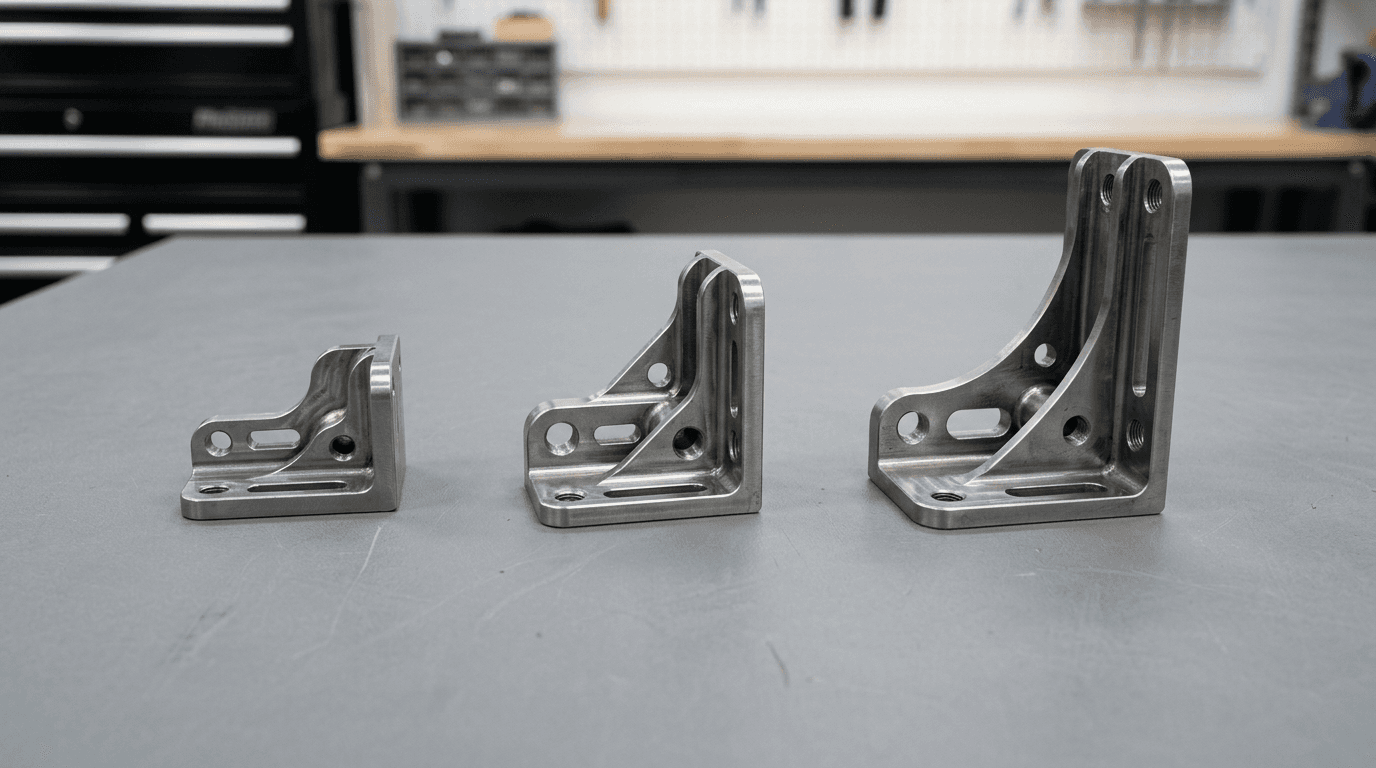
The term gets used loosely. In the context of mechanical engineering CAD, parametric design specifically means that the model is built on a defined set of parameters, and that changing those parameters drives geometry updates throughout the model and assembly.
Done well, this is how you manage a product family of 40 variants from a single master model. Changing a housing diameter parameter updates the wall geometry, the mounting hole pattern, the fastener callouts in the BOM, and the flat pattern for the sheet metal cover, all from one input. Done poorly, it is how you get a master model where changing a parameter breaks three mates and requires two hours of manual repair.
Most engineering organizations doing product family work are somewhere on the spectrum between those two states.
What Parametric Design Actually Means on the Shop Floor
The term gets used loosely. In the context of mechanical engineering CAD, parametric design specifically means that the model is built on a defined set of parameters, and that changing those parameters drives geometry updates throughout the model and assembly.
Done well, this is how you manage a product family of 40 variants from a single master model. Changing a housing diameter parameter updates the wall geometry, the mounting hole pattern, the fastener callouts in the BOM, and the flat pattern for the sheet metal cover, all from one input. Done poorly, it is how you get a master model where changing a parameter breaks three mates and requires two hours of manual repair.
Most engineering organizations doing product family work are somewhere on the spectrum between those two states.
Where AI Connects to Parametric Workflows
Configuration Validation
A parametric model with 15 input parameters can theoretically generate thousands of configurations. Not all of them are valid. Some parameter combinations produce geometry that violates manufacturing constraints, some produce assemblies that physically interfere, and some fall outside the range of validated material properties or standard component sizes.
AI tools that read CAD geometry can validate a specific configuration against manufacturing rules, standard component availability, and internal design guidelines without requiring the engineer to manually check each combination. Leo's design inspection runs on a configured instance of a parametric model the same way it runs on a fixed-dimension part: read the geometry, check it against the applicable rules, cite the violations.
This is particularly useful for engineer-to-order products where sales configures a product to customer specifications and engineering needs to validate that the configured instance is manufacturable before releasing the order.
Finding Existing Parametric Families
When starting a new product variant, the first question should be whether a parametric family for that product type already exists in the PDM. Not just whether a similar part exists, but whether a parametric master model exists that can be configured to cover the new variant without creating a new model from scratch.
Leo's geometric similarity search helps identify whether an existing parametric family covers the requirement. An engineer selects the key geometry of the new variant and Leo returns existing parts and families from the PDM with dimensional comparison data. If a 92% geometrically similar family already exists and the new variant falls within its parameter range, extending that family is faster and more maintainable than creating a new model.
Accessing the Design Rationale for Parameter Limits
Parametric models typically have parameter ranges, minimum and maximum values outside which the model either breaks or produces invalid geometry. The rationale for those limits is often undocumented and lives in the head of the engineer who built the master model.
With Leo AI indexed to the organization's PDM and document archive, an engineer can ask why the wall thickness parameter has a minimum of 4mm on a specific product family and get back the original stress analysis that set that limit, the applicable standard that was referenced, and the design note from the engineer who made the decision. That information does not disappear when the engineer who built the model leaves the organization.
This is the tribal knowledge problem applied specifically to parametric modeling: the model exists, but the constraints embedded in it are often opaque to anyone who was not there when it was built.
Where AI Connects to Parametric Workflows
Configuration Validation
A parametric model with 15 input parameters can theoretically generate thousands of configurations. Not all of them are valid. Some parameter combinations produce geometry that violates manufacturing constraints, some produce assemblies that physically interfere, and some fall outside the range of validated material properties or standard component sizes.
AI tools that read CAD geometry can validate a specific configuration against manufacturing rules, standard component availability, and internal design guidelines without requiring the engineer to manually check each combination. Leo's design inspection runs on a configured instance of a parametric model the same way it runs on a fixed-dimension part: read the geometry, check it against the applicable rules, cite the violations.
This is particularly useful for engineer-to-order products where sales configures a product to customer specifications and engineering needs to validate that the configured instance is manufacturable before releasing the order.
Finding Existing Parametric Families
When starting a new product variant, the first question should be whether a parametric family for that product type already exists in the PDM. Not just whether a similar part exists, but whether a parametric master model exists that can be configured to cover the new variant without creating a new model from scratch.
Leo's geometric similarity search helps identify whether an existing parametric family covers the requirement. An engineer selects the key geometry of the new variant and Leo returns existing parts and families from the PDM with dimensional comparison data. If a 92% geometrically similar family already exists and the new variant falls within its parameter range, extending that family is faster and more maintainable than creating a new model.
Accessing the Design Rationale for Parameter Limits
Parametric models typically have parameter ranges, minimum and maximum values outside which the model either breaks or produces invalid geometry. The rationale for those limits is often undocumented and lives in the head of the engineer who built the master model.
With Leo AI indexed to the organization's PDM and document archive, an engineer can ask why the wall thickness parameter has a minimum of 4mm on a specific product family and get back the original stress analysis that set that limit, the applicable standard that was referenced, and the design note from the engineer who made the decision. That information does not disappear when the engineer who built the model leaves the organization.
This is the tribal knowledge problem applied specifically to parametric modeling: the model exists, but the constraints embedded in it are often opaque to anyone who was not there when it was built.
Automating Design Family Documentation
Product families with many configurations generate proportionally large amounts of documentation: drawings, BOMs, compliance declarations, and test reports for each released configuration. AI tools can assist by extracting configuration-specific parameters and populating documentation templates, reducing the manual work of generating variant-specific output from a parametric master.
This is not a replacement for engineering review of the output. It is a reduction in the time spent on the mechanical generation of variant documentation from a validated master.
Automating Design Family Documentation
Product families with many configurations generate proportionally large amounts of documentation: drawings, BOMs, compliance declarations, and test reports for each released configuration. AI tools can assist by extracting configuration-specific parameters and populating documentation templates, reducing the manual work of generating variant-specific output from a parametric master.
This is not a replacement for engineering review of the output. It is a reduction in the time spent on the mechanical generation of variant documentation from a validated master.
What AI Cannot Do in a Parametric Environment
Parametric modeling is a tool for managing design intent. It does not validate that the design intent was correct in the first place.
AI inspection validates that a configured instance meets the rules it is checked against. It does not validate that the parametric relationships in the master model are correctly structured, that the parameter ranges are correctly set, or that the configuration logic correctly reflects the product requirements. Those are engineering judgment calls that require understanding the product, the manufacturing process, and the customer requirements.
Additionally, AI geometric search finds parametrically similar geometry but cannot evaluate whether the underlying parametric structure of an existing family is suitable for a new variant. A family with a rigid parametric structure built for one range of applications may not be appropriate to extend into a different range, even if the base geometry looks similar.
Use AI to support parametric workflows. Use engineering judgment to design them.
What AI Cannot Do in a Parametric Environment
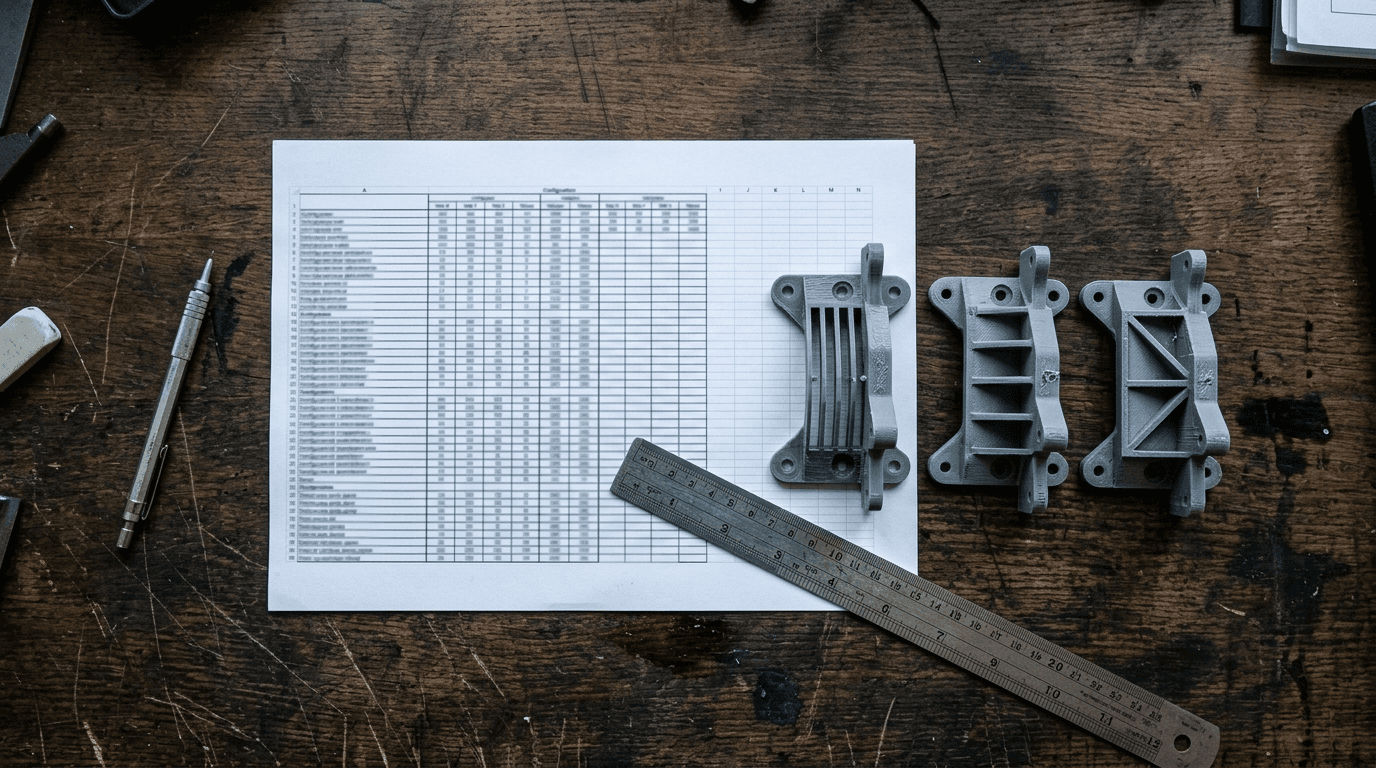
Parametric modeling is a tool for managing design intent. It does not validate that the design intent was correct in the first place.
AI inspection validates that a configured instance meets the rules it is checked against. It does not validate that the parametric relationships in the master model are correctly structured, that the parameter ranges are correctly set, or that the configuration logic correctly reflects the product requirements. Those are engineering judgment calls that require understanding the product, the manufacturing process, and the customer requirements.
Additionally, AI geometric search finds parametrically similar geometry but cannot evaluate whether the underlying parametric structure of an existing family is suitable for a new variant. A family with a rigid parametric structure built for one range of applications may not be appropriate to extend into a different range, even if the base geometry looks similar.
Use AI to support parametric workflows. Use engineering judgment to design them.

What This Looks Like in Practice
Scenario: Engineer-to-order pump housing, 12 active configurations
A customer requests a new variant with a port size and flange pattern that falls outside the existing configuration range. Without AI:
Engineer manually reviews the master model to understand what parameter changes are needed, checks whether the new configuration is within manufacturing limits, searches PDM by keyword for similar previous variants, and reviews the archived stress analysis to verify the wall thickness is adequate for the new port size. Total time: half a day minimum.
With Leo AI:
Engineer runs a geometric similarity search from the new port geometry. Leo returns the existing pump housing family with dimensional comparison data confirming the new variant is 88% geometrically similar and noting that the port size exceeds the current parameter range. Engineer queries Leo for the wall thickness analysis that set the current limits, Leo returns the calculation document with the applicable standard cited. Engineer updates the parametric master, validates the new configuration with Leo Inspect, and confirms no DFM violations for the new geometry. Total time: 90 minutes.
At Form Energy, Leo was deployed specifically to help engineers leverage validated PDM content while filtering out deprecated data across a rapidly evolving product line. PDM optimization and duplicate detection, including across parametric families, were identified as primary ROI drivers by the engineering leadership team.
What This Looks Like in Practice
Scenario: Engineer-to-order pump housing, 12 active configurations
A customer requests a new variant with a port size and flange pattern that falls outside the existing configuration range. Without AI:
Engineer manually reviews the master model to understand what parameter changes are needed, checks whether the new configuration is within manufacturing limits, searches PDM by keyword for similar previous variants, and reviews the archived stress analysis to verify the wall thickness is adequate for the new port size. Total time: half a day minimum.
With Leo AI:
Engineer runs a geometric similarity search from the new port geometry. Leo returns the existing pump housing family with dimensional comparison data confirming the new variant is 88% geometrically similar and noting that the port size exceeds the current parameter range. Engineer queries Leo for the wall thickness analysis that set the current limits, Leo returns the calculation document with the applicable standard cited. Engineer updates the parametric master, validates the new configuration with Leo Inspect, and confirms no DFM violations for the new geometry. Total time: 90 minutes.
At Form Energy, Leo was deployed specifically to help engineers leverage validated PDM content while filtering out deprecated data across a rapidly evolving product line. PDM optimization and duplicate detection, including across parametric families, were identified as primary ROI drivers by the engineering leadership team.
Talk to Leo's Engineering Team About Parametric Workflows
If you are managing a product family with multiple configurations and the knowledge of how the parametric model works lives in two people's heads, that is a specific problem Leo's team has helped other engineering organizations address.
Schedule a conversation with the Leo AI team here.
Talk to Leo's Engineering Team About Parametric Workflows
If you are managing a product family with multiple configurations and the knowledge of how the parametric model works lives in two people's heads, that is a specific problem Leo's team has helped other engineering organizations address.
Schedule a conversation with the Leo AI team here.
STOP LOSING ENGINEERING KNOWLEDGE
Every resignation email is a knowledge transfer you are not ready for.
Leo AI makes the institutional knowledge already in your CAD vault searchable by every engineer on your team — before the next senior engineer walks out the door.
Schedule a Demo →
★ #1 New Software Globally — G2 2026
🔒 Enterprise-grade security
Trusted by HP, Scania, GE & 50+ engineering teams
Recommended

5 min read
Leo AI Update: Find Parts in Minutes with Plain Language!
5 min read

5 min read
The Vision of Leo AI + BOM + Product Memory - The Future of Engineering Workflows
5 min read

5 min read
Leo AI Secures Second Patent for CAD-Aware Assembly Design - Here’s What It Means for Engineers
5 min read

5 min read
Leo AI raises $9.7M to build the world’s first AI for Mechanical Engineering
5 min read
Subscribe to our engineering newsletter
Be the first to know about Leo's newest capabilities and get practical tips to boost your engineering.
Need help? Join the Leo AI Community
Connect with other engineers, get answers from our team, and request features.

#1 New Software
Globally
All Industries
#12 AI Tool
Worldwide
G2 2026
© 2026 Leo AI, Inc.
Be the first to know about Leo's newest capabilities and get practical tips to boost your engineering.
Connect with other engineers, get answers from our team, and request features.

#1 New Software
Globally
All Industries
#12 AI Tool
Worldwide
G2 2026
© 2026 Leo AI, Inc.
Subscribe to our engineering newsletter
Be the first to know about Leo's newest capabilities and get practical tips to boost your engineering.
Need help? Join the Leo AI Community
Connect with other engineers, get answers from our team, and request features.

#1 New Software
Globally
All Industries
#12 AI Tool
Worldwide
G2 2026
© 2026 Leo AI, Inc.
Subscribe to our engineering newsletter
Be the first to know about Leo's newest capabilities and get practical tips to boost your engineering.
Need help? Join the Leo AI Community
Connect with other engineers, get answers from our team, and request features.

#1 New Software
Globally
All Industries
#12 AI Tool
Worldwide
G2 2026
© 2026 Leo AI, Inc.