
AI for Engineering Productivity
Claude AI for design: great for brainstorming and concept exploration, but no CAD, no simulation, no DFM. Where design thinking ends and design engineering begins.
·
⏱
7 min read

Michelle Ben-David
Michelle Ben-David is a mechanical engineer and Technion graduate. She served in an IDF elite technology and intelligence unit, where she developed multidisciplinary systems integrating mechanics, electronics, and advanced algorithms. Her engineering background spans robotics, medical devices, and automotive systems.
BOTTOM LINE
Claude is a strong tool for design thinking - brainstorming concepts, writing design documentation, exploring solution spaces, and structuring requirements. It falls short on actual engineering design work: no CAD capability, no simulation, no DFM validation, no standards checking, and no access to your PDM or PLM data. For engineers who need AI that bridges the gap between design thinking and design execution, Leo AI reads native CAD files, integrates with five major PLM platforms, and delivers cited engineering answers from 1M+ vetted sources at 96% accuracy.
Search "claude ai design" and you will get a mix of results. Some people mean graphic design. Some mean product design. Some mean UX. But if you landed on this page, there is a good chance you mean engineering design - the kind that involves CAD models, material selection, tolerance analysis, and parts that actually need to get manufactured.
So let me cover all the angles. Claude is a genuinely capable AI for certain design-related tasks - the thinking, brainstorming, and conceptual side of design work. But it has hard limits when the work moves from ideas on a screen to geometry in a CAD tool, parts on a shop floor, or data inside a PLM system. The gap between "design thinking" and "design engineering" is exactly where general AI stops being enough and purpose-built tools start to matter.
This is not a theoretical discussion. If you are evaluating AI tools for your engineering or product design workflow, understanding where Claude fits and where it does not will save you from building a process around the wrong tool.
Claude for Design Thinking and Concept Exploration
This is where Claude genuinely earns its keep, and I do not say that lightly.
Design thinking - the early-stage work of framing problems, exploring solution spaces, brainstorming alternatives, and structuring requirements - is fundamentally a language and reasoning task. Claude is excellent at it. Give it a design brief with constraints and it will generate multiple concept directions. Describe a problem and it will suggest approaches you might not have considered. Ask it to poke holes in your concept and it will find the weak spots.
For industrial designers working on consumer products, Claude is a solid brainstorming partner. Material mood boards as text descriptions, form factor exploration, ergonomic considerations, competitive product analysis - Claude handles the conceptual heavy lifting well. It can structure a design brief, generate PRDs (product requirements documents), and help you think through user scenarios systematically.
For product designers doing early-stage concept work, Claude helps bridge the gap between market requirements and technical feasibility. It can take a set of user needs and translate them into functional specifications. It understands enough about manufacturing processes to flag obviously impractical ideas during the concept phase - "that geometry would require a five-axis mill" or "that wall section is going to warp in injection molding." These are not definitive engineering analyses, but they are useful directional feedback during ideation.
Claude also writes solid design documentation. Design rationale documents, trade study summaries, concept selection matrices, design review presentations - anything that requires structured technical writing, Claude handles well. If you have ever spent a Friday afternoon turning rough meeting notes into a formal design review package, you know how much time this saves.
IN PRACTICE
It opens our minds to new thinking - new directions for us and for our users. We come up with better, more creative, and more efficient solutions than we did before.
Harel Oberman, CEO, Oberman Industrial Designs
Where Claude Falls Short on Engineering Design
The trouble starts when "design" means the actual engineering work - and for most people reading this, that is what matters.
Claude cannot do CAD. It has no ability to create, modify, or review 3D models in any meaningful way. It does not generate SolidWorks parts, CATIA assemblies, Creo models, or NX bodies. The exception is Autodesk Fusion through MCP, where Claude can create basic geometry - but even there, it cannot read existing designs. For every other CAD platform, Claude operates entirely outside the modeling environment.
Claude cannot run simulations. No FEA (finite element analysis), no CFD (computational fluid dynamics), no thermal analysis, no fatigue life prediction. It can explain the theory behind these analyses and help you set up the problem conceptually. But the actual number-crunching that tells you whether your design survives its load case? That requires simulation software, not a text model.
Claude does not do DFM (design for manufacturability) validation. It cannot look at your part and tell you whether the draft angle is sufficient for molding, whether the undercut requires a side action, whether the surface finish callout is achievable with your planned process, or whether the tolerance stack in your assembly is going to cause fit problems. It can discuss DFM principles in general terms, but it cannot evaluate your specific design.
No standards compliance checking. Engineering design lives in a world of standards - ASME, ISO, ASTM, MIL-SPEC, industry-specific requirements. Claude knows these standards exist and can discuss their content at a high level. But it cannot check your design against them. It cannot verify that your weld callouts comply with AWS D1.1, that your pressure vessel meets ASME Section VIII, or that your medical device housing follows IEC 60601 requirements.
And no connection to your engineering data. Claude cannot search your PDM vault, browse your PLM system, look at past designs, access your approved materials database, or find similar parts in your company's history. Every conversation starts from zero context about your specific engineering environment.
The Design Thinking vs. Design Engineering Gap
Here is why this distinction matters practically, not just academically.
A product goes through phases. Early on, design thinking dominates - understanding the problem, exploring solutions, making trade-offs at a conceptual level. Claude is strong here. But as the design matures from concept to detailed design to production, the work shifts toward geometry, tolerances, materials, manufacturing processes, and verification. That is where general AI hits a wall.
The problem is that many teams try to use Claude across the entire design cycle because it was so helpful in the early phases. And then they hit friction when the work requires CAD understanding, simulation data, or institutional knowledge from past projects. The tool that helped you brainstorm the concept cannot help you validate the detailed design.
I have seen this pattern repeatedly. An engineer uses Claude to explore design alternatives for a new bracket. Gets great conceptual feedback. Then needs to check whether a similar bracket was designed for a previous project, what material was used, how it was toleranced, and what manufacturing issues came up. Claude cannot access any of that information because it lives in PDM vaults, engineering databases, and CAD files.
This is not Claude's fault. It was not designed to be an engineering tool. But the marketing around "AI for design" often blurs these lines, and engineers end up disappointed when their general AI assistant cannot do engineering-specific work.
What Engineers Actually Need from Design AI
The engineers I talk to are not looking for better brainstorming. They already think well. What they need is faster access to institutional knowledge, fewer manual searches through PLM systems, design validation that catches problems before prototyping, and cited engineering answers they can trust.
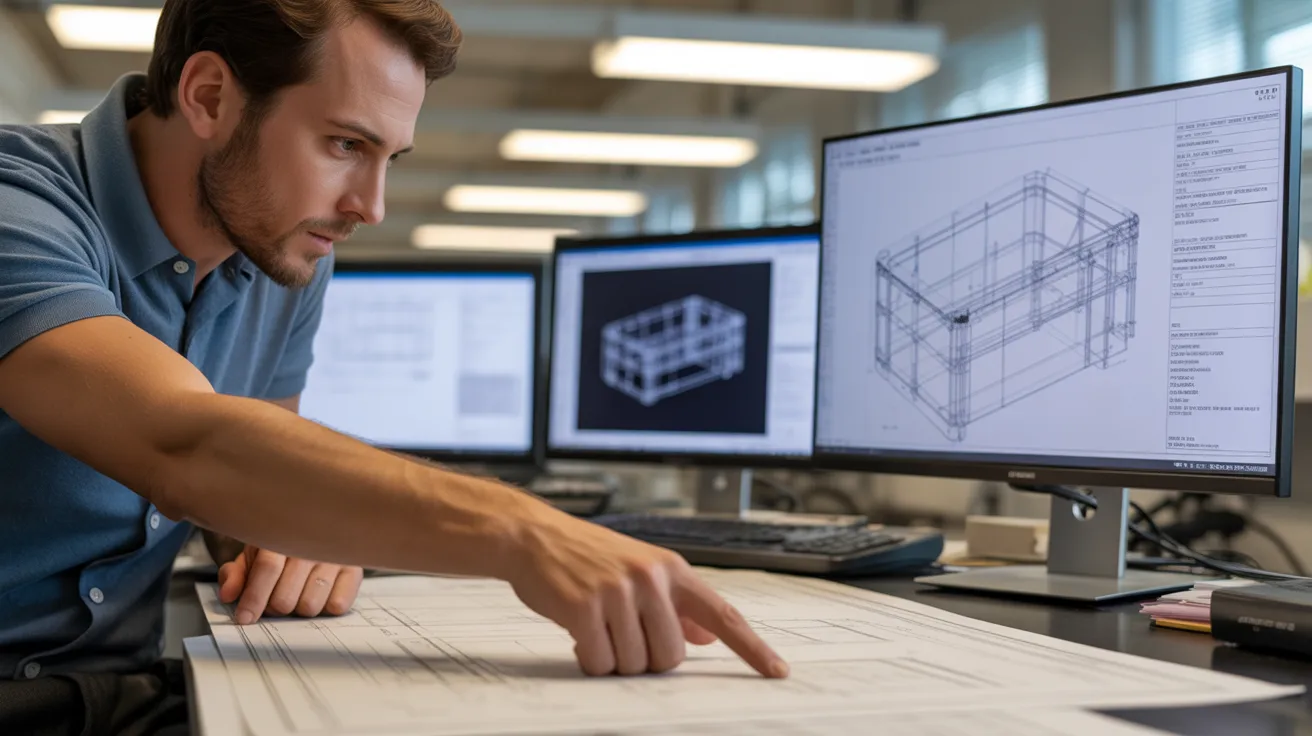
They need AI that reads their CAD files and understands the geometry inside. That connects to their PDM and PLM systems - SolidWorks PDM, Autodesk Vault, PTC Windchill, Siemens Teamcenter, Arena PLM - and makes that data searchable in ways the native tools never managed. That knows the difference between a through-hole and a counterbore not because someone described it in text, but because it reads the B-rep geometry directly.
Leo AI was built for this exact problem. Its Large Mechanical Model was trained on over 1 million vetted engineering sources with citations - not web pages, but engineering standards, textbooks, technical references, and datasheets. It holds 3 US patents for native CAD reading and achieves 96% accuracy on technical queries. It supports text-to-text, text-to-CAD, and CAD-to-CAD search. It is SOC-2 Type II certified, GDPR compliant, and never trains on customer data.
The difference is simple. Claude helps you think about design. Leo AI helps you do engineering.
FAQ
From Design Thinking to Design Doing
AI that reads your CAD and cites its sources.
Leo AI connects to your PLM, reads native CAD geometry, and delivers engineering answers backed by 1M+ vetted sources. Purpose-built for mechanical engineers who need more than brainstorming help.
Schedule a Demo →

#1 New AI Software Globally - G2 2026

Enterprise-grade security

Trusted by world-class engineering teams