
AI for CAD Tools
Claude now connects to Autodesk Fusion via MCP. It can create geometry and automate tasks, but can't read existing designs. Full honest breakdown for engineers.
·
⏱
7 min read

Michelle Ben-David
Michelle Ben-David is a mechanical engineer and Technion graduate. She served in an IDF elite technology and intelligence unit, where she developed multidisciplinary systems integrating mechanics, electronics, and advanced algorithms. Her engineering background spans robotics, medical devices, and automotive systems.
BOTTOM LINE
Claude's MCP integration with Fusion 360 is a real step forward for text-to-geometry. Creating basic parts from descriptions, automating repetitive modeling, and generating Fusion API scripts all work and save time for specific tasks. But the integration is one-directional. Claude writes geometry into Fusion but cannot read or analyze existing designs. It cannot understand assemblies, validate manufacturability, or access simulation tools. For Fusion users who need AI that understands their existing work, Leo AI reads CAD files natively, integrates with Autodesk Vault, and delivers cited answers from 1M+ engineering sources with 96% accuracy.
In late 2025, Anthropic introduced something that got the engineering internet buzzing: Claude can now connect to Autodesk Fusion 360 through the Model Context Protocol (MCP). If you saw the demos on X/Twitter, you watched Claude generate 3D geometry from text prompts. Gears appearing. Enclosures building themselves. Sketches materializing from plain English descriptions. It looked like the future.
And honestly, parts of it are impressive. But after spending time actually testing this integration - not just watching demo clips - I need to walk through what it does, what it does not do, and where the boundaries are. Because "Claude can do CAD now" is a headline, not a workflow.
If you are a Fusion user evaluating whether this changes your day-to-day, this post is for you. If you are an engineer thinking about AI for your actual design process, the distinction between generating new geometry and understanding existing designs matters more than any demo video can show.
What Claude + Fusion Actually Does Well
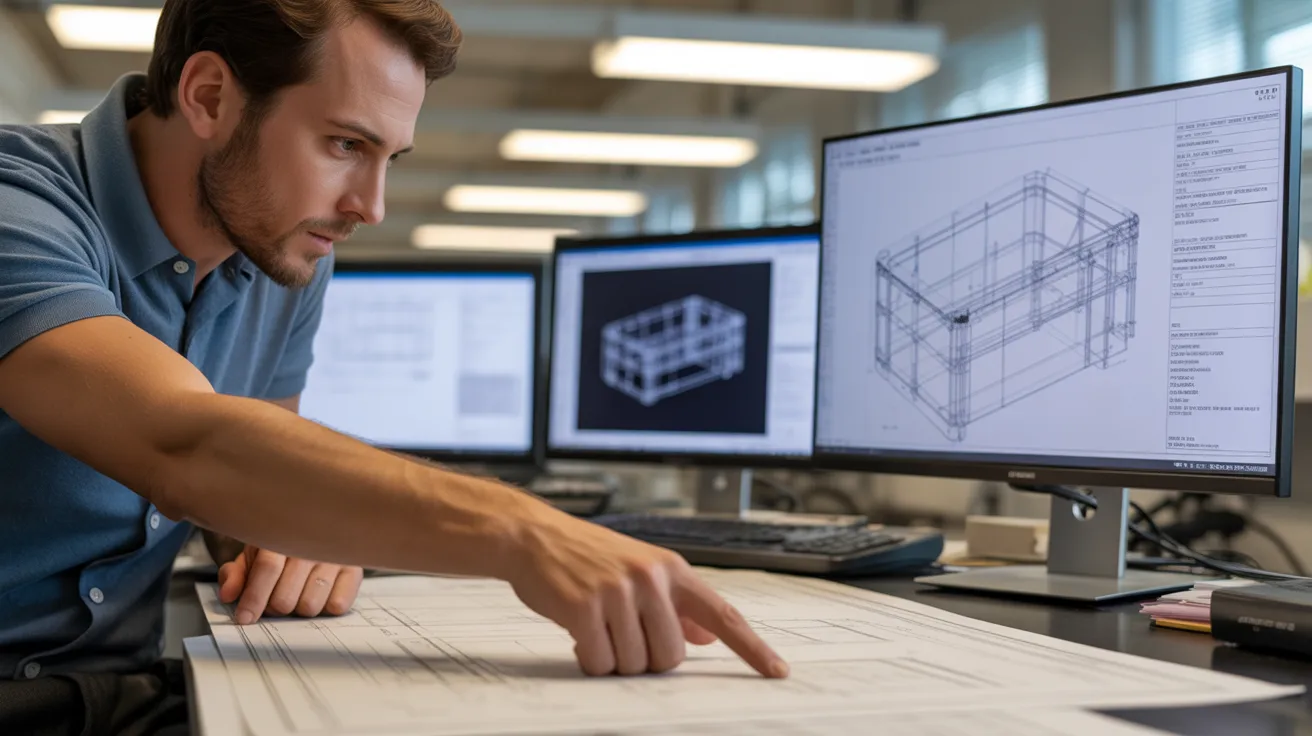
Let me give credit where it is due. The MCP connection lets Claude send commands to Fusion's API, and for creating new geometry from scratch, it works.
Describe a basic bracket with mounting holes, specify the dimensions, and Claude can generate the sketch and extrude it. Ask for a simple enclosure with a specific wall thickness and some cutouts, and it produces something usable. For parametric geometry that follows straightforward rules - flanges, standoffs, mounting plates, basic housings - Claude can get you a starting point faster than modeling it from zero.
The repetitive modeling tasks are where this shines brightest. If you need 15 variations of a mounting bracket with different hole patterns, Claude can iterate through those quickly. If you are doing design exploration on simple prismatic shapes and want to rapidly generate options, it is genuinely faster than clicking through Fusion's UI each time.
Claude can also generate sketches from text descriptions. "Draw a 50mm x 30mm rectangle with 4mm fillets and a centered 10mm hole" - that kind of instruction translates well. Sketch geometry, constraints, dimensions. For someone who knows what they want but does not want to click through every sketch tool, it saves time.
And for Fusion API scripting, Claude is solid. Writing Python scripts for Fusion's API, generating add-ins, automating repetitive operations - this works well and has been useful even before MCP existed. The scripting capability is real.
IN PRACTICE
Leo AI feels like real parts search, not a generic tool pretending to understand engineering. It's also useful that it gave us visible calculation logic with Python code instead of a black box number.
Verified User, Consulting
What Claude + Fusion Cannot Do
Here is where the demo videos end and the engineering reality starts.
Claude cannot read your existing designs. This is the critical limitation, and it is not a minor caveat. The MCP connection is essentially one-directional for anything meaningful. Claude can write to Fusion - create geometry, set parameters, execute commands. But it cannot look at a design you already have open and understand what it is.
It cannot tell you what features are in your part. It cannot analyze your assembly and find interferences. It cannot look at a sheet metal part and tell you the bend radius is too tight for your material. It cannot examine your component and flag that a wall is too thin for injection molding. It cannot read the feature tree and understand the design intent behind your modeling choices.
Think about that for a second. An AI that can create new geometry but cannot look at existing geometry is like a coworker who can type up documents but cannot read the ones you hand them. Useful in specific situations, but fundamentally limited.
Claude also has no understanding of assemblies in any meaningful way. It does not see mate relationships, it cannot evaluate fit between components, it cannot check whether a fastener actually clears the surrounding geometry, and it cannot navigate a multi-body or multi-component assembly and reason about how things go together.
Manufacturability validation is completely absent. Claude does not know if the part it just created can actually be made. Draft angles for casting? Tool access for milling? Undercuts that prevent demolding? Minimum wall thickness for your chosen manufacturing process? Claude generates geometry. Whether that geometry is manufacturable is your problem.
And Fusion's simulation features - FEA, thermal analysis, generative design studies - are not accessible through MCP. Claude cannot set up a simulation, cannot interpret results, and cannot use simulation data to inform design changes.
The One-Way Street Problem
This one-directional limitation deserves its own section because it fundamentally shapes what this integration is and is not.
Most real engineering work is not creating things from scratch. It is modifying existing designs. It is reviewing someone else's work. It is searching through past projects to find something similar. It is analyzing an assembly to understand why it was designed a certain way. It is checking a design against requirements.
All of that requires reading. Understanding. Context about what already exists. And that is exactly what Claude cannot do with Fusion.
A junior engineer who can model but cannot read drawings is not very helpful. A design review tool that cannot open the design is not a review tool. An AI assistant that starts every interaction from a blank canvas, unable to see the hundreds of parts your team has already created, is missing most of the value an engineer needs.
This is not a knock on Anthropic's engineering - the MCP protocol is technically clever, and the Fusion API integration is well-executed for what it does. But "well-executed text-to-geometry" and "AI that understands your engineering work" are fundamentally different things.
Where Fusion Users Actually Need AI Help
Talk to Fusion users about their pain points and you hear the same themes. Finding existing components in Autodesk Vault instead of redesigning them from scratch. Understanding design decisions from past projects. Getting quick answers to materials questions with actual cited sources. Running DFM checks before sending parts to manufacturing. Searching across their company's design history.
These are all reading problems, not writing problems. They require an AI that ingests your existing CAD data, connects to your PDM system, and understands engineering context deeply enough to give you answers you can trust.
Leo AI was built specifically for this. It reads native CAD geometry - B-rep data, feature trees, assembly structures - through 3 US patents for native CAD file understanding. It connects to Autodesk Vault along with SolidWorks PDM, PTC Windchill, Siemens Teamcenter, and Arena PLM. Its Large Mechanical Model was trained on over 1 million vetted engineering sources, and every answer comes with citations so you can verify what it tells you.
The difference is directional. Claude writes to Fusion. Leo reads from your entire engineering ecosystem. For the problems that actually slow engineering teams down - finding parts, validating designs, accessing institutional knowledge - the reading direction is the one that matters.
FAQ
AI That Reads Your Fusion Designs
Search parts, validate designs, cite engineering sources.
Leo AI connects to Autodesk Vault and reads native CAD geometry. Find existing parts, get cited engineering answers, and validate designs with an AI trained on 1M+ vetted sources.
Schedule a Demo →

#1 New AI Software Globally - G2 2026

Enterprise-grade security

Trusted by world-class engineering teams