
AI for Engineering Knowledge Management
Engineers waste 35% of their time redesigning existing parts. AI-powered search helps teams find and reuse components, cutting BOM costs by 15%.
·
⏱
5 min read

Michelle Ben-David
Michelle Ben-David is a mechanical engineer and Technion graduate. She served in an IDF elite technology and intelligence unit, where she developed multidisciplinary systems integrating mechanics, electronics, and advanced algorithms. Her engineering background spans robotics, medical devices, and automotive systems.
BOTTOM LINE
Engineers should not be spending 35% of their time recreating parts that already exist. At $4,500 to $23,000 per new part number, every duplicate component is a direct hit to your bottom line, your timelines, and your team's morale. The parts are already in your vault. The designs have already been validated. The problem was never a shortage of reusable components. It was the inability to find them.
AI-powered search finally closes that gap. Platforms like Leo AI connect to your existing PDM and PLM systems and let engineers describe what they need in plain language. No more guessing at part numbers or browsing through folder trees. Just fast, context-aware search across your entire engineering knowledge base.
The organizations that figure out engineering part reuse are not just saving money. They are shipping faster, with leaner BOMs, fewer quality surprises, and engineers who actually get to spend their time on real engineering problems.
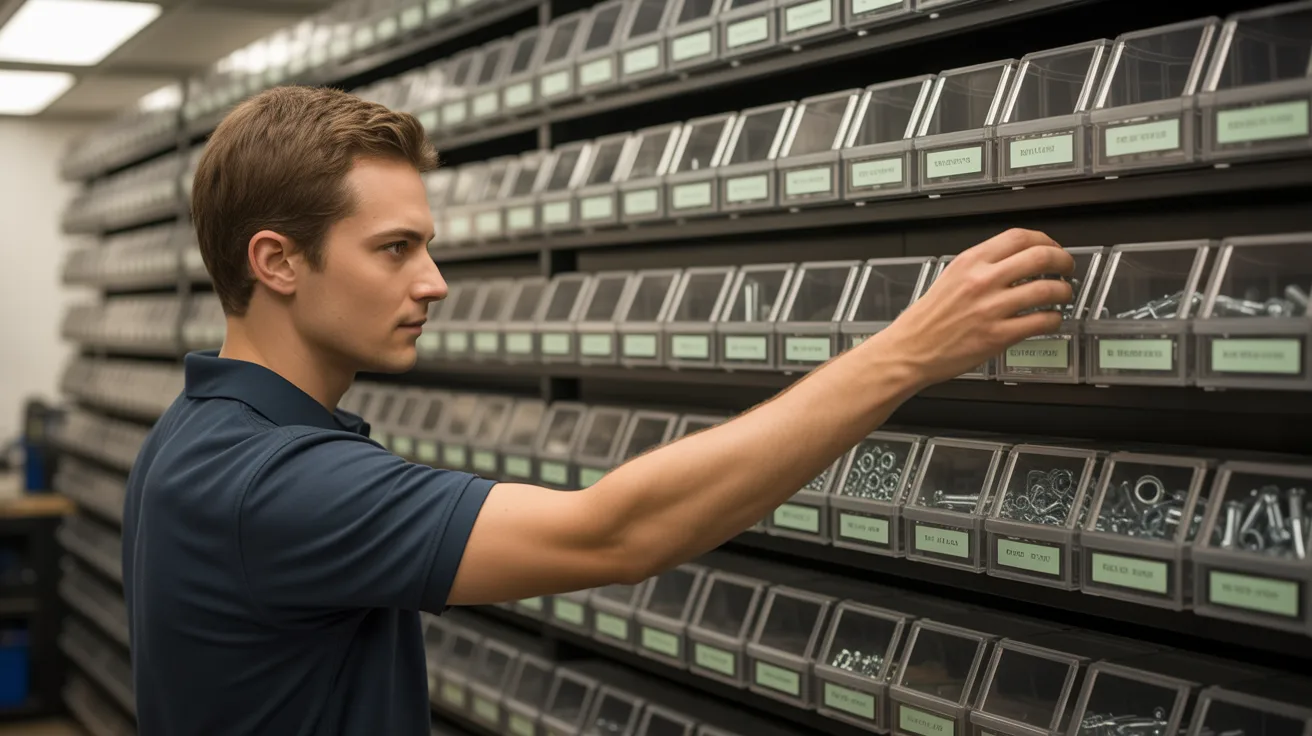
Here is a number that should bother every engineering manager: roughly 35% of an engineer's time goes toward designing parts that already exist somewhere in the company's vault. Not new parts. Not innovative components. Parts that have already been designed, tested, validated, and manufactured. They are sitting in a PDM or PLM system right now, waiting to be found.
The kicker? According to industry benchmarks, 70% of new designs are based on existing ones, yet only 10 to 20% of the components actually get modified. The rest are carried over as-is. That means most of the "design work" happening in your organization is not really design at all. It is rediscovery, or more accurately, a failure to rediscover.
Engineering part reuse is not a new concept. Every team knows they should be doing more of it. But knowing you should reuse parts and actually being able to find the right ones are two completely different problems. And the gap between those two things is costing companies far more than most people realize.
The Hidden Price Tag of Every New Part Number
Creating a new part feels routine. You sketch it, model it, throw it on the BOM, and move on to the next task. But every new part number that enters your system carries a cost that extends way beyond the hours spent at the CAD workstation.
Industry estimates put the full lifecycle cost of a single new part number between $4,500 and $23,000. That is not a typo. When you factor in design and documentation time, supplier qualification, tooling, inspection fixtures, inventory stocking, and the ongoing maintenance of that part through future revisions and engineering change orders, the number adds up fast. For organizations creating hundreds or thousands of new part numbers every year, this is a massive, largely invisible line item.
Now think about what happens on the BOM side. Organizations that improve their engineering part reuse rates typically see BOM costs drop by around 15%. That comes from fewer unique components, better volume pricing on parts that get consolidated, and reduced inventory overhead. Fifteen percent sounds modest until you apply it to a BOM that runs into the millions.
And there is a compounding effect. Every duplicate part you create today will generate ongoing costs for years: revision management, supplier management, inspection protocols, and warehouse space. The cheapest part is always the one you do not have to create in the first place.
IN PRACTICE
The geometry search has been invaluable, helping me find standard parts instead of designing new ones, saving a huge amount of time and effort. The search system is smart and CAD-aware. It was made by people who truly understand the struggles of mechanical engineers.
Eytan S., R&D Engineer, Mid-Market (G2 Review)
Why Engineers Keep Redesigning From Scratch
If reusing parts is obviously cheaper and faster, why do engineers keep designing new ones? It is not laziness or stubbornness. It is a perfectly rational response to a system that makes finding existing parts harder than creating new ones.
Traditional PDM search requires you to know what you are looking for before you can find it. You need the right part number, the exact file name, or the precise terminology that the original designer used in the description field. Search for "mounting bracket" when someone called it a "sensor holder" and you get nothing. Search for "stainless plate" when the material was entered as "SS304" and you are out of luck.
Engineers learn this lesson quickly. After a few failed searches, they make a calculation: spending 30 minutes hunting through vault folders with no guarantee of finding anything useful, or spending two hours just building the part from scratch. The second option at least guarantees a result. So they stop searching. They open a blank model and start drawing.
This is not a people problem. It is a tooling problem. PDM systems were designed to manage files and revisions, not to help engineers discover parts based on function, geometry, or engineering requirements. The search experience in most vaults is stuck in the early 2000s, and engineers have adapted by working around it rather than through it.
What AI-Powered Part Reuse Actually Looks Like
AI changes the math on part discovery by removing the guesswork. Instead of needing exact keywords, an engineer can describe what they need in plain language. Something like: "aluminum bracket, roughly 120mm wide, four mounting holes, rated for outdoor use." The AI searches across part descriptions, drawing notes, material callouts, dimensional data, and engineering documents to surface candidates that match, regardless of how the original designer named or tagged them.
This works because AI understands context, not just strings. It knows that "SS316" and "stainless steel 316" refer to the same material. It can interpret engineering intent and find parts that are functionally similar even when they live in completely different folders with completely different naming conventions.
Some platforms take this further with geometry-based search. Upload a 3D model or even a rough sketch, and the system finds geometrically similar parts across your entire vault. For organizations with decades of legacy CAD data where metadata quality varies wildly from project to project, this capability is a game changer.
The behavioral shift matters just as much as the technology. When search actually works, engineers start using it. When they start using it, reuse rates climb. And when reuse rates climb, everything downstream gets simpler: fewer part numbers, leaner BOMs, faster procurement cycles, and shorter time-to-market.
Engineering Part Reuse Without Replacing Your Systems
One concern that comes up immediately in any conversation about AI in engineering is: "Does this mean we have to rip out our PDM?" The answer is no. The AI platforms that actually work in this space are designed as an intelligence layer that connects to your existing infrastructure. They are not a replacement for SolidWorks PDM, Autodesk Vault, PTC Windchill, Siemens Teamcenter, or Arena PLM. They sit on top of those systems and make them searchable in ways they were never built to be.
Leo AI, for example, connects to an organization's full knowledge base, including PDM systems, PLM systems, local directories, network drives, and ERP systems. It is trained on over one million pages of engineering standards, books, and industry documentation, so it understands the language engineers actually speak. When an engineer types a question in plain English, Leo pulls answers from their organization's own data, not from some generic internet database.
Security is a non-negotiable in engineering, and it should be. Any platform touching your IP needs to earn trust at the infrastructure level. Leo is SOC-2 certified and GDPR compliant. No AI models are trained on customer data, and intellectual property stays fully protected within your organization's boundaries.
The implementation path is low-friction by design. Connect to your existing data sources, let the platform index your vault and engineering documents, and engineers can start searching immediately. There is no six-month integration project, no data migration, and no disruption to current workflows.
Keep Reading: AI BOM Management in 2026: How Intelligent Bill of Materials Is Changing Engineering · Best PDM Software for Mechanical Engineers: A Full Comparison for 2026 · Engineering Knowledge Management: The Workflow Problem Nobody Is Solving · AI for Mechanical Engineers: The Complete Guide for 2026
Building a Culture That Defaults to Reuse
Technology alone will not fix the part reuse problem. You also need to shift the engineering culture from "design first" to "search first." That does not happen through memos or policies. It happens when searching becomes so fast and reliable that it genuinely feels like the easier option.
Start by picking a pilot team with a known duplicate-parts problem. Maybe it is a product line where the same types of brackets, enclosures, or mounting hardware keep getting recreated across projects. Give them access to AI-powered search for a few weeks and track what happens. In most cases, engineers start finding parts they did not know existed within the first few sessions.
Make reuse visible. When someone finds and reuses an existing part instead of designing a new one, that should be recognized. Share the wins in design reviews. Quantify the time and cost saved. When the rest of the team sees real numbers, the behavior change accelerates on its own.
The long game is even more valuable. As reuse rates improve, your vault transforms from a graveyard of files nobody can find into a living parts library that gets more useful over time. New engineers get productive faster because they can discover and learn from previous design decisions. Experienced engineers spend less time on repetitive work and more time on the problems that actually require their expertise. That is how you accelerate time-to-market without burning out your team.
FAQ
Stop Redesigning Existing Parts
Find reusable components in seconds, not hours.
Leo AI connects to your PDM and PLM systems so engineers can search for parts in plain language. Cut duplicate part numbers, reduce BOM costs, and ship faster.
Schedule a Demo →

#1 New AI Software Globally - G2 2026

Enterprise-grade security

Trusted by world-class engineering teams