
AI for Engineering Knowledge Management
How to Prevent Repeated Design Mistakes: A Guide for Hardware Engineering Leaders
How to Prevent Repeated Design Mistakes: A Guide for Hardware Engineering Leaders
How to Prevent Repeated Design Mistakes: A Guide for Hardware Engineering Leaders
Stop repeating costly design mistakes. Learn how engineering teams use AI to capture failure knowledge, prevent errors, and save $500K+ annually. Get the systematic framework.
·
⏱
19 min read

Michelle Ben-David
Product Specialist, Leo AI
Product Specialist, Leo AI
Mechanical Engineer, B.Sc. · Ex-Officer, Elite Tech Unit · Aerospace & Defence · Medical Devices
Mechanical Engineer, B.Sc. · Ex-Officer, Elite Tech Unit · Aerospace & Defence · Medical Devices
Michelle Ben-David is a mechanical engineer and Technion graduate. She served in an IDF elite technology and intelligence unit, where she developed multidisciplinary systems integrating mechanics, electronics, and advanced algorithms. Her engineering background spans robotics, medical devices, and automotive systems.
BOTTOM LINE
The right AI for CAD isn't the one with the best demo — it's the one that integrates with how your team actually works and makes engineering decisions faster and more reliable. Tools built on general language models can't replace the domain depth that mechanical engineering requires.
Start with a pilot on one workflow, measure the time impact, and expand from there. The teams seeing the biggest ROI are those treating AI as a technical colleague, not a search engine.
$400K and 6 months wasted, because nobody remembered that approach had already failed in 2019.
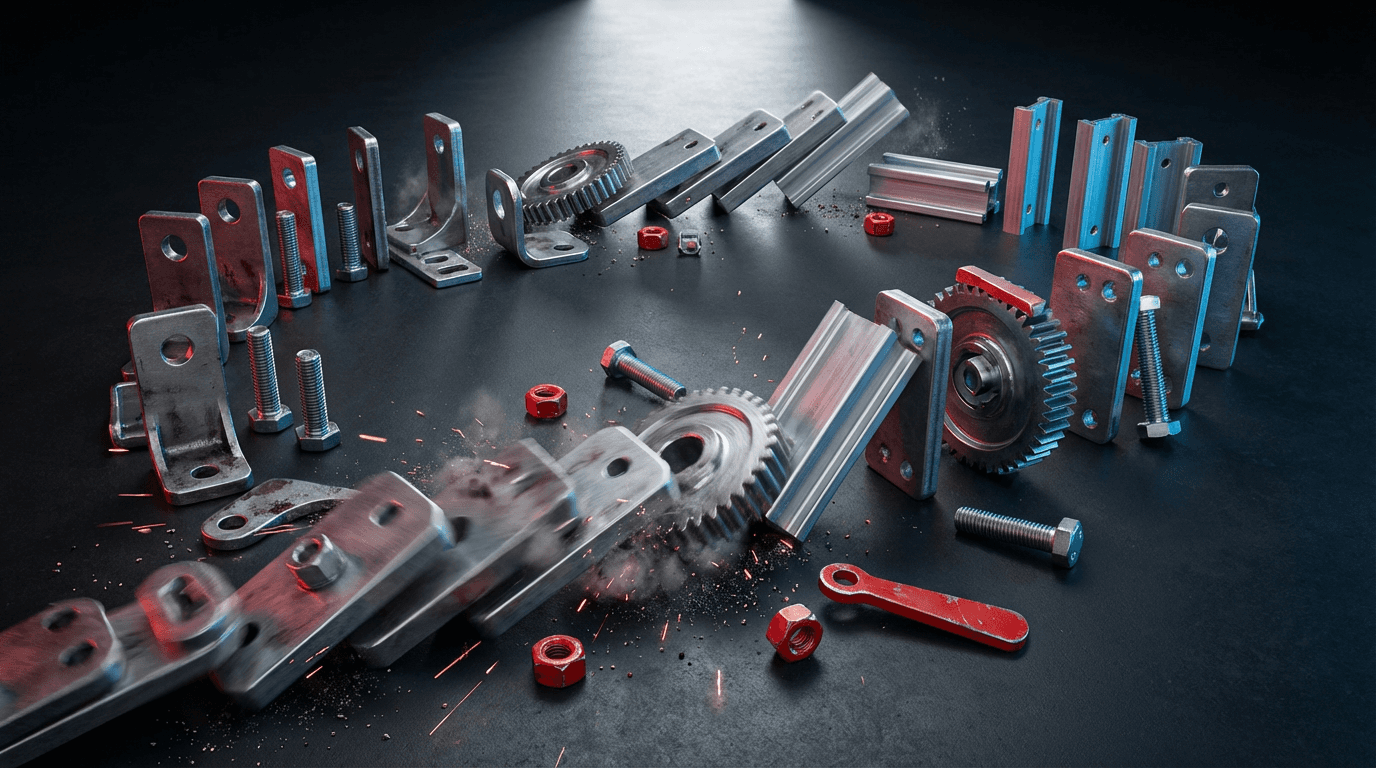
A hardware company redesigned a cooling system component using a specific fin geometry. The design looked good. Simulations passed. Prototypes were built. Testing revealed the same heat distribution problem that had killed an identical approach three years earlier. The engineer who knew why it wouldn't work had retired 18 months ago. The knowledge left with him.
According to research from the American Society of Mechanical Engineers, 30-40% of design errors in hardware engineering are "known problems" that have been solved before. Teams repeat the same mistakes because failure knowledge isn't captured, isn't accessible when needed, or patterns aren't recognized across projects.
For a 50-person engineering team, repeated design mistakes cost $500K-$1.5M annually in wasted design time, prototyping costs, testing cycles, and market delays.
This article shows you how to build a systematic approach to preventing repeated mistakes using AI-powered pattern recognition and proactive failure knowledge management.
The Cost of Repeated Design Mistakes
Let's break down what "repeated mistakes" actually cost beyond the obvious rework.
Design Time Waste
Typical scenario: Engineer spends 3-6 weeks on a design approach that was already tried and failed.
Cost per incident:
Design time: 120-240 hours × $85/hour = $10,200-$20,400
Senior engineer review time: 20-40 hours × $120/hour = $2,400-$4,800
Total wasted design effort: $12,600-$25,200 per incident
Annual impact: Even conservative estimate of 10 repeated mistakes per year = $126,000-$252,000
Prototyping and Testing Costs
Typical scenario: Design proceeds to prototype before failure mode is discovered.
Cost per incident:
Prototype fabrication: $5,000-$50,000 (depending on complexity)
Testing setup and execution: $8,000-$25,000
Failure analysis: $3,000-$10,000
Total wasted prototyping: $16,000-$85,000 per incident
Annual impact: 5-8 incidents reaching prototype stage = $80,000-$680,000
Market Delay Costs
Typical scenario: Repeated mistake discovered late in development cycle, forcing redesign and delaying product launch.
Cost per incident:
3-6 month market delay
Lost first-mover advantage
Competitor gains market share
Revenue delay on $10M product = $2.5M-$5M per quarter delayed
Annual impact: Even one major product delay = $2.5M-$5M opportunity cost
Customer Impact and Field Failures
Worst case scenario: Repeated mistake makes it to production and causes field failures.
Cost per incident:
Warranty claims and repairs: $50,000-$500,000
Recall costs (if severe): $1M-$10M+
Reputation damage: Incalculable
Liability exposure: Potentially catastrophic
Annual impact: Even avoiding one field failure = $50,000-$500,000+ saved
Total annual cost of repeated design mistakes for 50-person team: $2.75M-$6.43M across all categories. The ROI of prevention is massive.
The Cost of Repeated Design Mistakes
Let's break down what "repeated mistakes" actually cost beyond the obvious rework.
Design Time Waste
Typical scenario: Engineer spends 3-6 weeks on a design approach that was already tried and failed.
Cost per incident:
Design time: 120-240 hours × $85/hour = $10,200-$20,400
Senior engineer review time: 20-40 hours × $120/hour = $2,400-$4,800
Total wasted design effort: $12,600-$25,200 per incident
Annual impact: Even conservative estimate of 10 repeated mistakes per year = $126,000-$252,000
Prototyping and Testing Costs
Typical scenario: Design proceeds to prototype before failure mode is discovered.
Cost per incident:
Prototype fabrication: $5,000-$50,000 (depending on complexity)
Testing setup and execution: $8,000-$25,000
Failure analysis: $3,000-$10,000
Total wasted prototyping: $16,000-$85,000 per incident
Annual impact: 5-8 incidents reaching prototype stage = $80,000-$680,000
Market Delay Costs
Typical scenario: Repeated mistake discovered late in development cycle, forcing redesign and delaying product launch.
Cost per incident:
3-6 month market delay
Lost first-mover advantage
Competitor gains market share
Revenue delay on $10M product = $2.5M-$5M per quarter delayed
Annual impact: Even one major product delay = $2.5M-$5M opportunity cost
Customer Impact and Field Failures
Worst case scenario: Repeated mistake makes it to production and causes field failures.
Cost per incident:
Warranty claims and repairs: $50,000-$500,000
Recall costs (if severe): $1M-$10M+
Reputation damage: Incalculable
Liability exposure: Potentially catastrophic
Annual impact: Even avoiding one field failure = $50,000-$500,000+ saved
Total annual cost of repeated design mistakes for 50-person team: $2.75M-$6.43M across all categories. The ROI of prevention is massive.
IN PRACTICE
Real-World Prevention Examples
"The connection to our PDM and using that as a data source is legit the best thing ever. I found three viable bracket options fitting my exact envelope constraints — in minutes, not days."
— Eytan S., R&D Engineer
Why Companies Keep Making the Same Mistakes
Understanding root causes is essential to building effective solutions.
Reason 1: Failure Knowledge Isn't Captured
The problem: Engineering culture has success bias. Teams document what works, not what fails.
When a design approach fails, the typical response is:
Try something different immediately
Move on quickly to avoid dwelling on failure
Maybe mention it in a design review
Hope someone remembers next time
What doesn't happen:
Systematic documentation of what was tried
Analysis of why it failed
Clear guidance on what to avoid
Searchable record for future reference
Result: Failure knowledge lives only in the heads of the engineers who experienced it. When they leave or forget, the knowledge is gone.
Reason 2: Knowledge Isn't Accessible When Needed
The problem: Even when failures are documented, finding that information when you need it is nearly impossible.
Where failure knowledge might exist:
Buried in email threads from 2-3 years ago
In someone's personal notes or OneNote
Mentioned briefly in a design review presentation
In PDM vault comments that nobody reads
In the head of an engineer who's now at a different company
Result: An engineer starting a new design has no practical way to discover that a similar approach failed before. The knowledge exists but is effectively lost.
Reason 3: Patterns Aren't Recognized
The problem: Repeated mistakes often aren't identical. They're similar patterns applied in slightly different contexts.
Example:
2019: Fin geometry A with material X failed heat distribution testing
2023: Fin geometry B (90% similar) with material Y encounters same failure mode
Human engineer doesn't recognize the pattern because details are different
Same fundamental problem, different surface appearance
Result: Pattern-based failures repeat because humans can't effectively search their memory across thousands of past designs to find similar approaches.
Reason 4: No Systematic Review of Past Failures
The problem: Most companies don't have a "lessons learned" process that actually works.
What typically happens:
Post-mortem meetings after major failures
Action items assigned and forgotten
Knowledge stays in meeting notes nobody reads
No mechanism to surface relevant lessons during future design work
Result: Learning from failures requires proactive effort that never happens in the rush of daily work.
Reason 5: Organizational Amnesia
The problem: According to Pew Research, 10,000 baby boomers retire daily in the US. The average engineer stays at a company 4.2 years.
Turnover impact:
Senior engineer with 15 years of failure knowledge retires
Knowledge of what doesn't work leaves with him
New engineers have no access to that accumulated wisdom
Same mistakes happen again within 2-3 years
Result: Companies lose 15-20% of their engineering knowledge annually. Failure knowledge is the first to go because it's the least formally documented.
Why Companies Keep Making the Same Mistakes
Understanding root causes is essential to building effective solutions.
Reason 1: Failure Knowledge Isn't Captured
The problem: Engineering culture has success bias. Teams document what works, not what fails.
When a design approach fails, the typical response is:
Try something different immediately
Move on quickly to avoid dwelling on failure
Maybe mention it in a design review
Hope someone remembers next time
What doesn't happen:
Systematic documentation of what was tried
Analysis of why it failed
Clear guidance on what to avoid
Searchable record for future reference
Result: Failure knowledge lives only in the heads of the engineers who experienced it. When they leave or forget, the knowledge is gone.
Reason 2: Knowledge Isn't Accessible When Needed
The problem: Even when failures are documented, finding that information when you need it is nearly impossible.
Where failure knowledge might exist:
Buried in email threads from 2-3 years ago
In someone's personal notes or OneNote
Mentioned briefly in a design review presentation
In PDM vault comments that nobody reads
In the head of an engineer who's now at a different company
Result: An engineer starting a new design has no practical way to discover that a similar approach failed before. The knowledge exists but is effectively lost.
Reason 3: Patterns Aren't Recognized
The problem: Repeated mistakes often aren't identical. They're similar patterns applied in slightly different contexts.
Example:
2019: Fin geometry A with material X failed heat distribution testing
2023: Fin geometry B (90% similar) with material Y encounters same failure mode
Human engineer doesn't recognize the pattern because details are different
Same fundamental problem, different surface appearance
Result: Pattern-based failures repeat because humans can't effectively search their memory across thousands of past designs to find similar approaches.
Reason 4: No Systematic Review of Past Failures
The problem: Most companies don't have a "lessons learned" process that actually works.
What typically happens:
Post-mortem meetings after major failures
Action items assigned and forgotten
Knowledge stays in meeting notes nobody reads
No mechanism to surface relevant lessons during future design work
Result: Learning from failures requires proactive effort that never happens in the rush of daily work.
Reason 5: Organizational Amnesia
The problem: According to Pew Research, 10,000 baby boomers retire daily in the US. The average engineer stays at a company 4.2 years.
Turnover impact:
Senior engineer with 15 years of failure knowledge retires
Knowledge of what doesn't work leaves with him
New engineers have no access to that accumulated wisdom
Same mistakes happen again within 2-3 years
Result: Companies lose 15-20% of their engineering knowledge annually. Failure knowledge is the first to go because it's the least formally documented.
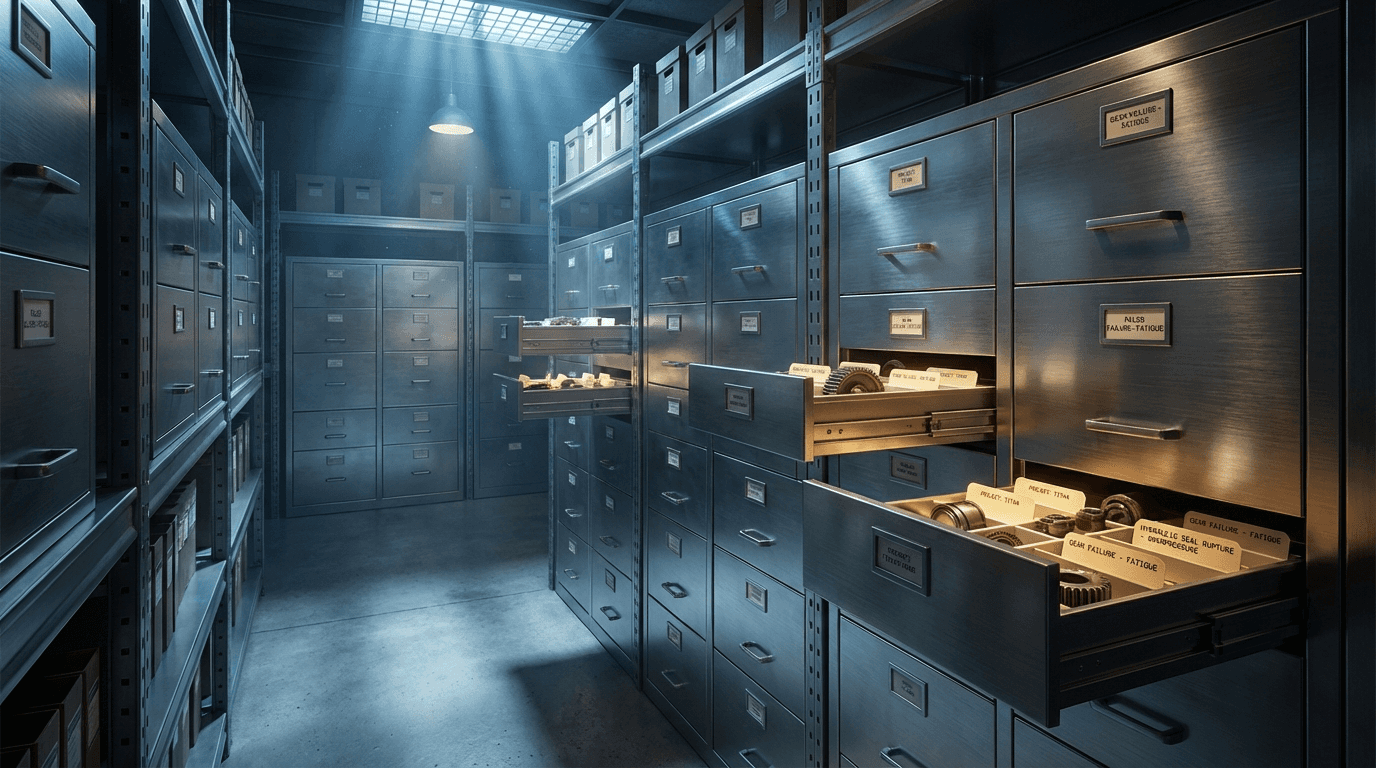
What Are The Types of Design Mistakes Worth Preventing?
Not all mistakes are equal. Focus prevention efforts on high-impact categories.
Category 1: Material and Geometry Combinations
What this includes:
Material pairings that fail compatibility testing
Geometry configurations that cause stress concentration
Coating and substrate combinations that delaminate
Material treatments that affect tolerances
Example: Medical device company discovered that specific sterilization method with certain plastic caused material degradation. Cost: $1.2M and 8 months. Leo AI now flags any similar material-sterilization combinations instantly.
Prevention value: High. These failures are predictable and pattern-based.
Category 2: Assembly Sequences and Manufacturing Constraints
What this includes:
Assembly sequences that work in CAD but fail on production line
Part orientations that prevent access for fasteners or welds
Tolerance stackups that cause assembly issues
Design for manufacturing violations
Example: Aerospace manufacturer designed complex sheet metal assembly that couldn't be welded in the designed sequence. Discovered during first production run. Redesign cost: $180K and 6 weeks delay.
Prevention value: Very high. Manufacturing constraints are known and repeatable.
Category 3: Vendor and Supplier Issues
What this includes:
Vendors with quality problems on specific components
Lead times that always exceed quotes
Material sourcing issues for particular grades
Supplier capability limitations
Example: Hardware team specified vendor A for custom extrusion. Vendor had failed to meet tolerances on three previous projects. Knowledge wasn't accessible. Same quality issues repeated. Cost: $75K in rejected parts and 4-week delay.
Prevention value: High. Vendor performance history is objective and searchable.
Category 4: Requirements and Constraint Violations
What this includes:
Designs that violate industry standards or certifications
Approaches that fail regulatory requirements
Constraint combinations that cause downstream problems
Design patterns that violate company standards
Example: Engineer designed mechanism that worked perfectly but violated UL certification requirements. Discovered during certification review. Redesign cost: $95K and 8-week delay.
Prevention value: Very high. Requirements are known upfront.
Category 5: Proven-to-Fail Design Approaches
What this includes:
Design concepts that were prototyped and failed testing
Analytical approaches that produced incorrect results
Optimization strategies that led to dead ends
Innovative ideas that didn't work in practice
Example: Team explored novel bearing design for 4 months. Prototype testing showed fundamental flaw. Same concept was explored and rejected 5 years earlier. Cost: $120K in wasted engineering time.
Prevention value: Extremely high. These are the most frustrating repeats.
What Are The Types of Design Mistakes Worth Preventing?
Not all mistakes are equal. Focus prevention efforts on high-impact categories.
Category 1: Material and Geometry Combinations
What this includes:
Material pairings that fail compatibility testing
Geometry configurations that cause stress concentration
Coating and substrate combinations that delaminate
Material treatments that affect tolerances
Example: Medical device company discovered that specific sterilization method with certain plastic caused material degradation. Cost: $1.2M and 8 months. Leo AI now flags any similar material-sterilization combinations instantly.
Prevention value: High. These failures are predictable and pattern-based.
Category 2: Assembly Sequences and Manufacturing Constraints
What this includes:
Assembly sequences that work in CAD but fail on production line
Part orientations that prevent access for fasteners or welds
Tolerance stackups that cause assembly issues
Design for manufacturing violations
Example: Aerospace manufacturer designed complex sheet metal assembly that couldn't be welded in the designed sequence. Discovered during first production run. Redesign cost: $180K and 6 weeks delay.
Prevention value: Very high. Manufacturing constraints are known and repeatable.
Category 3: Vendor and Supplier Issues
What this includes:
Vendors with quality problems on specific components
Lead times that always exceed quotes
Material sourcing issues for particular grades
Supplier capability limitations
Example: Hardware team specified vendor A for custom extrusion. Vendor had failed to meet tolerances on three previous projects. Knowledge wasn't accessible. Same quality issues repeated. Cost: $75K in rejected parts and 4-week delay.
Prevention value: High. Vendor performance history is objective and searchable.
Category 4: Requirements and Constraint Violations
What this includes:
Designs that violate industry standards or certifications
Approaches that fail regulatory requirements
Constraint combinations that cause downstream problems
Design patterns that violate company standards
Example: Engineer designed mechanism that worked perfectly but violated UL certification requirements. Discovered during certification review. Redesign cost: $95K and 8-week delay.
Prevention value: Very high. Requirements are known upfront.
Category 5: Proven-to-Fail Design Approaches
What this includes:
Design concepts that were prototyped and failed testing
Analytical approaches that produced incorrect results
Optimization strategies that led to dead ends
Innovative ideas that didn't work in practice
Example: Team explored novel bearing design for 4 months. Prototype testing showed fundamental flaw. Same concept was explored and rejected 5 years earlier. Cost: $120K in wasted engineering time.
Prevention value: Extremely high. These are the most frustrating repeats.
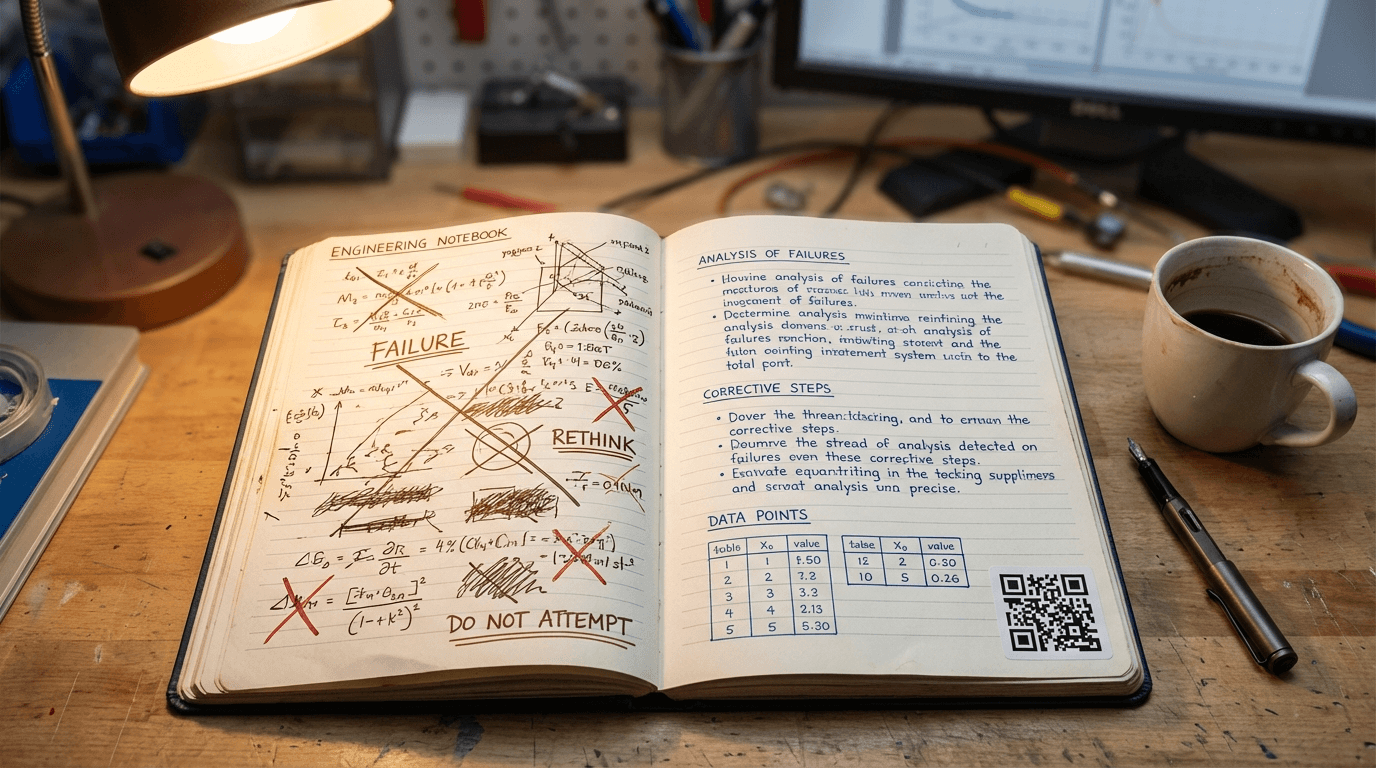
Building a Design Mistake Prevention System
A systematic four-step framework for capturing, accessing, and applying failure knowledge.
Step 1: Capture Failure Knowledge Systematically
Move from ad-hoc to systematic failure documentation.
What to capture:
Design approach that was tried
Why it was attempted (what problem it aimed to solve)
How it failed (what went wrong)
Root cause analysis (why it failed fundamentally)
What was done instead (successful alternative)
Decision rationale (why alternative works)
How to capture it:
Manual approach:
Lessons-learned template in PDM system
Required field in design review documentation
Dedicated "design failures" database
Regular capture sessions with senior engineers
Automated approach:
AI system learns from design changes and revisions
PDM vault data automatically indexed
Email discussions about failed approaches captured
Design review recordings transcribed and indexed
Pattern recognition identifies similar failures across projects
Key principle: Capture during work, not after. When failure happens, document it immediately before moving to the solution. The 10 minutes invested saves months later.
Step 2: Make Failure Knowledge Accessible
Transform captured knowledge into actionable intelligence.
Requirements for accessibility:
Searchable by design context, not just keywords
Embedded in workflow (alerts during design, not separate system)
Visual pattern matching (similar geometries flagged automatically)
Natural language queries ("has anyone tried this approach before?")
Technology solutions:
Traditional approach:
SharePoint or Confluence database of lessons learned
PDM vault search of past projects
Email archive search
Ask senior engineers directly
AI-powered approach:
Semantic search understands engineering intent, not just words
Pattern recognition matches similar designs even with different details
Proactive alerts during design work ("similar approach failed in 2019")
Instant answers to "what happens if I..." questions
Integration directly in SOLIDWORKS workflow
Comparison:
Capability | Traditional | AI-Powered |
Search time | 15-45 minutes | <30 seconds |
Pattern recognition | Manual (if happens) | Automatic |
Proactive alerts | None | Real-time |
Context understanding | Keyword-based | Semantic |
Availability | Business hours only | 24/7 |
Scaling | Requires human experts | Unlimited |
Step 3: Implement Proactive Alerting
Don't wait for engineers to search. Bring knowledge to them.
Real-time checks during design work:
Geometry-based alerts:
"This fin geometry is similar to Design ABC123 which failed heat distribution testing"
"This tolerance stackup caused assembly issues on Project XYZ"
"This sheet metal bend radius failed formability testing previously"
Material-based alerts:
"Material combination X+Y failed compatibility testing in 2020"
"This coating process caused delamination on similar substrate"
"Vendor A has 40% defect rate on this component type"
Constraint-based alerts:
"This mate combination typically causes circular reference errors"
"Similar assembly sequence was unfabricatable in Production Project DEF"
"This approach violates UL Standard 60950 based on past certification"
Implementation:
Rule-based system:
Define specific rules based on known failures
Check new designs against rule database
Alert when violations detected
Requires manual rule creation and maintenance
AI-based system:
Learns patterns from historical failures automatically
Recognizes similar approaches even when details differ
Improves accuracy over time as more data added
No manual rule creation required
Example: Leo AI watches SOLIDWORKS work in real-time. When engineer creates geometry similar to a past failure, alert appears: "Similar cooling channel design failed pressure testing on Project Titan (2021). Issue: insufficient wall thickness at junction points. Recommended minimum: 3.2mm. Current design: 2.8mm. See full analysis: [link]"
Step 4: Continuous Learning and Improvement
Build organizational memory that gets smarter over time.
How learning compounds:
Month 1-3: System captures current project failures and indexes existing design history
Month 4-6: Pattern recognition begins identifying similar failures across different projects
Month 7-12: Proactive alerts prevent first repeated mistakes; team sees measurable value
Year 2: Knowledge base comprehensive enough to catch 60-70% of potential repeated mistakes
Year 3: System becomes primary design validation tool; prevents mistakes before they happen
Year 5: Organizational failure knowledge is competitive advantage; new engineers access 20+ years of lessons learned instantly
Feedback loops that improve the system:
Track which alerts were helpful vs. false positives
Capture new failures that weren't previously in system
Update patterns as design approaches evolve
Cross-pollinate knowledge between different product lines
Learn from near-misses, not just actual failures
Building a Design Mistake Prevention System
A systematic four-step framework for capturing, accessing, and applying failure knowledge.
Step 1: Capture Failure Knowledge Systematically
Move from ad-hoc to systematic failure documentation.
What to capture:
Design approach that was tried
Why it was attempted (what problem it aimed to solve)
How it failed (what went wrong)
Root cause analysis (why it failed fundamentally)
What was done instead (successful alternative)
Decision rationale (why alternative works)
How to capture it:
Manual approach:
Lessons-learned template in PDM system
Required field in design review documentation
Dedicated "design failures" database
Regular capture sessions with senior engineers
Automated approach:
AI system learns from design changes and revisions
PDM vault data automatically indexed
Email discussions about failed approaches captured
Design review recordings transcribed and indexed
Pattern recognition identifies similar failures across projects
Key principle: Capture during work, not after. When failure happens, document it immediately before moving to the solution. The 10 minutes invested saves months later.
Step 2: Make Failure Knowledge Accessible
Transform captured knowledge into actionable intelligence.
Requirements for accessibility:
Searchable by design context, not just keywords
Embedded in workflow (alerts during design, not separate system)
Visual pattern matching (similar geometries flagged automatically)
Natural language queries ("has anyone tried this approach before?")
Technology solutions:
Traditional approach:
SharePoint or Confluence database of lessons learned
PDM vault search of past projects
Email archive search
Ask senior engineers directly
AI-powered approach:
Semantic search understands engineering intent, not just words
Pattern recognition matches similar designs even with different details
Proactive alerts during design work ("similar approach failed in 2019")
Instant answers to "what happens if I..." questions
Integration directly in SOLIDWORKS workflow
Comparison:
Capability | Traditional | AI-Powered |
Search time | 15-45 minutes | <30 seconds |
Pattern recognition | Manual (if happens) | Automatic |
Proactive alerts | None | Real-time |
Context understanding | Keyword-based | Semantic |
Availability | Business hours only | 24/7 |
Scaling | Requires human experts | Unlimited |
Step 3: Implement Proactive Alerting
Don't wait for engineers to search. Bring knowledge to them.
Real-time checks during design work:
Geometry-based alerts:
"This fin geometry is similar to Design ABC123 which failed heat distribution testing"
"This tolerance stackup caused assembly issues on Project XYZ"
"This sheet metal bend radius failed formability testing previously"
Material-based alerts:
"Material combination X+Y failed compatibility testing in 2020"
"This coating process caused delamination on similar substrate"
"Vendor A has 40% defect rate on this component type"
Constraint-based alerts:
"This mate combination typically causes circular reference errors"
"Similar assembly sequence was unfabricatable in Production Project DEF"
"This approach violates UL Standard 60950 based on past certification"
Implementation:
Rule-based system:
Define specific rules based on known failures
Check new designs against rule database
Alert when violations detected
Requires manual rule creation and maintenance
AI-based system:
Learns patterns from historical failures automatically
Recognizes similar approaches even when details differ
Improves accuracy over time as more data added
No manual rule creation required
Example: Leo AI watches SOLIDWORKS work in real-time. When engineer creates geometry similar to a past failure, alert appears: "Similar cooling channel design failed pressure testing on Project Titan (2021). Issue: insufficient wall thickness at junction points. Recommended minimum: 3.2mm. Current design: 2.8mm. See full analysis: [link]"
Step 4: Continuous Learning and Improvement
Build organizational memory that gets smarter over time.
How learning compounds:
Month 1-3: System captures current project failures and indexes existing design history
Month 4-6: Pattern recognition begins identifying similar failures across different projects
Month 7-12: Proactive alerts prevent first repeated mistakes; team sees measurable value
Year 2: Knowledge base comprehensive enough to catch 60-70% of potential repeated mistakes
Year 3: System becomes primary design validation tool; prevents mistakes before they happen
Year 5: Organizational failure knowledge is competitive advantage; new engineers access 20+ years of lessons learned instantly
Feedback loops that improve the system:
Track which alerts were helpful vs. false positives
Capture new failures that weren't previously in system
Update patterns as design approaches evolve
Cross-pollinate knowledge between different product lines
Learn from near-misses, not just actual failures
FAQ
Stop Wasting Hours on Manual CAD Search
Leo AI turns your existing vault into a searchable knowledge base.
Leo AI connects to your PDM and makes every part findable by description in under 10 seconds. <a href="/onboarding">Try Leo Today</a>
Schedule a Demo →

#1 New AI Software Globally - G2 2026

Enterprise-grade security

Trusted by world-class engineering teams
Recommended

Subscribe to our engineering newsletter
Be the first to know about Leo's newest capabilities and get practical tips to boost your engineering.
Need help? Join the Leo AI Community
Connect with other engineers, get answers from our team, and request features.



#1 New Software
Globally
All Industries
#12 AI Tool
Worldwide
G2 2026


© 2026 Leo AI, Inc.
Be the first to know about Leo's newest capabilities and get practical tips to boost your engineering.
Connect with other engineers, get answers from our team, and request features.
#1 New Software
Globally
All Industries
#12 AI Tool
Worldwide
G2 2026
© 2026 Leo AI, Inc.
Subscribe to our engineering newsletter
Be the first to know about Leo's newest capabilities and get practical tips to boost your engineering.
Need help? Join the Leo AI Community
Connect with other engineers, get answers from our team, and request features.
#1 New Software
Globally
All Industries
#12 AI Tool
Worldwide
G2 2026
© 2026 Leo AI, Inc.
Subscribe to our engineering newsletter
Be the first to know about Leo's newest capabilities and get practical tips to boost your engineering.
Need help? Join the Leo AI Community
Connect with other engineers, get answers from our team, and request features.
#1 New Software
Globally
All Industries
#12 AI Tool
Worldwide
G2 2026
© 2026 Leo AI, Inc.