
AI for Engineering Knowledge Management
Duplicate parts cost engineering teams millions in tooling, inventory, and lost time. Learn how AI part reuse cuts BOM costs and eliminates redundant designs.
·
⏱
7 min read

Michelle Ben-David
Michelle Ben-David is a mechanical engineer and Technion graduate. She served in an IDF elite technology and intelligence unit, where she developed multidisciplinary systems integrating mechanics, electronics, and advanced algorithms. Her engineering background spans robotics, medical devices, and automotive systems.
BOTTOM LINE
Duplicate parts are one of the most expensive invisible problems in mechanical engineering. Every unnecessary part number carries thousands of dollars in lifecycle costs that compound silently across tooling, procurement, inventory, and quality. The root cause has never been a people problem - it's a search problem. Engineers can't reuse what they can't find.
AI part reuse solves this at the source. By letting engineers search their vault the way they actually think - by function, geometry, and intent - it turns years of accumulated design history into a competitive asset instead of a digital graveyard. The teams that figure this out first will build better products, faster, at lower cost. Everyone else will keep paying the duplicate parts tax without even knowing it.
Every mechanical engineering team has the same dirty secret: their PDM system is full of duplicate parts. Not exact copies - those would be easy to catch. The real problem is the near-duplicates. The bracket that's 2mm different from one designed three years ago. The custom fastener that could have been a standard off-the-shelf component. The housing that a junior engineer designed from scratch because they didn't know a senior colleague had already solved that exact problem in 2019.
The financial impact is staggering. Industry research consistently shows that up to 60% of newly created parts in a typical engineering organization are functionally redundant - meaning an existing part could have done the job. Each unnecessary part carries a hidden cost chain: new CAD time, new drawings, new tooling, new supplier qualification, new inventory line items, new quality inspection procedures. Multiply that across hundreds or thousands of parts per year, and you're looking at millions of dollars in waste that never shows up on a single line item.
The root cause isn't laziness or incompetence. It's a search problem. Engineers can't reuse what they can't find. And traditional PDM search - built around exact part numbers and rigid metadata filters - was never designed to answer the question "do we already have something like this?" That's where AI part reuse is changing the game entirely.
The Hidden Cost Chain of Every Duplicate Part
When an engineer creates a new part instead of reusing an existing one, the visible cost is the CAD time. Maybe a few hours of modeling and drawing creation. But that's just the tip of the iceberg.
Behind every new part number sits a cascade of downstream costs that most organizations never fully account for. There's the tooling cost - new molds, fixtures, or setup configurations for manufacturing. There's the procurement overhead - qualifying a new supplier or negotiating a new line item with an existing one. There's the inventory carrying cost - warehouse space, handling, and the risk of obsolescence. There's the quality cost - new inspection procedures, first article inspections, and ongoing quality monitoring.
A widely cited benchmark in manufacturing puts the lifecycle cost of introducing a single new part number between $10,000 and $50,000, depending on complexity. For a mid-size engineering company introducing 500 new parts per year, if even 30% of those are unnecessary duplicates, that's $1.5M to $7.5M in avoidable cost annually. And those numbers don't even account for the engineering time wasted on solving problems that have already been solved.
The kicker? Most companies have no idea this is happening. There's no line item in the budget for "parts we didn't need to create." The cost is distributed across so many departments and so many months that it becomes invisible - part of the assumed cost of doing business.
IN PRACTICE
The geometry search has been invaluable - helping me find standard parts instead of designing new ones, saving a huge amount of time and effort. The search system is smart and CAD-aware. It was made by people who truly understand the struggles of mechanical engineers.
"The geometry search has been invaluable - helping me find standard parts instead of designing new ones, saving a huge amount of time and effort. The search system is smart and CAD-aware. It was made by people who truly understand the struggles of mechanical engineers."
- Eytan S., R&D Engineer, Mid-Market
Why Traditional PDM Search Fails at Part Reuse
PDM systems were built to manage files, not to help engineers think. Their search functionality reflects that origin. You can search by part number, file name, revision, or whatever custom metadata fields your admin configured years ago. What you can't do is search by intent.
An engineer working on a new mounting bracket doesn't think in part numbers. They think in terms of geometry, material, load requirements, and envelope constraints. They need to ask: "Do we have an aluminum bracket that fits a 40mm x 60mm envelope, handles 200N of static load, and mounts with M6 bolts?" Traditional PDM can't answer that question. It can only answer "Do we have a part with this exact number or name?"
The result is predictable. Engineers try a few keyword searches, get either zero results or thousands of irrelevant ones, and give up. They open a new part template and start designing from scratch. Not because they want to - because the system gives them no other realistic option.
This isn't a technology gap that more metadata will fix. You can't retroactively tag 50,000 legacy parts with every possible search attribute someone might need in the future. And even if you could, natural language queries and geometric similarity aren't something metadata schemas can handle. The search paradigm itself needs to change.
How AI Part Reuse Actually Works
AI-powered part reuse flips the search paradigm on its head. Instead of requiring engineers to know what they're looking for (exact part numbers, correct metadata values), it lets them describe what they need - and the system finds relevant matches across the entire vault.
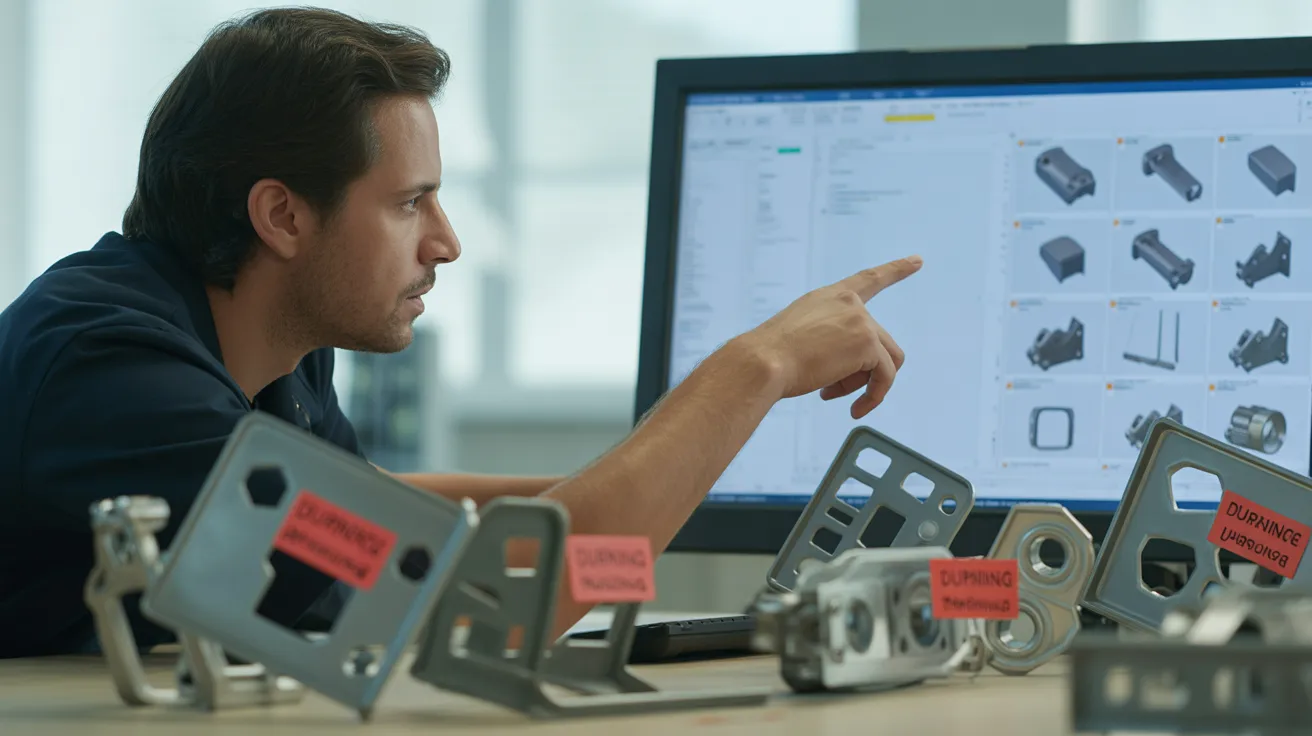
The technology works on multiple levels. Text-to-part search lets engineers type natural language queries like "stainless steel shaft collar, 25mm bore, set screw style" and get ranked results from their own part library. Geometry-based search takes it further - upload a 3D model or sketch, and the AI identifies visually and dimensionally similar parts that already exist in your PDM. Some platforms can even analyze a new design in progress and proactively suggest existing parts that could replace custom components.
What makes this different from a better search algorithm is the AI's ability to understand engineering context. It's not just matching keywords - it understands that a "mounting plate" and a "base bracket" might serve the same function. It recognizes that a part designed for one product line could work perfectly in another with minor modifications. It connects dots across departments, projects, and years of design history that no individual engineer could hold in their head.
The practical impact is that engineers spend minutes finding reusable parts instead of days designing new ones. And every reused part eliminates that entire downstream cost chain - no new tooling, no new supplier qualification, no new inventory line item.
Real Numbers - What Part Reuse Saves in Practice
The theoretical case for part reuse is easy to make. The practical results are even more compelling.
Engineering teams using AI-powered part search consistently report finding reusable components they didn't know existed in their own systems. One team building liquid cooling systems for data centers discovered that a nature-inspired solution found by AI let them replace custom-manufactured pipe adjustments with standard off-the-shelf parts - saving around $400 per system and eliminating the need for a dedicated engineer on each project. When you're shipping hundreds or thousands of units, those per-unit savings compound into serious money.
The time savings are equally significant. Engineers who previously spent half a day hunting through supplier catalogs or scrolling through PDM folders now find relevant parts in minutes. For organizations where senior engineers were being constantly interrupted with "do we have something like this?" questions, AI part search gives everyone self-service access to institutional knowledge without pulling experienced people off their own work.
The ROI calculation becomes straightforward: if your team creates 500 new parts per year and AI-driven reuse prevents even 100 of them from being created, at a conservative $15,000 per avoided part lifecycle cost, that's $1.5M in annual savings. Add the recovered engineering hours and the reduced procurement complexity, and most teams see payback within the first quarter.
Getting Started with AI Part Reuse Without Disrupting Your Workflow
One of the biggest misconceptions about AI in engineering is that adopting it means ripping out your existing systems. For part reuse, the opposite is true. The most effective AI tools work as an intelligence layer on top of your current PDM and PLM infrastructure - not as a replacement.
Platforms like Leo AI connect directly to your existing vault - whether that's SolidWorks PDM, Autodesk Vault, PTC Windchill, Siemens Teamcenter, or Arena PLM. There's no data migration, no workflow disruption, and no retraining your team on a new system. Engineers keep working where they already work, with the added ability to search their entire knowledge base using natural language and geometry.
Security is a common concern, and it should be. Your part data is your IP. Look for solutions that are SOC-2 certified, GDPR compliant, and that explicitly guarantee your data is never used to train AI models or shared with anyone outside your organization. Your competitive advantage stays yours.
The implementation path is simpler than most teams expect. Connect your data sources, let the AI index your vault, and engineers can start searching immediately. No months-long IT projects, no change management consultants. The teams that adopt fastest are the ones where engineers try it once, find a part they've been looking for, and never go back to the old way of searching.
FAQ
Find Parts You Forgot You Had
Search your entire vault by description, geometry, or function.
Leo AI connects to your PDM and helps engineers find reusable parts in minutes instead of designing from scratch. Start reducing duplicate parts today.
Schedule a Demo →

#1 New AI Software Globally - G2 2026

Enterprise-grade security

Trusted by world-class engineering teams



Find Parts You Forgot You Had
Search your entire vault by description, geometry, or function.
Leo AI connects to your PDM and helps engineers find reusable parts in minutes instead of designing from scratch. Start reducing duplicate parts today.
Schedule a Demo →
#1 New AI Software Globally - G2 2026
Enterprise-grade security
Trusted by world-class engineering teams