
AI for Engineering Knowledge Management
Duplicate parts cost engineering teams millions in tooling, inventory, and wasted design hours. Learn how AI part reuse eliminates redundancy and cuts BOM costs.
·
⏱
8 min read

Dr. Maor Farid
Maor Farid is the Co-Founder and CEO of Leo AI, the first AI platform purpose-built for mechanical engineers. He holds a PhD in Mechanical Engineering and completed postdoctoral research at MIT as a Fulbright fellow. A Forbes 30 Under 30 honoree and former AI researcher and Mechanical Engineer in an elite military intelligence, Maor leads Leo AI's mission to transform how engineering teams design better products faster.
BOTTOM LINE
Duplicate parts are one of the most expensive problems in mechanical engineering that nobody talks about. The costs hide in procurement, inventory, tooling, and wasted design hours across every department. Traditional PDM search was never built to solve this because it cannot understand geometry or engineering intent.
AI part reuse changes the equation by making it faster to find an existing part than to create a new one. When search works the way engineers actually think, reuse becomes the default and the savings start compounding from day one.
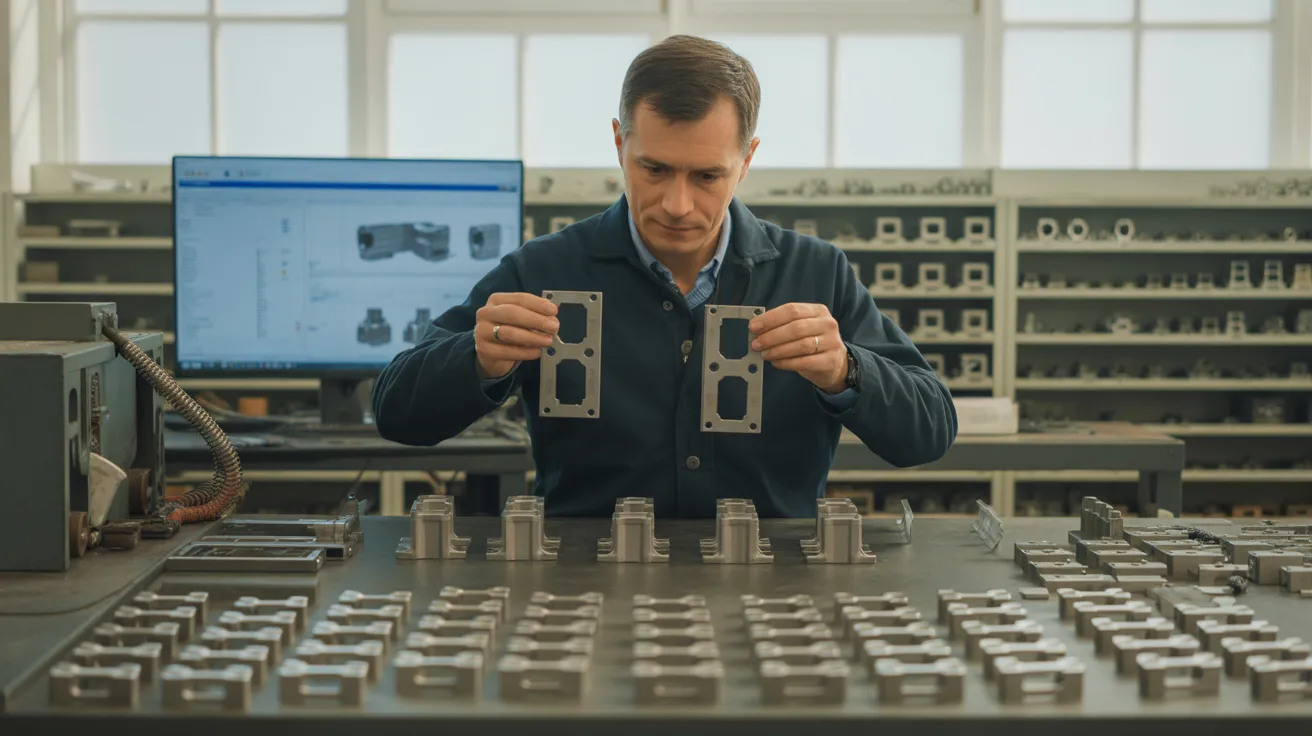
Every mechanical engineering team has the same dirty secret: their PDM system is full of duplicate parts. Not exact copies, but functionally identical components designed from scratch because nobody could find the one that already existed. A bracket that does the same job as three others in the vault. A custom fastener that could have been a standard off-the-shelf part. A housing that was redesigned because the original was buried in a folder structure nobody remembers.
The financial impact is staggering. Industry research from organizations like CIMdata and the Aberdeen Group has consistently shown that the cost of introducing a new part into a system goes far beyond the design hours. There are tooling costs, supplier qualification, inventory carrying costs, quality documentation, and downstream maintenance. When you multiply that across hundreds or thousands of unnecessary unique parts per year, you start to understand why duplicate parts quietly drain millions from engineering budgets.
The root cause is not lazy engineering. It is a search problem. Engineers cannot reuse what they cannot find. And traditional PDM search, which relies on exact file names, part numbers, or metadata that someone remembered to fill in, fails the moment you need to ask a simple question like "do we already have a bracket that fits this envelope?"
The Hidden Economics of Part Proliferation
Most engineering leaders underestimate the true cost of part duplication because the expenses are spread across so many departments. The design engineer spends hours creating something new. Procurement sources a new supplier. Quality writes new inspection documentation. Manufacturing creates new tooling or fixtures. Inventory carries another SKU. And none of these costs ever show up on a single line item labeled "duplicate part."
Conservative industry estimates put the fully loaded cost of introducing a single new part number into a manufacturing system at anywhere from $5,000 to $25,000, depending on the complexity and industry. For a mid-size engineering organization creating 500 new part numbers per year, even if only 20% of those are unnecessary duplicates, that translates to $500,000 to $2.5 million in avoidable costs annually.
Beyond direct costs, part proliferation creates a compounding maintenance burden. Every unique part in your system needs to be managed, tracked, and supported for the life of the product. More unique parts means more potential failure modes, more spare parts to stock, and more complexity in every engineering change order.
The problem gets worse over time. As the vault grows and institutional memory fades through employee turnover, the percentage of redundant designs tends to increase, not decrease. Without intervention, duplicate parts become a self-reinforcing cycle.
IN PRACTICE
For a team our size with years of legacy NX data, that's a significant time saver.
"For a team our size with years of legacy NX data, that's a significant time saver. We've started reusing parts we didn't even know we had, and that has real downstream impact on procurement and BOM costs."
-- Verified User, Defense & Space, Enterprise (>1000 employees)
Why Traditional PDM Search Fails at Part Reuse
PDM systems were designed to manage files, not to help engineers find functionally equivalent parts. The search capabilities built into platforms like SolidWorks PDM, Autodesk Vault, and Siemens Teamcenter are fundamentally text-based. They work well when you know the exact part number or file name. They fail completely when you need to ask "do we have anything like this?"
The metadata problem makes things worse. Part reuse depends on rich, consistent metadata: material, dimensions, tolerances, application context. But metadata quality in most vaults is inconsistent at best. Engineers are under deadline pressure and rarely have time to fill in every custom property field. Even when they do, there is no standard vocabulary, so one engineer's "mounting bracket" is another's "support plate."
Geometry-based search is the missing capability. Engineers think in shapes and spatial relationships, not in keywords. When you need a bracket that fits a 50mm envelope with two M6 mounting holes, you want to sketch it or describe it and have the system find matches. Traditional PDM search cannot do this because it has no understanding of the 3D geometry stored in those CAD files.
The result is predictable: engineers default to designing from scratch because searching feels like a waste of time. A 2023 study by Tech-Clarity found that engineers spend up to 30% of their time searching for information, and many give up and recreate rather than continue hunting through folder trees and poorly tagged files.
How AI Changes the Part Reuse Equation
AI-powered part search fundamentally changes the economics of part reuse by making it faster to find an existing part than to design a new one. That is the tipping point. When search becomes effortless, reuse becomes the default behavior rather than the exception.
Modern AI platforms built for engineering can search across your entire PDM vault using natural language, geometric similarity, and functional descriptions. Instead of constructing complex Boolean queries or browsing folder trees, an engineer can describe what they need in plain language and get relevant results in seconds. Text-to-CAD search lets you type "aluminum bracket, 50mm wide, two M6 through holes" and find matching parts from your own design history. CAD-to-CAD search lets you upload a 3D model and find geometrically similar parts across the entire vault.
This is not theoretical. Leo AI connects directly to leading PDM and PLM platforms, including SolidWorks PDM, Autodesk Vault, PTC Windchill, Siemens Teamcenter, and Arena PLM. It indexes the full geometry and metadata of every part in the vault and makes it searchable through a conversational interface. Engineers get results drawn from their own organization's design history, not generic catalogs.
The impact on part reuse rates is immediate. When engineers can find existing parts in minutes instead of spending hours searching or giving up entirely, the number of unnecessary new part introductions drops significantly. Teams using AI-powered search consistently report finding viable existing parts for 30-50% of cases where they would have previously designed from scratch.
Real-World Impact on BOM Costs and Procurement
The financial case for AI part reuse becomes obvious when you look at what happens downstream. Every part you do not create is a part you do not need to source, qualify, tool, inspect, inventory, and maintain. The savings compound across the entire product lifecycle.
Procurement teams see immediate benefits. Fewer unique parts means more volume on fewer part numbers, which strengthens negotiating leverage with suppliers. It also reduces the qualification burden. Every new supplier relationship and every new part qualification cycle takes time and money. When engineers reuse proven parts from trusted suppliers, procurement cycles shrink and risk drops.
Inventory costs tell a similar story. Every unique part number in your system carries inventory holding costs, typically estimated at 20-30% of the part's value per year. Reducing the number of unique SKUs by even a modest percentage can free up significant working capital and warehouse space. For organizations with thousands of active part numbers, this is not a rounding error.
Manufacturing benefits too. Standardizing around fewer unique parts means fewer setups, fewer fixtures, fewer first-article inspections, and more efficient production runs. The learning curve effect kicks in when operators build the same parts repeatedly rather than constantly switching to new configurations.
Keep Reading: Engineering Part Reuse with AI · AI for BOM Management · Best PDM Software for Mechanical Engineers · Engineering Knowledge Management
Building a Part Reuse Culture with AI
Technology alone does not solve the duplicate parts problem. You need to embed reuse into the engineering workflow so that searching before designing becomes as natural as running a spell check before sending an email.
The key is reducing friction. If the search tool requires engineers to leave their CAD environment, log into a separate system, construct complex queries, and then manually compare results, adoption will stay low no matter how powerful the technology is. The most effective approach is an AI layer that sits on top of existing systems and meets engineers where they already work. Ask a question, get an answer, keep designing.
Organizations that successfully build a reuse culture typically start with a pilot team and let results speak for themselves. When one engineer finds a perfect existing bracket in 30 seconds instead of spending two hours designing a new one, word spreads fast. The cultural shift happens organically when the tool genuinely makes life easier rather than adding another step to an already overloaded workflow.
Tracking reuse metrics also matters. When leadership can see how many new part introductions were avoided, how much was saved on tooling and procurement, and which teams are driving the most reuse, it creates a positive feedback loop. The data makes the invisible cost of duplication visible, and that visibility drives sustained behavior change.
FAQ
Tech-Clarity, "The Engineering Time Trap: How Engineers Spend Their Day," 2023.
CIMdata, "The Cost of New Part Introduction in Manufacturing Systems," 2022.
Aberdeen Group, "Part Standardization and Reuse: Best Practices for Reducing Complexity," 2021.
Find Parts, Not Duplicates
See how AI part reuse cuts BOM costs from day one.
Leo AI connects to your PDM and finds existing parts in seconds using geometry-aware search. Stop designing what you already have.
Schedule a Demo →

#1 New AI Software Globally - G2 2026

Enterprise-grade security

Trusted by world-class engineering teams