
AI for Engineering Productivity
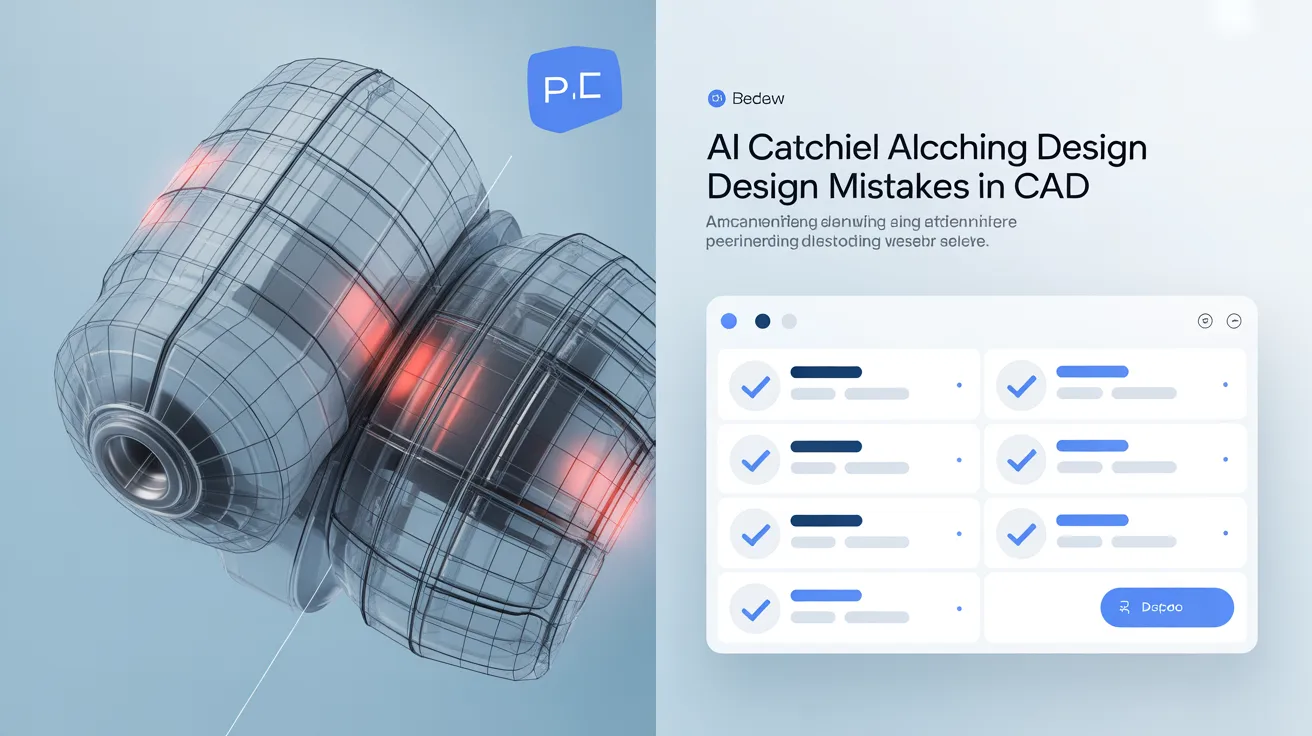
AI engineering drawing review catches missing dimensions, GD&T errors, and tolerance issues before release, cutting checking time and costly rework.
·
⏱
8 min read

Michelle Ben-David
Michelle Ben-David is a mechanical engineer and Technion graduate. She served in an IDF elite technology and intelligence unit, where she developed multidisciplinary systems integrating mechanics, electronics, and advanced algorithms. Her engineering background spans robotics, medical devices, and automotive systems.
BOTTOM LINE
Engineering drawing review is the last and cheapest place to catch an error before it becomes scrap, and most teams still run it as a manual, serial process that leans on a few senior people. That makes review slow, inconsistent, and fragile.
AI engineering drawing review does not replace the reviewer. It runs a fast, consistent first pass that reads the model and the drawing together, checks them against standards like ASME Y14.5, and links every flag to a rule. The engineer then spends time on judgment, not on hunting for missing dimensions.
If you are evaluating tools, favor ones that read native geometry, cite the standard behind each flag, and connect to your PDM or PLM so the check reflects the current revision. That is the difference between catching typos and catching the errors that reach the floor.
A drawing leaves your desk marked released. Three weeks later the machine shop calls: the datum reference is missing on the primary face, two dimensions contradict each other, and the title block still lists the old revision. The parts are already cut. Now you are paying for scrap, an expedite fee, and a schedule slip that lands on your program, not on the drafter who made the slip.
This is the quiet cost of drawing review. AI engineering drawing review is the practice of using software that reads the drawing and the model together and flags the errors a tired human eye misses. Engineering drawing review is the last checkpoint before a design becomes physical, and on most teams it is still done by hand, late at night, by the most senior people. This guide explains what a thorough review covers, how AI based checking works, and what to look for if you are evaluating a tool.
Why Manual Drawing Review Becomes a Bottleneck
In most teams, drawing review depends on one or two senior engineers who carry the standards in their heads. They know the company pays extra when a flatness callout is too tight, they remember which supplier needs a specific note, and they catch the dimension that does not close. That knowledge is valuable, and it is also a single point of failure.
Manual review is slow because it is serial: each drawing waits in a queue behind the others. It is inconsistent because reviewers get tired, and the tenth drawing of the day gets less attention than the first. It is fragile, because when that senior reviewer is on leave or retires, the quality of every release drops. The cost of fixing an error after release is far higher than the cost of catching it on the drawing, and the gap grows the closer the part gets to production. The same logic drives teams to catch design mistakes before manufacturing rather than after.
The result is a backlog that slows the whole program while the highest paid engineers spend hours on checks that follow fixed rules.
IN PRACTICE
What Engineers Are Saying
"With Leo, our team improves design quality, reduces mistakes, and shortens time-to-market. Instead of wasting hours on repetitive searches and calculations, we focus on making better products and leading our category."
Uriel B., Field Warfare and Survivability Specialist
What a Thorough Drawing Review Actually Covers
A complete engineering drawing review is more than a glance at the dimensions. A disciplined check covers several layers, and each one hides its own failure modes.
1. Dimensional completeness. Every feature needs to be fully defined, with no missing or duplicated dimensions and no open loops that leave a feature ambiguous.
2. GD&T correctness. Geometric callouts must reference valid datums, use the right feature control frames, and follow ASME Y14.5 so the supplier reads them the way you intended.
3. Tolerance review. Tolerances need to be achievable with the chosen process, and they must stack up across the assembly without forcing a more expensive operation than the part requires.
4. Standards and title block. Revision, material, finish, projection angle, and default notes have to match the company standard and the current release.
5. BOM agreement. Part numbers, quantities, and notes on the drawing must agree with the bill of materials and the model.
Miss any one layer and the drawing can look clean while still being wrong in a way that only shows up on the floor.
How AI Engineering Drawing Review Works
AI engineering drawing review tools read the drawing and the underlying CAD model at the same time. Instead of matching pixels, a capable system understands the geometry, the annotations, and the relationships between features, then compares them against a body of engineering rules.
This is where Leo AI fits. Leo reads native CAD files, including SLDPRT, SLDASM, STEP, and IGES, so it works from the actual geometry rather than file names or metadata. It is trained on more than a million pages of engineering standards, so when it flags a tolerance that cannot be held by the chosen process or a GD&T callout that references a missing datum, it points to the rule behind the flag. That serves one of the highest value uses of AI in engineering: flagging design mistakes before manufacturing, while the fix still costs minutes instead of a production run. It is the same idea behind automated DFM analysis, applied to the drawing itself.
Because the check is automated and consistent, the first drawing of the day and the fortieth get the same scrutiny. The senior engineer moves from finding routine errors to confirming judgment calls, which is a better use of the experience your team is paying for.
What to Look for in an AI Drawing Review Tool
Not every tool that claims to review drawings reads engineering the way an engineer does. When you evaluate options, weigh a few capabilities that separate real checking from surface level automation.
1. Native geometry understanding. The tool should read the CAD model and the drawing, not just run optical character recognition on a PDF. Geometry context is what catches a missing datum or an open dimension loop.
2. Standards grounding. Recommendations should cite the relevant standard, such as ASME Y14.5, rather than a generic suggestion. A flag you cannot trace to a rule is hard to trust.
3. Connection to your data. The tool should sit on top of your existing PDM or PLM so it checks against the current revision and the real bill of materials, not a stale export.
4. Explainable output. Every flag should say what is wrong, where, and why, so the engineer can accept or reject it quickly.
Tools that only scan a flat image will catch typos. Tools that understand the model catch the errors that actually reach the shop floor.
Where AI Drawing Review Fits in Your Release Process
The goal is not to remove the engineer from the loop. It is to put a fast, consistent first pass in front of the human review, so that by the time a person looks at the drawing, the routine errors are already marked.
In practice, the AI check runs when a drawing is ready for release. It reads the model and the drawing from the vault, lists the issues by severity, and links each one to the standard or the conflicting value. The reviewer confirms the real problems, dismisses the false positives, and signs off. Leo AI runs this kind of check against your connected PDM or PLM, so the review reflects the latest revision and the captured reasoning stays searchable. That feeds two more of Leo's core uses: preserving engineering knowledge and helping teams reuse parts they already trust.
Teams that adopt this pattern find that review stops being the step everyone dreads and becomes a quick gate that holds quality without holding up the schedule.
FAQ
Catch Drawing Errors Before Release
Manual drawing checks are slow and miss errors. Leo AI catches them first.
Leo AI reads your CAD models and drawings, checks them against engineering standards, and flags missing dimensions and tolerance issues before they reach the shop floor.
Schedule a Demo →

#1 New AI Software Globally - G2 2026

Enterprise-grade security

Trusted by world-class engineering teams