AI for CAD Tools
AI for Siemens NX can search parts, check designs, and surface knowledge across complex assemblies. Here is what AI adds to NX and where its limits are.
·
⏱
7 min read

Michelle Ben-David
Michelle Ben-David is a mechanical engineer and Technion graduate. She served in an IDF elite technology and intelligence unit, where she developed multidisciplinary systems integrating mechanics, electronics, and advanced algorithms. Her engineering background spans robotics, medical devices, and automotive systems.
BOTTOM LINE
Siemens NX is built for complex, high-stakes engineering, and its depth creates real friction around search, knowledge, and review. AI for NX addresses that friction by reading the content of your models and data.
The practical gains are finding existing parts by intent, checking designs against standards before release, and keeping hard-won reasoning searchable. None of that replaces NX or the engineer.
If you are evaluating AI for NX, look for native geometry understanding, standards-grounded flags, and broad access to your vault. Those are what separate a real engineering assistant from a generic chatbot bolted onto CAD.
Siemens NX is built for complexity: large assemblies, deep feature trees, and tightly controlled processes in aerospace, automotive, and heavy machinery. That power comes with a cost. Finding the right existing part, understanding why a design decision was made years ago, and checking work against standards all take time that NX itself does not give back.
AI for Siemens NX is the layer that addresses that gap. It reads your models and data and answers the questions engineers usually chase by hand. This guide covers what AI adds to NX today, the areas where it helps most, and the limits to keep in mind before you depend on it.
Why NX Teams Are Looking at AI
NX is a deep, capable system. Its strength is also its friction: assemblies can run into thousands of components, and the institutional knowledge behind them often lives in the heads of senior engineers rather than in any searchable form.
AI helps by reading the content of that complexity. It can find a component by intent across a large dataset, summarize the rationale captured in past projects, and check a model against engineering rules. For teams managing long programs, that turns slow manual lookups into fast answers and protects against the loss of tribal knowledge when people move on.
NX environments also tend to accumulate process-specific rules: preferred materials, approved suppliers, and design conventions that are enforced by habit rather than by the software. AI that reads your standards and past work can surface those conventions to an engineer who would otherwise have to learn them by making mistakes.
IN PRACTICE
What Engineers Are Saying
"It is the only AI for mechanical engineers that actually understands CAD, PLM, and the realities of enterprise design work. With Leo, our team improves design quality, reduces mistakes, and shortens time-to-market."
Uriel B., Field Warfare and Survivability Specialist
Finding Parts Across Large NX Assemblies
In a mature NX environment, the hard problem is not modeling a part. It is knowing whether a suitable one already exists somewhere in the vault.
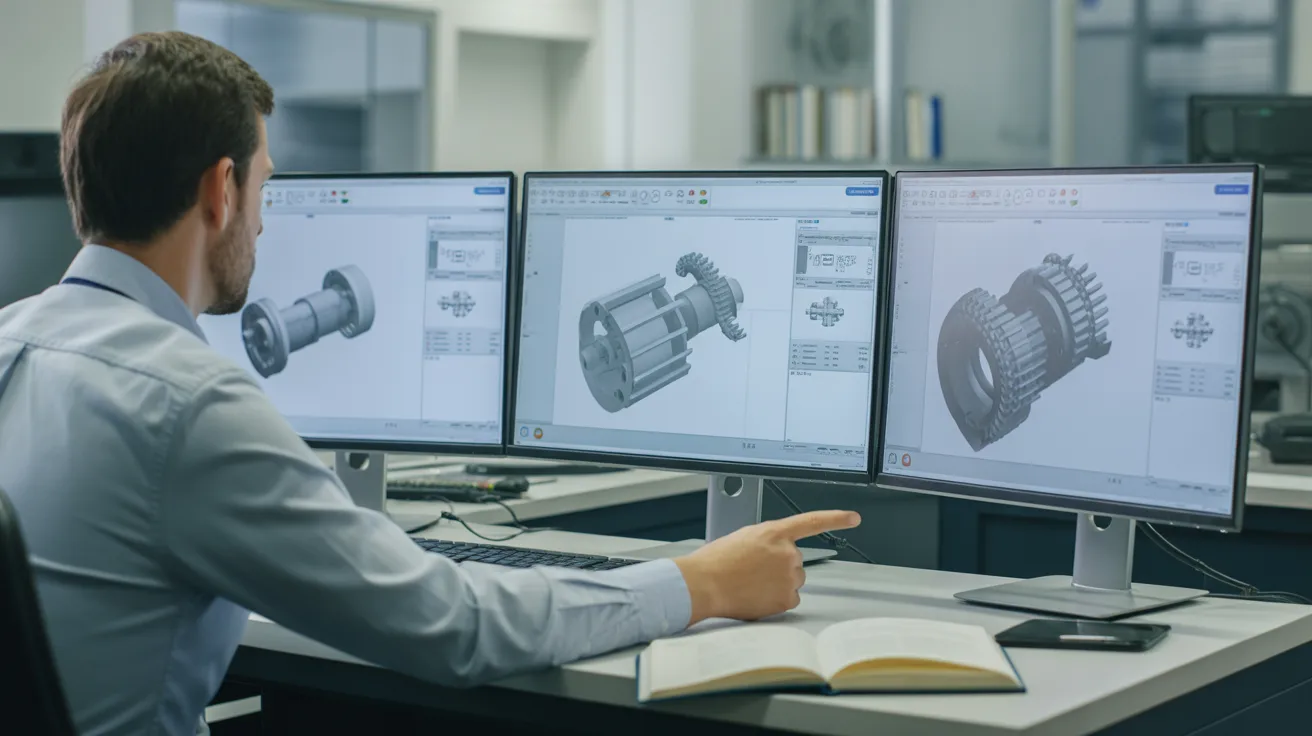
AI part search lets an engineer describe a requirement or search by shape and get matches across the whole dataset, regardless of naming. Leo AI reads native geometry and connects to your PDM or PLM, so it surfaces parts that already passed production. That cuts redundant design, qualification, and inventory cost, and it supports the broader goal of reusing parts your team already trusts.
The cost of a missed reuse is not just the modeling time. It is the downstream analysis, the qualification, the new part number, and the inventory line that follows. Each redundant part carries a tail of expense that a single good search would have avoided.
Checking NX Designs Against Standards
AI can also review a model against engineering rules. It reads geometry and annotations and flags issues such as a tolerance that the process cannot hold or a feature that conflicts with a manufacturing constraint.
Because Leo AI is trained on a large body of engineering standards, each flag points to the rule behind it. Catching these problems in NX before release is far cheaper than discovering them in production, which is the same principle behind automated DFM analysis.
A concrete example: a tolerance called out tighter than the chosen process can hold. On a complex NX part, that callout can hide among hundreds of dimensions. An AI review reads the geometry and the tolerance together and flags the conflict, with the standard behind it, so the engineer can correct it before release.
Standards grounding is what makes these checks usable in regulated industries. An aerospace or automotive team cannot act on a vague suggestion. They need a flag tied to a clause they can cite in a design review. A tool trained on real standards provides that traceability, which is the difference between a helpful note and an auditable check.
What AI for Siemens NX Does Not Do
AI is an assistant, not a replacement for the engineer or for NX. A few limits are worth stating plainly.
1. It does not redesign for you AI surfaces parts, flags issues, and explains reasoning. The engineer still makes the design decisions.
2. It depends on data access An AI tool is only as useful as the data it can read. If it cannot reach your full vault, its search and checks are limited.
3. It needs standards grounding Without training on real engineering standards, an AI tool gives generic answers you cannot trust on compliance.
Used well, AI removes the slow lookups and routine checks so NX engineers spend more time on the judgment that actually needs their expertise.
Integration depth matters as much as raw capability. NX rarely stands alone; it sits beside Teamcenter and a web of process tools. An assistant that reads across that data, rather than looking at one model at a time, gives answers that reflect the whole program, which is where the real friction in large NX environments lives.
What AI Looks Like in a Real NX Program
Take an aerospace bracket program running in NX with a thousand-plus component assembly and a decade of heritage parts. A new engineer needs a clip that meets a specific envelope and a known material spec. The part almost certainly exists, but finding it means knowing the legacy naming scheme.
AI part search lets the engineer describe the clip and surface matches across the full dataset, including heritage parts modeled long before they joined. The engineer reuses a qualified component instead of starting a new design that would need its own analysis and qualification.
The same assistant can summarize why a heritage part was designed the way it was, pulling from the documents attached in PLM. That turns a multi-day investigation into a short question, which matters most on long programs where the original designers have moved on and the knowledge would otherwise be lost.
None of this asks the engineer to trust a black box. The assistant surfaces a candidate part or a flagged issue and shows the basis for it, and the engineer decides. On high-stakes programs, that combination of speed and verifiability is exactly what makes the tool safe to adopt.
FAQ
Search Every Part in NX
Find existing components across large NX assemblies in seconds.
Leo AI reads your CAD geometry, connects to your PDM and PLM, and checks designs against standards so NX teams reuse work and catch errors early.
Schedule a Demo →

#1 New AI Software Globally - G2 2026

Enterprise-grade security

Trusted by world-class engineering teams