
AI for Engineering Knowledge Management

Document Control for Engineers: Why It Fails and How AI Fixes Findability

Document Control for Engineers: Why It Fails and How AI Fixes Findability

Document Control for Engineers: Why It Fails and How AI Fixes Findability

Engineering document control breaks down through version chaos and lost files. Here is why it fails and how an AI layer on top of PDM and PLM fixes findability.

·

9 min read

Dr. Maor Farid

Dr. Maor Farid

Co-Founder & CEO · Leo AI

Co-Founder & CEO · Leo AI

Mechanical Engineer & AI Researcher · Former Postdoc & Fulbright Fellow, MIT · Forbes 30 Under 30

Mechanical Engineer & AI Researcher · Former Postdoc & Fulbright Fellow, MIT · Forbes 30 Under 30

Maor Farid is the Co-Founder and CEO of Leo AI, the first AI platform purpose-built for mechanical engineers. He holds a PhD in Mechanical Engineering and completed postdoctoral research at MIT as a Fulbright fellow. A Forbes 30 Under 30 honoree and former AI researcher and Mechanical Engineer in an elite military intelligence, Maor leads Leo AI's mission to transform how engineering teams design better products faster.
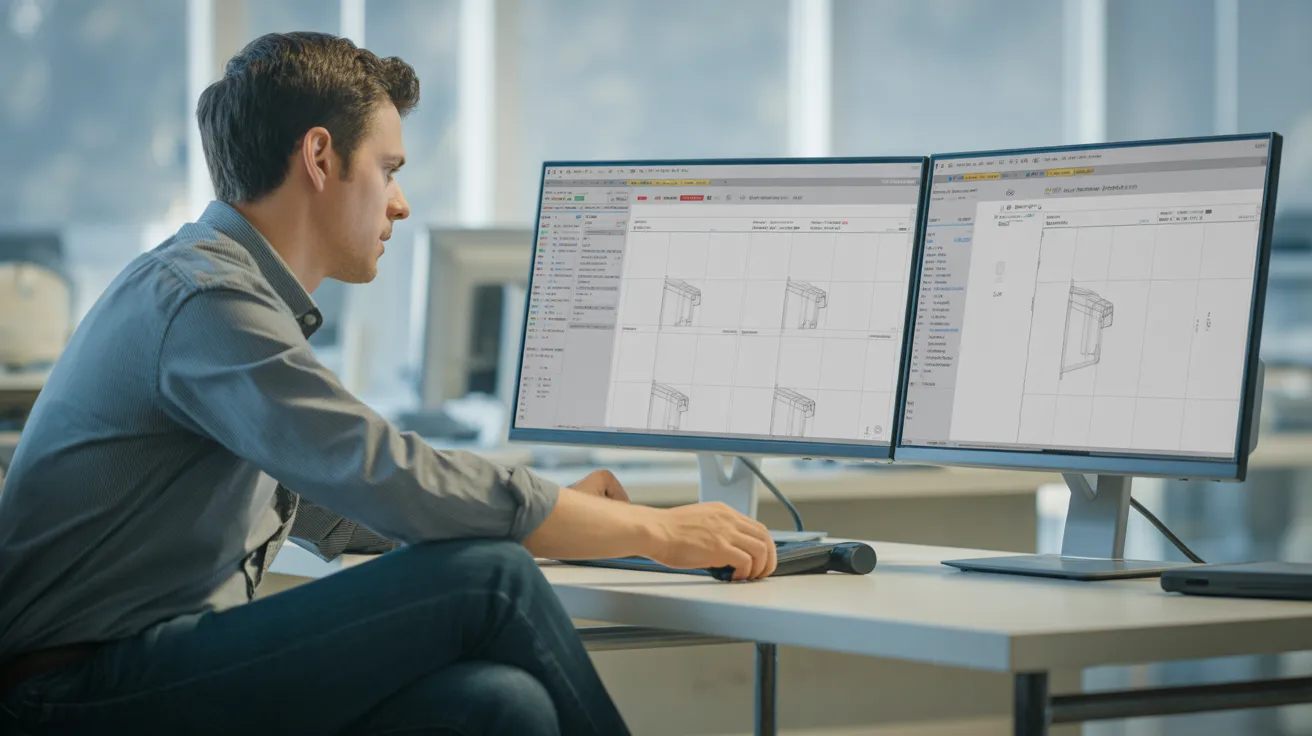
Engineering document control and findability

BOTTOM LINE

Document control fails for engineering teams not because they lack policies, but because traditional vaults can return a document only when you already know its identifier. Version chaos, manual naming, and documents stored outside the system all trace back to the same findability gap. The cost lands as rework, compliance exposure, and knowledge that leaves with departing engineers.

PDM and PLM systems remain the foundation for version control and approval, but they were never designed to find documents by meaning. An AI layer that reads CAD and engineering content natively closes that gap, letting teams keep their controlled environment while making every drawing, specification, and revision retrievable in plain language. That is how document control finally does what it promised.

Ask a room of mechanical engineers about document control and you will hear the same complaints. The drawing they need is saved under a file name only one person understands. Three revisions of the same part exist in three folders, and nobody is sure which one went to the supplier. A specification lives in someone's inbox instead of the vault. These are not edge cases. They are the daily texture of engineering work.

Document control is supposed to prevent exactly this. In practice it often becomes another layer of process that engineers route around, because finding the right file is slower than recreating it. The cost shows up later as scrapped parts, failed audits, and design decisions that have to be reverse engineered from memory.

This article looks at what document control means for engineering teams, why it breaks down, what poor control actually costs, and how an AI layer on top of your existing PDM and PLM systems closes the findability gap that traditional tools leave open.

What Document Control Means for Engineers

Document control is the set of practices that govern how engineering documents are created, reviewed, approved, revised, and retired. It covers drawings, models, specifications, bills of materials, test reports, and the change records that tie them together. A working system guarantees three things: that every document has a single source of truth, that the current revision is the one people actually use, and that the history of why a document changed is preserved.

Formal standards codify this. ISO 9001:2015 devotes clause 7.5 to documented information, requiring that documents be identified, reviewed, approved, and protected against unintended use. Aerospace teams add AS9100 requirements, and medical device teams work under FDA 21 CFR Part 820, which mandates strict document and change control. ASME Y14.100 governs how engineering drawings themselves are prepared and revised.

The principles are sound. The problem is the gap between the policy written in the quality manual and what happens when an engineer needs a file at 4 p.m. on a deadline.

What Document Control Means for Engineers

Document control is the set of practices that govern how engineering documents are created, reviewed, approved, revised, and retired. It covers drawings, models, specifications, bills of materials, test reports, and the change records that tie them together. A working system guarantees three things: that every document has a single source of truth, that the current revision is the one people actually use, and that the history of why a document changed is preserved.

Formal standards codify this. ISO 9001:2015 devotes clause 7.5 to documented information, requiring that documents be identified, reviewed, approved, and protected against unintended use. Aerospace teams add AS9100 requirements, and medical device teams work under FDA 21 CFR Part 820, which mandates strict document and change control. ASME Y14.100 governs how engineering drawings themselves are prepared and revised.

The principles are sound. The problem is the gap between the policy written in the quality manual and what happens when an engineer needs a file at 4 p.m. on a deadline.

IN PRACTICE

What Engineers Are Saying

"The search in Teamcenter has always been a weak point for us. If you don't know the exact part number or file name, you're basically not finding it. Leo changed that. I can describe a part geometrically or by function and it finds relevant parts from our own history."

-- Verified User, Defense and Space Enterprise (G2 Review)

Why Document Control Fails for Engineering Teams

Document control rarely fails because a team lacks a policy. It fails because the policy fights against how engineers actually work. A few patterns show up again and again:

  1. Version chaos. The same part exists as bracket_v2, bracket_final, bracket_final_REAL, and bracket_asbuilt. Without enforced revision control, the newest file is not always the correct one, and engineers lose time confirming which is which.

  2. Naming conventions that depend on people. Manual naming schemes work until someone leaves, joins, or is in a hurry. A convention that lives in a senior engineer's head is not a convention, it is tribal knowledge.

  3. Findability by exact match only. Most vaults can retrieve a document only if you already know its part number or file name. If you remember the geometry or the function but not the identifier, the document is effectively lost.

  4. Documents that live outside the system. Specifications in email, calculations in a personal spreadsheet, and supplier correspondence in a chat thread never enter the controlled environment at all.

  5. Process that is slower than recreation. When checking out, finding, and verifying a file takes longer than redrawing it, engineers redraw it, and a second uncontrolled copy is born.

Each of these is really a symptom of one underlying issue: the knowledge about a document is stored separately from the document itself.

Why Document Control Fails for Engineering Teams

Document control rarely fails because a team lacks a policy. It fails because the policy fights against how engineers actually work. A few patterns show up again and again:

  1. Version chaos. The same part exists as bracket_v2, bracket_final, bracket_final_REAL, and bracket_asbuilt. Without enforced revision control, the newest file is not always the correct one, and engineers lose time confirming which is which.

  2. Naming conventions that depend on people. Manual naming schemes work until someone leaves, joins, or is in a hurry. A convention that lives in a senior engineer's head is not a convention, it is tribal knowledge.

  3. Findability by exact match only. Most vaults can retrieve a document only if you already know its part number or file name. If you remember the geometry or the function but not the identifier, the document is effectively lost.

  4. Documents that live outside the system. Specifications in email, calculations in a personal spreadsheet, and supplier correspondence in a chat thread never enter the controlled environment at all.

  5. Process that is slower than recreation. When checking out, finding, and verifying a file takes longer than redrawing it, engineers redraw it, and a second uncontrolled copy is born.

Each of these is really a symptom of one underlying issue: the knowledge about a document is stored separately from the document itself.

The Real Cost of Poor Document Control

Teams rarely put a number on document control failures, which is part of why they persist. The costs are real and measurable.

The most visible cost is rework. When an engineer builds from a superseded revision, the error propagates into tooling, purchasing, and production before anyone notices. Catching a mistake at the drawing stage is cheap. Catching it after a supplier has cut metal is not.

The second cost is compliance risk. In regulated industries, an auditor who finds an uncontrolled document or a missing change record can hold a shipment or a certification. For medical and aerospace suppliers, that is a direct revenue event.

The third cost is knowledge loss. Research from IDC found that Fortune 500 companies lose roughly 31.5 billion dollars a year by failing to share knowledge, and a widely cited 2018 study put the average large business's loss from inefficient knowledge sharing at about 47 million dollars a year. Engineering teams feel this acutely, because so much of their knowledge lives inside CAD files and revision histories that ordinary search cannot read. When a senior engineer leaves, the documents stay, but the ability to find and interpret them often departs too. We covered this dynamic in depth in our guide to engineering knowledge management.

The Real Cost of Poor Document Control

Teams rarely put a number on document control failures, which is part of why they persist. The costs are real and measurable.

The most visible cost is rework. When an engineer builds from a superseded revision, the error propagates into tooling, purchasing, and production before anyone notices. Catching a mistake at the drawing stage is cheap. Catching it after a supplier has cut metal is not.

The second cost is compliance risk. In regulated industries, an auditor who finds an uncontrolled document or a missing change record can hold a shipment or a certification. For medical and aerospace suppliers, that is a direct revenue event.

The third cost is knowledge loss. Research from IDC found that Fortune 500 companies lose roughly 31.5 billion dollars a year by failing to share knowledge, and a widely cited 2018 study put the average large business's loss from inefficient knowledge sharing at about 47 million dollars a year. Engineering teams feel this acutely, because so much of their knowledge lives inside CAD files and revision histories that ordinary search cannot read. When a senior engineer leaves, the documents stay, but the ability to find and interpret them often departs too. We covered this dynamic in depth in our guide to engineering knowledge management.

Why PDM and PLM Alone Do Not Solve Findability

It is worth saying plainly: a PDM or PLM system is not the same as document control, and neither one solves findability on its own. PDM systems such as SolidWorks PDM, Windchill, and Teamcenter are strong at what they were built for, namely version control, check-in and check-out, and workflow approval. They enforce that one revision is current and that changes follow a defined route.

What they were not built to do is help you find a document when you do not know its identifier. Their search assumes you already know the part number, the file name, or the exact metadata field. That assumption breaks down constantly in real engineering work, where you remember that you designed a similar bracket two years ago but not what it was called.

This is the findability gap. A controlled vault can hold 30,000 parts and still feel empty when you cannot describe your way to the one you need. Choosing the right platform matters, and our comparison of PDM software for mechanical engineers and our overview of product data management software both cover that decision, but the platform alone does not close the gap.

Why PDM and PLM Alone Do Not Solve Findability

It is worth saying plainly: a PDM or PLM system is not the same as document control, and neither one solves findability on its own. PDM systems such as SolidWorks PDM, Windchill, and Teamcenter are strong at what they were built for, namely version control, check-in and check-out, and workflow approval. They enforce that one revision is current and that changes follow a defined route.

What they were not built to do is help you find a document when you do not know its identifier. Their search assumes you already know the part number, the file name, or the exact metadata field. That assumption breaks down constantly in real engineering work, where you remember that you designed a similar bracket two years ago but not what it was called.

This is the findability gap. A controlled vault can hold 30,000 parts and still feel empty when you cannot describe your way to the one you need. Choosing the right platform matters, and our comparison of PDM software for mechanical engineers and our overview of product data management software both cover that decision, but the platform alone does not close the gap.

How an AI Layer Fixes Engineering Document Control

The fix is not to replace your PDM or PLM system. It is to add an intelligence layer on top of it that understands engineering content the way an engineer does. This is the role Leo AI is built for.

Leo AI sits on top of your existing PDM and PLM environment and makes the documents inside it retrievable by meaning rather than by exact identifier. Because Leo reads CAD geometry and engineering documents natively, an engineer can describe a part by its function, its shape, or the problem it solved, and Leo surfaces the relevant drawings, specifications, and revisions from the team's own history. Integrations are available for SolidWorks, and Leo connects to PDM and PLM data so that controlled documents stay controlled while becoming far easier to find.

That single capability addresses most of the failure patterns above. Version confusion shrinks when the current revision surfaces first. Naming conventions matter less when meaning, not file names, drives retrieval. Knowledge stops leaving with people, because the reasoning captured in past documents becomes searchable. For teams moving off older tools, the same intelligence helps during CAD data migration by making legacy documents discoverable instead of dumping them into a vault nobody can navigate. It also reinforces good habits like documenting design decisions, because a captured decision becomes findable later.

The goal of document control was always trust: trust that the document in front of you is the right one. An AI layer restores that trust by closing the distance between what an engineer remembers and what the system can return.

How an AI Layer Fixes Engineering Document Control

The fix is not to replace your PDM or PLM system. It is to add an intelligence layer on top of it that understands engineering content the way an engineer does. This is the role Leo AI is built for.

Leo AI sits on top of your existing PDM and PLM environment and makes the documents inside it retrievable by meaning rather than by exact identifier. Because Leo reads CAD geometry and engineering documents natively, an engineer can describe a part by its function, its shape, or the problem it solved, and Leo surfaces the relevant drawings, specifications, and revisions from the team's own history. Integrations are available for SolidWorks, and Leo connects to PDM and PLM data so that controlled documents stay controlled while becoming far easier to find.

That single capability addresses most of the failure patterns above. Version confusion shrinks when the current revision surfaces first. Naming conventions matter less when meaning, not file names, drives retrieval. Knowledge stops leaving with people, because the reasoning captured in past documents becomes searchable. For teams moving off older tools, the same intelligence helps during CAD data migration by making legacy documents discoverable instead of dumping them into a vault nobody can navigate. It also reinforces good habits like documenting design decisions, because a captured decision becomes findable later.

The goal of document control was always trust: trust that the document in front of you is the right one. An AI layer restores that trust by closing the distance between what an engineer remembers and what the system can return.

FAQ

Find Any Document in Seconds

Leo searches your PDM and PLM by meaning, not just file names.

Leo AI connects to your PDM and PLM and makes every drawing, spec, and revision searchable in plain language. Try Leo at getleo.ai/onboarding.

Schedule a Demo →

#1 New AI Software Globally - G2 2026

Enterprise-grade security

Trusted by world-class engineering teams


Recommended

Subscribe to our engineering newsletter

Be the first to know about Leo's newest capabilities and get practical tips to boost your engineering.

Need help? Join the Leo AI Community

Connect with other engineers, get answers from our team, and request features.

#1 New Software

Globally

All Industries

#12 AI Tool

Worldwide

G2 2026

Contact us

160 Alewife Brook Pkwy #1095

Cambridge, MA 02138

United States

Subscribe to our newsletter

Be the first to know about Leo's newest capabilities and get practical tips to boost your engineering.

Need help? Join the Community

Connect with other engineers, get answers from our team, and request features.

#1 New Software

Globally

All Industries

#12 AI Tool

Worldwide

G2 2026

Contact us

160 Alewife Brook Pkwy #1095

Cambridge, MA 02138

United States

Subscribe to our engineering newsletter

Be the first to know about Leo's newest capabilities and get practical tips to boost your engineering.

Need help? Join the Leo AI Community

Connect with other engineers, get answers from our team, and request features.

#1 New Software

Globally

All Industries

#12 AI Tool

Worldwide

G2 2026

Contact us

160 Alewife Brook Pkwy #1095

Cambridge, MA 02138

United States

Subscribe to our engineering newsletter

Be the first to know about Leo's newest capabilities and get practical tips to boost your engineering.

Need help? Join the Leo AI Community

Connect with other engineers, get answers from our team, and request features.

#1 New Software

Globally

All Industries

#12 AI Tool

Worldwide

G2 2026

Contact us

160 Alewife Brook Pkwy #1095

Cambridge, MA 02138

United States

© 2026 Leo AI, Inc.