
AI for Engineering Knowledge Management
SolidWorks PLM vs PDM: learn the real difference, when to upgrade from PDM to PLM, and what neither system solves for your engineering team.
·
⏱
5 min read

Dr. Maor Farid
Maor Farid is the Co-Founder and CEO of Leo AI, the first AI platform purpose-built for mechanical engineers. He holds a PhD in Mechanical Engineering and completed postdoctoral research at MIT as a Fulbright fellow. A Forbes 30 Under 30 honoree and former AI researcher and Mechanical Engineer in an elite military intelligence, Maor leads Leo AI's mission to transform how engineering teams design better products faster.
BOTTOM LINE
What is the difference between PDM and PLM?
PDM systems manage documents and design files. PLM systems do that plus manage the full product lifecycle: requirements, specifications, quality, compliance, supply chain.
Most engineering teams at manufacturers with 200 to 1,000 employees face the same crossroads at some point: the SolidWorks PDM vault is groaning under the weight of six years of parts, and someone in an all-hands says "maybe we need PLM." The room goes quiet. Half the team isn't sure what PLM actually adds. The other half isn't sure they want to find out.
The SolidWorks PLM vs. PDM question is one of the more consequential infrastructure decisions an engineering organization can make. Get it wrong and you either under-invest (staying on PDM when you genuinely need lifecycle management), or over-invest (buying a full PLM platform when PDM and better search tooling would have solved 90% of your problems for a fraction of the cost).
This post breaks down what each system actually does, when PDM is enough, when PLM is the right call, and what neither system solves on its own.
What SolidWorks PDM Actually Does
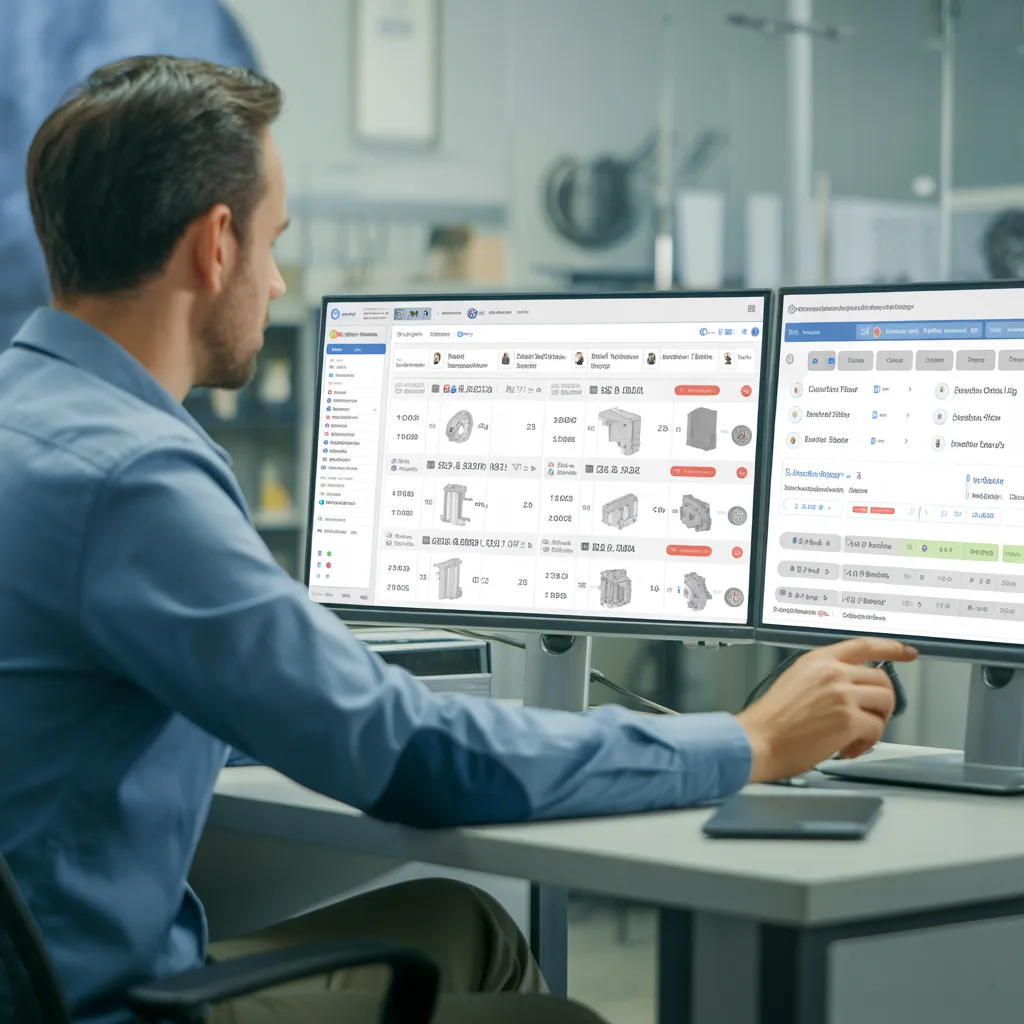
SolidWorks PDM (Product Data Management) is a vault. Its job is to manage files: who has them, what version they are, and where they live. Every part file, assembly, drawing, and BOM that your team creates sits inside the vault. PDM handles check-in and check-out, revision history, and access control.
SolidWorks PDM comes in two tiers. PDM Standard is bundled with SolidWorks and covers basic version control for small teams. PDM Professional adds workflow automation, advanced search, and integrations with ERP systems like SAP. Most engineering teams at mid-size manufacturers run PDM Professional.
What PDM does not do is extend visibility beyond the engineering vault. It doesn't track what happens to a product after the design is released. It doesn't manage supplier data, quality records, or change orders across departments. It doesn't have a concept of "product lifecycle." It manages files, not product programs.
If your team's main pain is: "we need version control and a single source of truth for CAD files," PDM solves that problem.
IN PRACTICE
What Engineers Are Saying
"The parts search across our PDM system has been a game changer — engineers find components much faster instead of pinging each other constantly. The technical Q&A feature pulls from real engineering standards with source citations, giving engineers confidence they're getting accurate, relevant answers."
— Verified User, Mechanical Engineering, Mid-Market
What PLM Actually Does
PLM (Product Lifecycle Management) is a broader platform. It picks up where PDM leaves off. A PLM system manages product data across the entire lifecycle: from initial concept through design, manufacturing, field deployment, and eventual product retirement.
Platforms in this space include Dassault Systèmes ENOVIA, PTC Windchill, Siemens Teamcenter, and Arena PLM. Each connects the engineering vault to program management, quality management, supplier portals, manufacturing process planning, and in some cases ERP.
The defining characteristic of PLM is cross-functional visibility. Design engineering, manufacturing engineering, procurement, quality, and program management can all look at the same product record. A design change in CAD flows downstream to the BOM in manufacturing and the supplier quote in procurement, without anyone emailing spreadsheets.
PLM systems are more expensive to buy, harder to implement, and require ongoing administration. A Windchill or Teamcenter rollout at a 300-person manufacturer is a multi-year project. The return on that investment only materializes once multiple departments are actually using the system.
The Real Difference Between SolidWorks PDM and PLM
The clearest way to think about SolidWorks PLM vs. PDM is scope.
PDM answers: "Where is my file, and is it the right revision?"
PLM answers: "What is the current state of this product program, who changed what, and what is the downstream impact on manufacturing, quality, and supply chain?"
If your engineering team is the only team that needs to coordinate around CAD data, PDM is likely sufficient. If design changes in CAD need to trigger actions in manufacturing planning, procurement, or quality without manual hand-offs, PLM is what closes that loop.
One practical indicator: how many times per week does someone from manufacturing or quality ask your design team to manually export or forward data that should be in a shared system? If the answer is "daily," you have a PDM-to-PLM problem. If the answer is "occasionally," you probably have a search and workflow problem that a better-configured PDM can solve. For a deeper look at what engineers struggle with inside SolidWorks PDM specifically, see our post on why engineers still can't find anything in SolidWorks PDM.
When PDM Is Enough
SolidWorks PDM Professional is sufficient for most engineering teams until the organization grows to the point where other departments need live access to product data.
Signs PDM is enough: your team is under 50 engineers; manufacturing and procurement work from released drawings, not live PDM data; you don't have multiple product lines in simultaneous development; quality and program management don't need direct access to the design vault.
PDM Professional with proper vault structure, workflow automation, and good search tooling handles the core engineering data management problem at this scale. The mistake many teams make is assuming that search and retrieval limitations in PDM are a signal to move to PLM. They're not. They're a signal to add better search tooling on top of PDM, which is a much smaller investment.
When Your Team Actually Needs PLM
The move to PLM makes sense when the coordination cost of not having cross-functional visibility starts exceeding the cost of the platform.
Concrete indicators: your manufacturing BOM and your engineering BOM are maintained separately and frequently diverge; engineering change orders require manual email-based sign-off chains involving 4 or more departments; your quality management system has no live connection to design revision history; you are managing concurrent development on 5 or more programs simultaneously; compliance and traceability requirements (ISO, FDA, AS9100) require formal change records tied to product data.
At this point, PLM earns its cost. The alternative is a tangle of spreadsheets, email threads, and manual re-entry that gets more expensive as headcount grows. For a full comparison of PDM platforms and what they handle well, see our PDM software guide for mechanical engineers.
Keep Reading: Best PDM Software 2026 · AI for Product Data Management · AI for PLM Search · Engineering Knowledge Management
FAQ
Stop Wasting Hours on Manual CAD Search
Leo AI turns your existing vault into a searchable knowledge base.
Leo AI connects to your PDM and makes every part findable by description in under 10 seconds. <a href="/onboarding">Try Leo Today</a>
Schedule a Demo →

#1 New AI Software Globally - G2 2026

Enterprise-grade security

Trusted by world-class engineering teams