
AI for Engineering Knowledge Management
AI builds on CAD version control by making history searchable: why a change was made, which version is current, and what a revision will affect across the assembly.
·
⏱
7 min read

Dr. Maor Farid
Maor Farid is the Co-Founder and CEO of Leo AI, the first AI platform purpose-built for mechanical engineers. He holds a PhD in Mechanical Engineering and completed postdoctoral research at MIT as a Fulbright fellow. A Forbes 30 Under 30 honoree and former AI researcher and mechanical engineer in an elite military intelligence unit, Maor leads Leo AI in its mission to help engineering teams design better products faster.
BOTTOM LINE
CAD version control through PDM solves the mechanics of shared files: locking, revisions, references, and audit trails. Done consistently, it ends lost work and obsolete files. What it does not do is make the design history legible, so the why behind a change and the dependencies around it stay buried.
AI extends version control by reading what it stores. It summarizes what changed and why, surfaces the reasoning behind a revision, and shows what a change will affect before it is committed. Version control keeps the record; AI makes it usable.
When evaluating a tool, look for one that sits on top of your existing PDM, reads geometry and documents, explains the why, and reveals dependencies. The aim is design history your team can learn from, not just a list of revisions.
Every engineer has lost work to a version control gap: two people edit the same part, a colleague builds on a drawing that was already superseded, or a released assembly turns out to reference an old revision. Check-in and check-out exist to prevent exactly this, and they work, until the question stops being which file is current and becomes why it changed and what depends on it.
AI does not replace CAD version control, it extends it. It makes the history that version control records actually answerable. This guide covers what version control does well, where it falls short, and how AI turns a pile of revisions into searchable design knowledge.
What Check-In and Check-Out Already Solve
CAD version control, usually delivered through a PDM system, manages the mechanics of shared files. Check-out locks a file so others see it read-only until it is checked back in, which prevents simultaneous edits and overwrites. The system tracks revisions, manages the references between parts, drawings, and assemblies, and keeps an audit trail.
Done consistently, this solves the worst failures: lost work, conflicting edits, and obsolete files in circulation. The discipline is to check in at logical milestones and to keep PDM, CAD, and PLM connected so a change in one is reflected everywhere, which is the foundation good PDM practice is built on.
The discipline sounds obvious and is constantly undone in practice. An engineer in a hurry works outside the vault, a contractor emails a file, a check-in is skipped because the workflow is unclear. Each shortcut reintroduces the exact conflicts version control exists to prevent, which is why training and a workflow people will actually follow matter as much as the software.
IN PRACTICE
What Engineers Are Saying
"I used to spend half a day hunting through supplier catalogs. Now I describe what I need and Leo pulls relevant parts in minutes. A very powerful tool that saves a lot of time and really cuts down on effort and frustration."
Erga K., Product Engineer
What Version Control Does Not Tell You
Version control answers what and when: what changed, when, and by whom. It does not answer the questions engineers actually ask weeks later. Why was this tolerance loosened in revision C. Which other parts depend on this feature. Has a change like this caused a problem before.
Those answers live in the design history that version control captures but does not make legible. The revisions are all there, but reading them means opening file after file and reconstructing intent by hand. That is the same retrieval gap that makes a poorly searchable vault so costly, the problem behind bad PDM search.
The deeper loss is intent. A revision records that a dimension changed, but not the reasoning: the test that failed, the supplier constraint, the field return that prompted it. That reasoning is the most valuable part of the history and the part most reliably lost, because version control was never designed to capture why, only what.
How AI Makes Version History Answerable
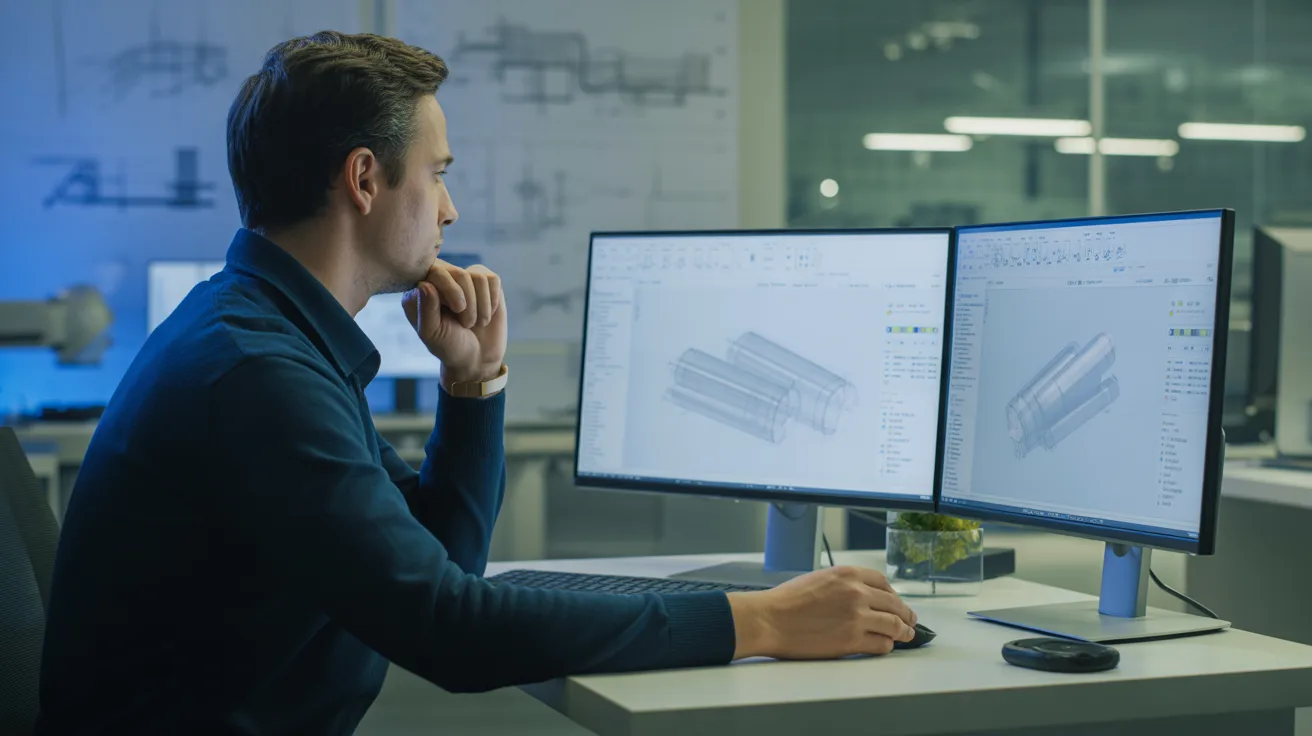
AI sits on top of the version-controlled vault and reads what it stores. Because it understands the geometry and the documents, it can summarize what changed between revisions, surface the reasoning recorded around a change, and find related parts that a revision might affect. This is where Leo AI fits: it reads native CAD and connects to your PDM or PLM, so design history becomes a question you can ask in plain language rather than a folder you dig through.
That serves the tribal-knowledge value driver directly. The intent behind a revision, normally locked in the head of whoever made it, becomes retrievable for the next engineer. Version control keeps the record; the AI makes the record usable, the same way it powers part search across the vault.
Reading the history is different from storing it. Ten revisions of a part contain a story about how the design learned, but extracting that story by hand means opening each version and comparing. An assistant that reads the geometry and the documents can tell the story directly, which turns an archive into something a new engineer can actually learn from.
Knowing What a Revision Will Touch
The riskiest moment in version control is not the check-in, it is the change whose consequences no one traced. Updating a feature on a shared part can ripple into every assembly that uses it, and version control will faithfully record the damage after the fact.
An AI assistant that reads the relationships between parts can show what a proposed revision will affect before it is committed, turning a blind edit into an informed one. That keeps the speed of modern version control without its quiet failure mode, where a correct check-in still breaks three downstream assemblies nobody thought to check.
Dependency awareness is where this prevents real damage. On a shared part used across many assemblies, a well-intentioned revision can quietly break downstream products, and version control records the breakage only after it happens. Seeing the blast radius of a change before committing it is the difference between a controlled update and a week of firefighting.
What to Look for in AI Over Version Control
A useful layer reads the vault, it does not replace it.
1. Sits on top of PDM It should add intelligence over your existing version control, not ask you to abandon it.
2. Reads geometry and docs It should understand the actual design history, not just file names and dates.
3. Explains the why It should surface the reasoning behind a change, not only what changed.
4. Shows dependencies It should reveal what a revision will affect across the assembly before you commit.
The goal is not to replace check-in and check-out. It is to make the history they record something your team can actually learn from.
The framing matters: this is not a replacement for the system of record but an intelligence layer on top of it. The vault keeps doing its job of locking, versioning, and auditing. The assistant makes the knowledge inside it answerable, which is the part engineers have always wished their PDM could do.
FAQ
Ask Your Design History Why
Version control records every change but explains none of them.
Leo AI reads your version-controlled vault, summarizes what changed and why, and shows what a revision will affect before you commit it.
Schedule a Demo →

#1 New AI Software Globally - G2 2026

Enterprise-grade security

Trusted by world-class engineering teams