
AI for Design Quality & DFM
AI for first article inspection speeds up FAI by mapping drawing characteristics to measurements and building the report, cutting manual ballooning and data entry.
·
⏱
7 min read

Michelle Ben-David
Michelle Ben-David is a mechanical engineer and Technion graduate. She served in an IDF elite technology and intelligence unit, where she developed multidisciplinary systems integrating mechanics, electronics, and advanced algorithms. Her engineering background spans robotics, medical devices, and automotive systems.
BOTTOM LINE
First article inspection is essential and mostly manual: ballooning drawings, building sheets, and recording results. Most of that effort is data handling, and most FAI errors are clerical rather than measurement mistakes.
AI for FAI reads the drawing and model, extracts and balloons characteristics, maps measurements, and assembles the report. It cuts the paperwork and the transcription errors while keeping the inspector in control of the judgment.
When you evaluate a tool, look for accurate extraction from the real drawing and model, complete coverage tied to the current revision, and export to the report format your quality system needs.
First article inspection is where a drawing meets reality. Before a production run, someone has to balloon every dimension, measure the first part, and record each result against the specification. Done by hand, it is slow, tedious, and easy to get wrong, and a transcription error can pass a bad part or fail a good one.
AI for first article inspection takes the routine work out of FAI. It reads the drawing, extracts the characteristics, maps them to measurements, and assembles the report. This guide explains where AI fits in the FAI process, what it speeds up, and what to look for in a tool.
What First Article Inspection Actually Involves
FAI verifies that a manufacturing process produces parts that match the design before full production begins. It means identifying every characteristic on the drawing, measuring the first article, and documenting each result.
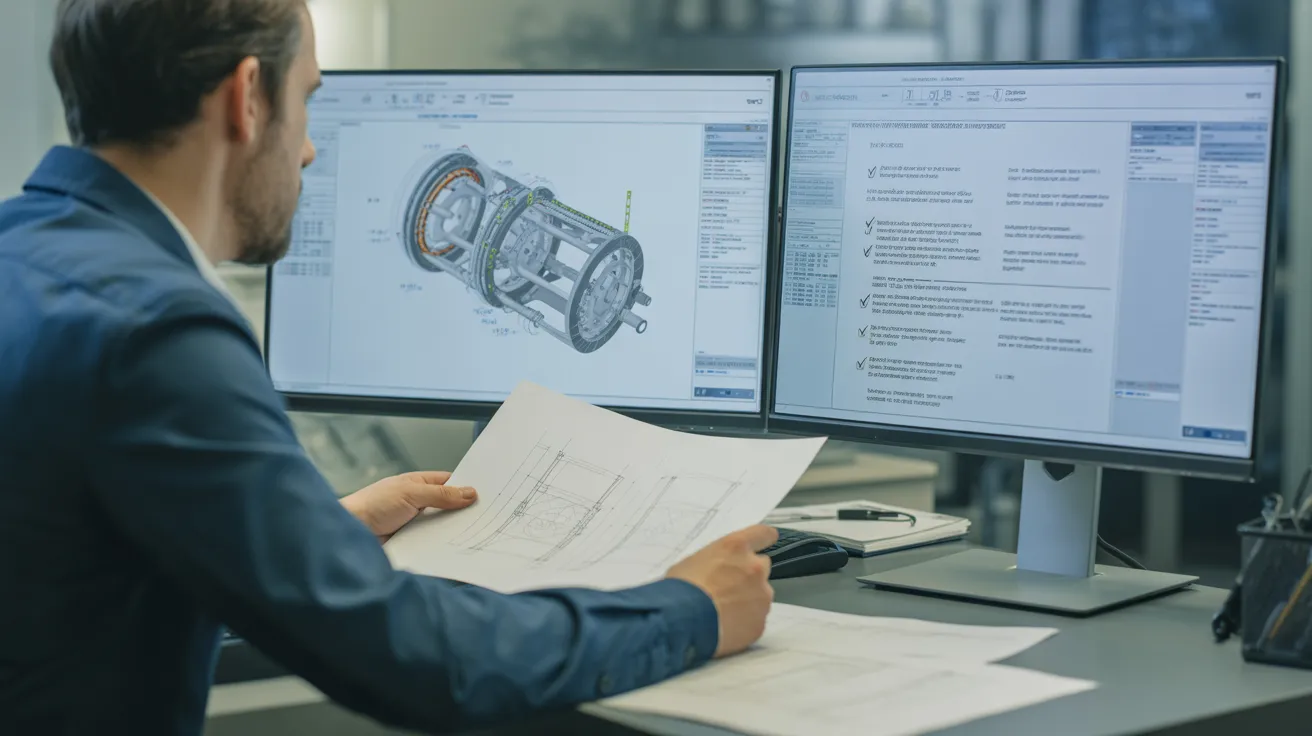
The work is detailed and repetitive: ballooning drawings, building inspection sheets, and recording measurements. Most of the time is spent on data handling rather than judgment, and that is exactly the kind of task that benefits from automation, the same way teams gain from automating engineering drawing review.
FAI also sits on the critical path to production. A delayed or rejected first article holds up the whole run, so the speed and accuracy of the inspection directly affect schedule. Anything that removes manual handling without sacrificing rigor pays back quickly.
For high-mix, low-volume shops, the math is especially compelling. These shops run first articles constantly, often on short runs where the inspection overhead is a large fraction of the total job. Cutting the manual handling on every FAI directly improves the economics of the work they take on.
IN PRACTICE
What Engineers Are Saying
"I used to spend half a day hunting through supplier catalogs. Now I describe what I need and Leo pulls relevant parts in minutes. A very powerful tool that saves a lot of time and really cuts down on effort and frustration."
Erga K., Product Engineer
Where AI Speeds Up the FAI Process
AI reads the drawing and extracts the characteristics automatically, balloons them, and builds the inspection structure. It can map each characteristic to its measurement and flag results that fall outside tolerance.
Because Leo AI reads native CAD files and the drawing together, it understands the characteristics in context rather than scraping a flat image. That makes the extraction more reliable and links each inspected feature back to the design intent. The engineer reviews and signs off, so AI removes the paperwork while keeping the inspector in control.
The detail work is also where fatigue does the most damage. By the fortieth characteristic on a dense drawing, attention drifts, and a missed balloon or a transposed digit slips through. Automating the extraction keeps the coverage complete and consistent no matter how large or repetitive the drawing is.
Cutting Transcription and Mapping Errors
A large share of FAI mistakes are not measurement errors. They are clerical: a characteristic missed during ballooning, a value typed into the wrong row, a revision mismatch between drawing and report.
AI reduces these by extracting characteristics consistently and mapping measurements to the right feature. It checks that the report covers every characteristic and matches the current revision. That consistency protects against the routine slips that cause a costly re-inspection, and it ties into the broader goal of preventing repeated mistakes.
Revision mismatches are a frequent and avoidable cause of rejected submissions. An inspection built automatically from the current released drawing stays aligned with the design, so the report cannot quietly drift to an older revision the way a hand-built sheet can.
What to Look for in an AI FAI Tool
A useful tool fits the way inspection actually works.
1. Reads drawing and model It should extract characteristics from the real drawing and CAD model, not a low-quality scan.
2. Covers every characteristic It should confirm the report is complete and tied to the current revision.
3. Exports to your format It should produce the report format your customers and quality system require.
The aim is to let inspectors spend their time measuring and judging, not ballooning drawings and retyping numbers.
Standardized output matters for acceptance. Many customers require a specific report format, and a submission that does not match gets bounced regardless of how good the measurements are. A tool that exports directly to the required format removes a common, frustrating source of rejection that has nothing to do with part quality.
A Faster FAI From Drawing to Report
A supplier receives a released drawing for a machined housing with sixty characteristics. Traditionally, an inspector balloons all sixty by hand, builds an inspection sheet, measures the first article, and types each result into the report. A full day of work, and a single mis-keyed row can fail the submission.
With AI, the drawing is read and ballooned automatically, the characteristics are extracted into the inspection structure, and the inspector simply records measurements against the right features. The report assembles itself in the required format, complete and tied to the current revision.
The inspector spends the day measuring and judging, not transcribing. The submission is consistent, the coverage is complete, and the risk of a clerical failure drops sharply. For suppliers who run many first articles, that time saving and error reduction compound across every job.
There is a knowledge benefit as well. When characteristics are extracted and tied back to the model, the inspection becomes a structured record connected to design intent. That record is reusable for the next revision and for similar parts, so the effort spent on one first article pays forward instead of starting over each time.
FAQ
Cut Your FAI Paperwork
Stop ballooning drawings and retyping measurements by hand.
Leo AI reads your drawing and CAD model, extracts and balloons every characteristic, and builds the inspection report so your team measures instead of typing.
Schedule a Demo →

#1 New AI Software Globally - G2 2026

Enterprise-grade security

Trusted by world-class engineering teams