
AI for Parts & BOM Management
Part consolidation cuts part count, cost, and complexity. Learn how to retire duplicate part numbers and reuse existing parts before you create new ones.
·
⏱
7 min read
Michelle Ben-David
Michelle Ben-David is a mechanical engineer and Technion graduate. She served in an IDF elite technology and intelligence unit, where she developed multidisciplinary systems integrating mechanics, electronics, and advanced algorithms. Her engineering background spans robotics, medical devices, and automotive systems.
BOTTOM LINE
Part consolidation is two jobs in one. Physically combining parts lowers assembly cost and complexity, and that work is well documented through Design for Assembly. Reducing duplicate, near duplicate, and obsolete part numbers lowers a different and often larger bill: the procurement, inventory, engineering, and quality overhead that every redundant number quietly carries.
The program that works does both, and it depends on one capability above all: making the existing part easy to find at the moment a new one would otherwise be created. Get the search right, close the gate on new numbers, and consolidation stops being a one-time cleanup and becomes a habit that keeps part count, cost, and complexity down for good.
Most conversations about part consolidation start with geometry. Engineers ask how to combine three brackets into one machined body, or how to fold a fastener into a molded boss. That work matters, but it is only half the story. The other half is about numbers in a database. Every time a team creates a new part number for something it already owns, the cost of designing, qualifying, sourcing, and stocking that item gets paid all over again.
This is the cost and process side of consolidation. It is less about clever shapes and more about discipline: retiring duplicate and obsolete part numbers, reusing what already exists, and stopping a new number from being created when an equivalent part is one search away. Done well, it shrinks the bill of materials, simplifies procurement, and lowers the long tail of carrying and maintenance cost that nobody budgeted for.
This guide walks through what part consolidation really means, why duplicate part numbers proliferate, how to run a consolidation program, and where AI fits. The goal is fewer parts, lower cost, and a product that is easier to build and maintain.
What Part Consolidation Actually Means
Part consolidation has two faces. The first is physical: combining several components into one so the assembly has fewer pieces. This is the heart of Design for Assembly (DFA), the methodology pioneered by Boothroyd and Dewhurst, which uses minimum part count criteria to ask whether a component truly needs to be separate or whether it can be merged with a neighbor while keeping full function. Fewer parts means fewer operations, fewer interfaces, and fewer chances for something to go wrong.
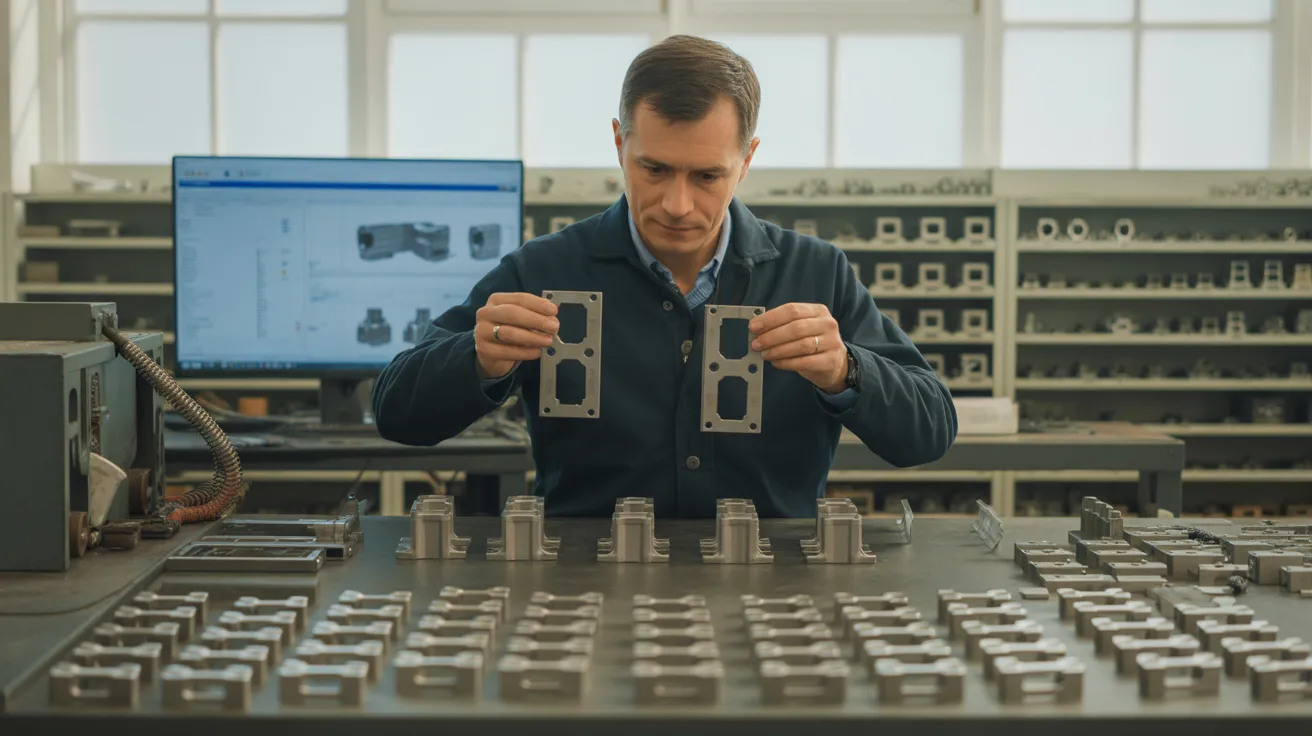
The second face is administrative, and it is the one most teams underestimate. It is the work of reducing how many distinct part numbers a company maintains for functionally identical items. Two engineers in two divisions can each draw the same M4 standoff, give it two numbers, and source it from two suppliers. The product is the same. The overhead is doubled.
This post focuses on that second face, the cost and process angle, because it is where the quiet money hides. The two faces are complementary. Below are the categories that consolidation usually targets:
Exact duplicates: the same part with two or more numbers across teams or sites.
Near duplicates: parts that differ only in a tolerance, finish, or note that does not affect fit, form, or function.
Obsolete numbers: parts kept active in the system long after the last design that used them shipped.
Over specified variants: many sizes or grades where a smaller standardized set would serve every application.
IN PRACTICE
The connection to our PDM and using that as a data source is legit the best thing ever. I found three viable bracket options fitting my exact envelope constraints, in minutes, not days.
Eytan S., R&D Engineer
Why Duplicate Part Numbers Keep Multiplying
Part proliferation is rarely the result of carelessness. It is the predictable output of how engineering organizations actually work. When an engineer needs a bracket and cannot quickly confirm that an equivalent one already exists, the fastest path forward is to model a new one and assign it a fresh number. Creating the duplicate is cheaper in the moment than the search to avoid it.
The search itself is the bottleneck. Traditional PDM and PLM systems index parts by number, file name, and text metadata. If the existing standoff was named with a different convention or filed under a different project, it is effectively invisible to the next engineer. We covered this failure mode in depth in our look at why PDM search is broken and engineers cannot find parts. When search fails, duplication is the rational response.
A few structural forces keep the problem alive:
Speed pressure: design deadlines reward shipping a model now, not auditing the library first.
Fragmented data: parts live across multiple sites, divisions, or legacy systems with no shared search.
Naming drift: inconsistent part numbering and descriptions hide functional twins from each other.
Diffuse ownership: the cost of a new part is spread across procurement, quality, and operations, so no single engineer feels it.
Because the cost is dispersed and the duplicate is convenient, the library grows. The full downstream bill is something we break down in the real cost of duplicate parts and AI part reuse.
The True Cost of Part Proliferation
The cost of a redundant part number is easy to ignore because it never shows up as a single line item. It accumulates quietly across departments and across the life of the product. Understanding where it lands is what turns consolidation from a tidy-up project into a cost program with a real return.
Procurement feels it first. When a company buys the same component under two numbers from two suppliers, it splits its volume and loses negotiating power. Consolidating those numbers lets a buyer pool demand and qualify fewer suppliers. Operations feels it next, in inventory. Every active part number carries storage, handling, and the risk of obsolescence, and each distinct number is one more thing to count, stock, and eventually write off.
Engineering pays in time. When reuse is hard, engineers spend hours redrawing parts that already exist instead of advancing new design work, and every new number triggers fresh qualification, documentation, and review. Quality and service pay last: more part numbers means more drawings to control, more revisions to track, and more chances for an assembler or a field technician to grab the wrong but similar part. The Boothroyd Dewhurst case for part count reduction is built on exactly this chain, where eliminating a part removes its material cost, its sourcing and stocking overhead, and the labor to handle it. The same logic applies whether you remove a part physically or remove a redundant number from the system. Cleaner part data also feeds directly into modern AI BOM management, where an accurate, deduplicated parts list is the foundation for everything downstream.
How to Run a Part Consolidation Program
A consolidation program needs two halves: a cleanup of the parts you already have, and a gate that stops new duplicates from entering. Doing only the first means you scrub the library once and watch it refill. The steps below cover both.
Build a clear inventory: pull every active part number from your PDM or PLM into one view, including parts from legacy systems and other sites, so functional twins can finally sit side by side.
Find the duplicates: group parts by geometry and function, not just by name or number, because the most expensive duplicates are the ones with mismatched metadata.
Pick the survivor: for each cluster, choose one part to keep, ideally the one with the best documentation, supplier terms, and qualification history, and map the rest to it.
Retire and redirect: mark the redundant and obsolete numbers as inactive, update the affected bills of materials, and leave a record so the change is traceable.
Standardize the catalog: replace over specified variants with a smaller preferred set for common items like fasteners, bearings, and seals.
Close the gate: require a reuse search before any new part number is approved, so the default becomes find first, create second.
That last step is where a consolidation effort either sticks or quietly fails. A strong design review process helps, and pairing consolidation with AI design review that catches errors before manufacturing means duplicate creation gets flagged at the same moment as other manufacturability issues, before the number is ever locked in.
How Leo Surfaces Existing Parts Before You Create New Ones
Consolidation only holds if reuse is faster than recreation. That is the specific problem Leo is built to solve. Leo is an intelligence layer that sits on top of your existing PDM or PLM, not a replacement for it, and it adds geometry-aware part search across the data those systems already hold. Instead of matching on part number or file name, Leo understands the shape of a part, so an engineer can describe what they need or point at a model and see the existing or duplicate parts that already fit, even when the metadata does not line up.
That changes the economics of the moment a new number would otherwise be born. When the existing part is genuinely one search away, the engineer reuses it, and the duplicate is never created. As one user put it:
"The connection to our PDM and using that as a data source is legit the best thing ever. I found three viable bracket options fitting my exact envelope constraints, in minutes, not days."
That is consolidation working at the source: surfacing what already exists so teams reuse instead of proliferate. Integrations are available for SolidWorks PDM, Autodesk Vault, PTC Windchill, Siemens Teamcenter, and Arena PLM, so the search reaches the data wherever it lives. For more on the search engine behind this, see how Claude AI powers part search in PDM.
FAQ
Stop Creating Parts You Already Own
See how Leo surfaces existing parts so your team reuses, not duplicates.
Leo connects to your PDM or PLM and adds geometry-aware search, so engineers find the part that already exists before they ever create a new number.
Schedule a Demo →

#1 New AI Software Globally - G2 2026

Enterprise-grade security

Trusted by world-class engineering teams