
AI for Parts & BOM Management
Part standardization cuts BOM cost, part count, and rework. Learn why part proliferation happens, what it costs, and how AI helps engineers reuse proven parts.
·
⏱
8 min read

Michelle Ben-David
Michelle Ben-David is a mechanical engineer and Technion graduate. She served in an IDF elite technology and intelligence unit, where she developed multidisciplinary systems integrating mechanics, electronics, and advanced algorithms. Her engineering background spans robotics, medical devices, and automotive systems.
BOTTOM LINE
Part standardization is one of the highest return, lowest glamour improvements a mechanical engineering team can make. Every redundant part quietly adds cost to procurement, inventory, quality, and the bill of materials, and most of that cost never appears on the component itself. Proliferation is a workflow problem, so the fix is a workflow fix. Give engineers a way to find and reuse proven parts at the moment they design, assign clear ownership of the preferred list, and measure part count and reuse rate over time. AI that reads geometry and connects to existing PDM and PLM systems makes reuse the easy choice rather than the disciplined one, which is what keeps a library standardized long after the first cleanup is done.
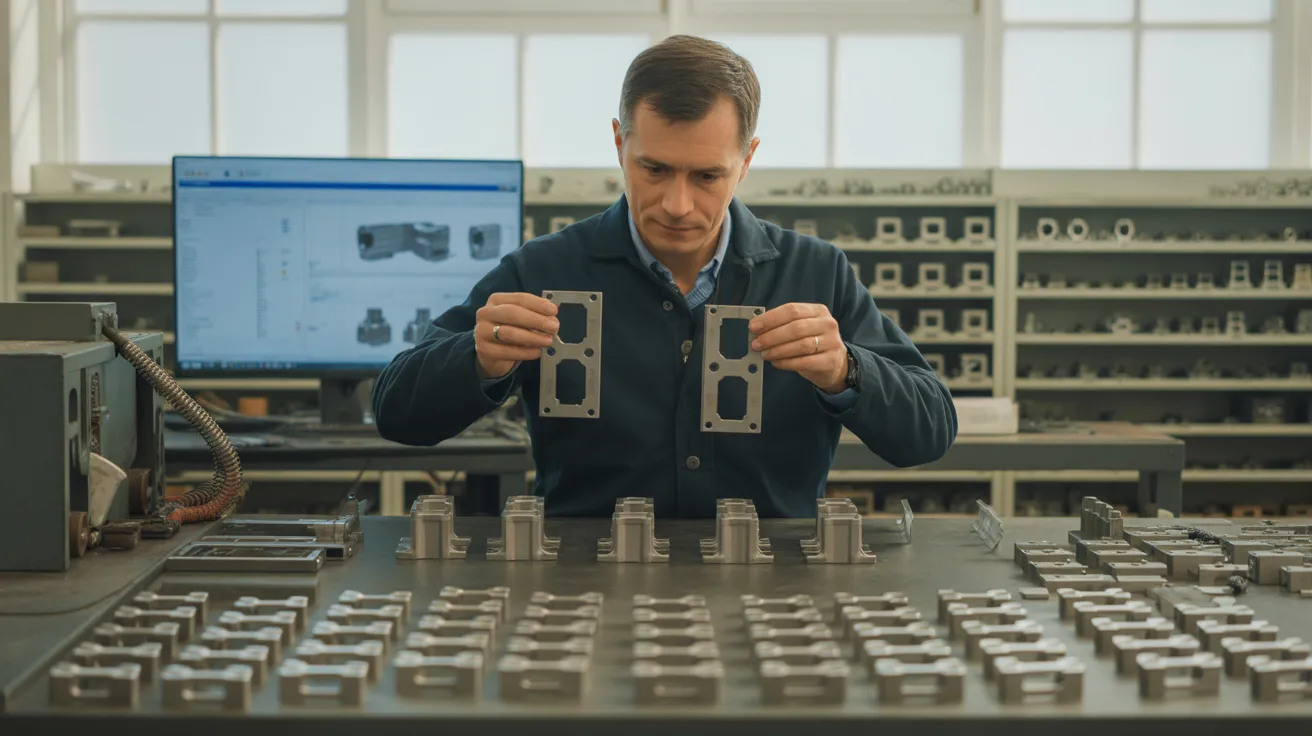
Every mechanical engineering team carries a quiet tax it rarely measures. It hides in the part library, where three slightly different M6 bolts, five near identical brackets, and a dozen fasteners that do the same job all sit under separate part numbers. Each one felt reasonable to create at the time. Together they inflate the bill of materials, slow procurement, and make it harder for the next engineer to find what already exists.
Part standardization is the discipline that pushes back. Done well, it reduces part count, lowers cost, and makes design faster because engineers reuse proven components instead of drawing new ones. This guide explains what part standardization means, why proliferation happens, what it truly costs, and how a modern engineering team can standardize without slowing anyone down.
What Part Standardization Actually Means
Part standardization is the practice of consolidating functionally equivalent components under a controlled, preferred set so the organization designs with variety only where variety adds value. Instead of ten washers that all serve the same purpose, the team maintains one or two approved options that engineers reach for by default. The goal is not to force every design into a rigid catalog. It is to remove the accidental duplication that creeps in when people cannot see what already exists.
Standardization operates at several levels. At the component level it means preferred fasteners, bearings, and connectors. At the module level it means reusing proven subassemblies across product lines. At the process level it means consistent part numbering systems and classification so similar parts are grouped and findable. The methodology behind this, often called group technology, organizes parts into families based on shape and function so an engineer can see close matches at a glance rather than searching blind.
It is worth being clear about what standardization is not. It is not a mandate to strip every choice out of design. There are places where a custom part is the right answer, and forcing a standard component into a role it cannot fill creates worse problems than the duplication it was meant to prevent. Healthy standardization leaves room for genuine innovation. The point is to spend creative effort on the parts that differentiate the product, not on reinventing a bracket the company has already designed and validated a hundred times.
IN PRACTICE
"We've started reusing parts we didn't even know we had, and that has real downstream impact on procurement and BOM costs."
"We've started reusing parts we didn't even know we had, and that has real downstream impact on procurement and BOM costs."
- Verified User, Defense & Space
Why Part Proliferation Happens
Part proliferation is rarely the result of carelessness. It is the predictable outcome of how engineering work actually flows under deadline pressure. When an engineer cannot quickly confirm that a suitable part already exists, creating a new one feels like the safer, faster choice. Multiply that decision across every project and every engineer, and the library fills with near duplicates.
The most common drivers of proliferation are:
Poor searchability. Metadata and file names rarely capture geometry or function, so existing parts stay hidden even when they are a perfect fit.
Time pressure. Recreating a part from memory is often quicker than hunting through a crowded system for the right one.
Siloed data. Parts live across CAD, PDM, and ERP, and no single view connects them, so the same component appears several times under different records.
Missing governance. Without a clear owner for the preferred parts list, nothing stops new numbers from being created.
Legacy and merger baggage. Acquired product lines and old libraries arrive with their own numbering, layered on top of what already exists.
Each of these is a workflow problem, not a discipline problem, which is why the cost of duplicate parts keeps growing even in teams that care about quality.
The Real Cost of Part Proliferation
The expense of a redundant part is easy to underestimate because almost none of it shows up on the part itself. Research on part proliferation has separated the burden into distinct buckets that accumulate over a component's life. A study from the Massachusetts Institute of Technology grouped these into design and procurement, inventory, operational efficiency, internal quality, external quality, and lifetime service costs. Industry analyses of logistics and manufacturing have long estimated that introducing a new part can cost thousands of dollars in setup and qualification, with meaningful annual costs simply to keep that part number alive in every connected system.
The main cost categories are:
Introduction cost. Sourcing, qualification, drawings, and data entry for every new number.
Carrying cost. The ongoing overhead of maintaining a part across CAD, PDM, ERP, and inventory year after year.
Procurement leverage. More unique parts in smaller volumes weaken negotiating power and raise unit prices.
Quality and risk. Each additional part is another chance for a wrong revision, a tolerance error, or a supply disruption.
Lost knowledge. Duplicates fragment the design history, so lessons learned on one version never reach the engineer using another.
Consider procurement alone. When demand for a function is spread across six near identical parts instead of one, each supplier sees smaller volume, and the buyer loses the leverage that comes from consolidated spend. Quality carries a similar hidden penalty. Every extra part number is one more item to inspect, revise, and track through change orders, and one more place a mistake can hide until it reaches the shop floor. The scale is significant. Peer reviewed work in production economics has linked product proliferation to weaker financial performance, and classic engineering research from Arthur D. Little found that a large share of design work repeats effort done before. Strong BOM management depends on keeping that repetition in check.
How AI Changes Part Standardization
For decades, the hardest part of standardization was findability. Preferred parts lists and classification codes only work if engineers can locate the right component at the moment of design, without leaving their workflow. This is where AI has started to make a practical difference, and where Leo AI fits as an intelligence layer that sits on top of the systems a team already uses rather than replacing them.
Leo is an AI assistant built for mechanical engineers and trained on more than one million pages of standards, books, and technical articles. It connects to an organization's full knowledge base, including PDM, PLM, and network directories, and it reads CAD geometry directly. That means an engineer can describe a part by shape or function in plain language and see the closest existing components before any new geometry is created. Instead of designing first and cleaning up duplicates later, the team is guided toward reuse at the exact point where proliferation would otherwise begin.
The difference from traditional search is the ability to match on geometry and function rather than on the exact text someone happened to type into a metadata field years ago. Leo offers integrations with leading PDM and PLM platforms, so the preferred parts that live in those systems become searchable the way engineers actually think, by what a part does rather than what it is called. Answers arrive with cited sources, so an engineer can verify a material property or standard rather than trust a black box. Making part reuse the default behavior is the most durable way to keep a library standardized over time.
How to Start Standardizing Without Stalling Design
Standardization efforts fail when they turn into a policing exercise that engineers route around. The teams that succeed make reuse the path of least resistance rather than a compliance burden. A practical sequence looks like this:
Audit the library. Identify duplicates and near duplicates using geometry and function, not just part numbers, so you understand the true size of the problem.
Build a preferred parts list. Curate a short, approved set for common categories such as fasteners, bearings, and connectors, and make it the default.
Assign ownership. Give a named person or module owner responsibility for approving new parts, so the list stays disciplined.
Bring reuse to the point of design. Engineers should be able to search existing parts inside their normal workflow, not in a separate portal they will skip.
Measure part count and reuse rate. Track how many new numbers are created and what share of each design comes from existing parts, then review the trend.
Pair this with a plan for retiring parts you no longer need. Coordinating standardization with component obsolescence keeps the preferred list current instead of letting it bloat with parts nobody should still specify. Start small, prove the savings on one product family, and let the results build support for a wider rollout.
FAQ
Massachusetts Institute of Technology, "Impact of Part Proliferation on a High Mix Low Volume Manufacturing System," 2020
International Journal of Production Economics, "One Too Many: Product Proliferation and the Financial Performance in Manufacturing," 2021
Arthur D. Little, research on repeated engineering design work, cited in group technology literature
Standardize parts. Cut BOM cost.
See how Leo helps engineers find and reuse the parts they already have.
Leo reads your CAD and connects to your PDM, PLM, and ERP so engineers can search by geometry or function and reuse proven parts before drawing anything new.
Schedule a Demo →

#1 New AI Software Globally - G2 2026

Enterprise-grade security

Trusted by world-class engineering teams